Artwork
Jingoji Sutra
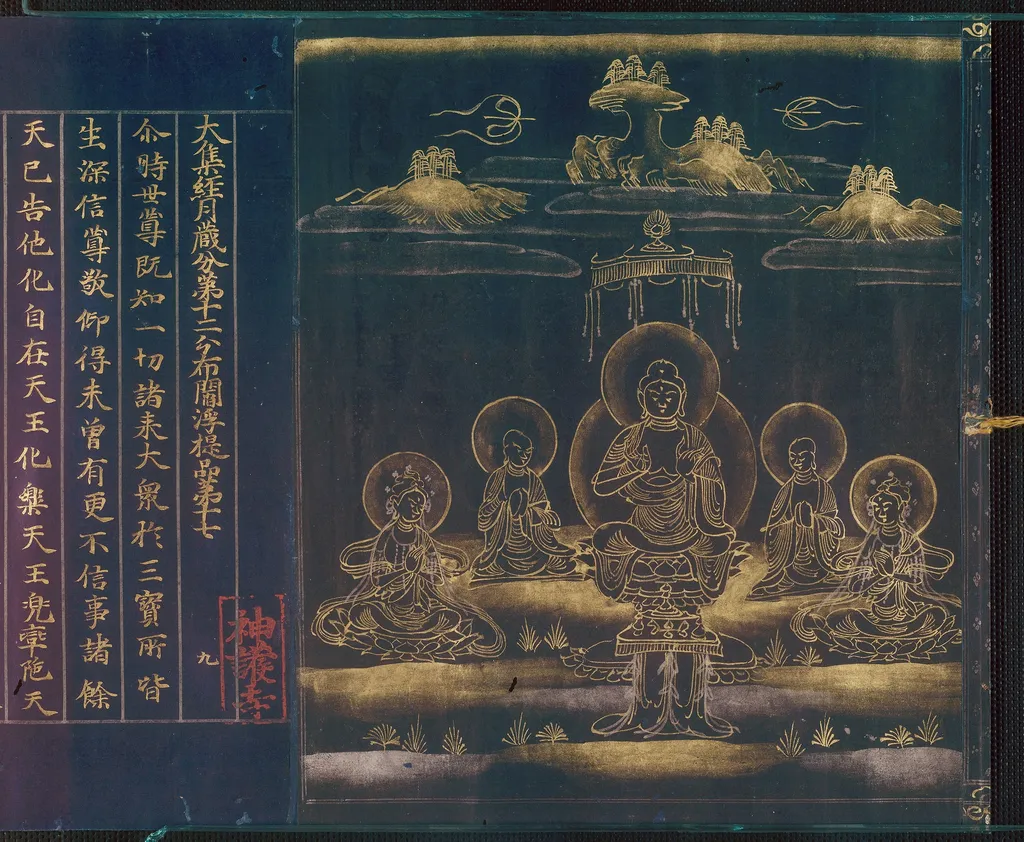
Jingoji Sutra is an unspecified painting by the Byzantine icon painting artist Unknown. It dates from 1149 and is held in the collection of the Art Institute of Chicago.
About this work
Overview
The figures are set against a dark blue sky punctuated by floating islands, modest structures, and a coiled dragon perched on a rock.
The work titled Jingoji Sutra is a painted composition that arranges five golden Buddha figures upon a cloud‑like platform. Central to the scene is the largest Buddha, who holds objects in both hands, while four smaller Buddhas flank him on either side, each bearing serene expressions and luminous halos. The figures are set against a dark blue sky punctuated by floating islands, modest structures, and a coiled dragon perched on a rock.
Subject & Meaning
The central Buddha’s dual objects and the surrounding smaller Buddhas suggest a narrative drawn from Buddhist scripture, likely the Jingoji Sutra itself, as indicated by the accompanying inscription in an ancient East Asian script on the left. The celestial setting, with islands and a dragon, reinforces a mythic, otherworldly realm associated with Buddhist cosmology.
Technique & Style
Rendered in gold pigment, the figures contrast sharply with the deep blue background, creating a luminous effect that emphasizes their sanctity. The use of light and shadow, reminiscent of chiaroscuro, enhances the three‑dimensionality of the cloud platform and the surrounding landscape, while the halos and glowing surfaces contribute to a sense of divine radiance.
History & Provenance
The painting bears an inscription in an old East Asian script, indicating its origin within a cultural context that valued Buddhist textual illustration. No further details on its creation date, artist, or ownership history are provided in the available information.
Context
Positioned within the broader tradition of Buddhist visual art, the work reflects the practice of depicting sutras through elaborate pictorial narratives. The inclusion of architectural elements, floating islands, and a dragon aligns with East Asian artistic conventions that blend religious symbolism with fantastical scenery.
Legacy
While specific influence or reception of the Jingoji Sutra painting is not documented, its striking use of gold against a dark backdrop and its integration of textual and visual elements exemplify the fusion of doctrinal illustration and aesthetic innovation characteristic of historic Buddhist art.
Artist & collection

 Domestic Scene
 Giacomo and Cardinal Marco, investing Andrea, Abbot of San Zeno, with his Benefice
 The Nymph of Fontainebleau
 Portrait of a Woman
 Madonna and Child with Saints in the Enclosed Garden
 Venus and Minerva
 Family Group of Four on Sofa
 Wall painting from Room H of the Villa of P. Fannius Synistor at Boscoreale
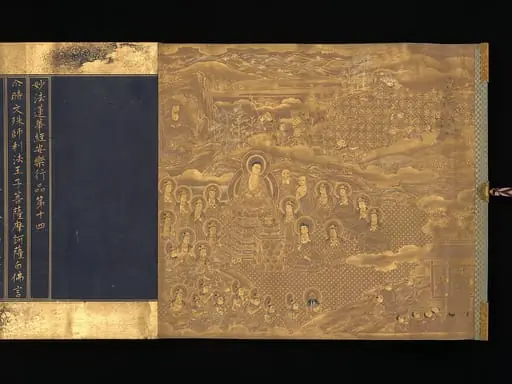 「提婆達多品」 「安楽行品」 『(法華経)』|Lotus Sutra, Chapters 12 and 14
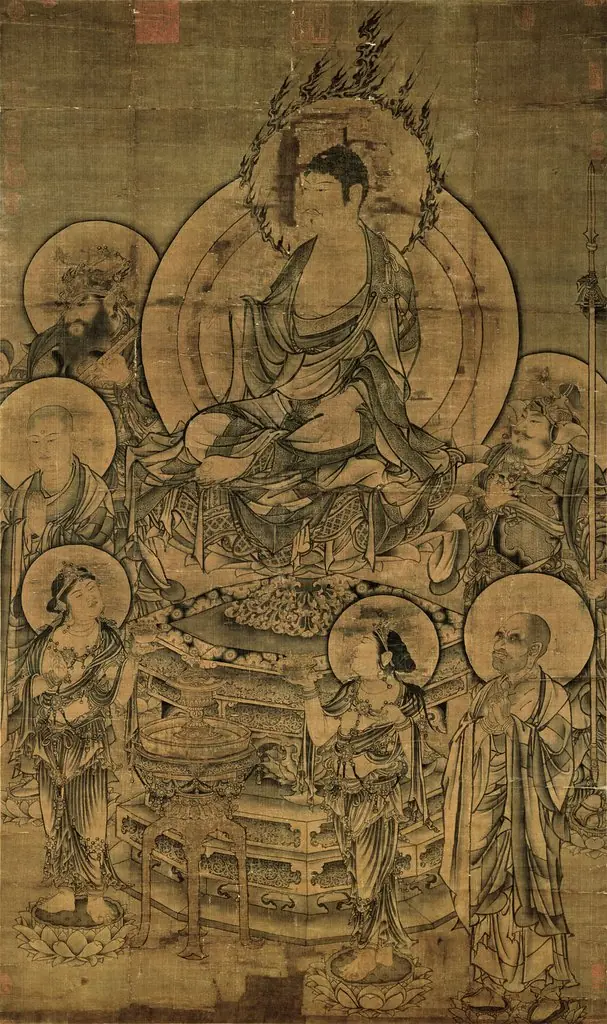 The Buddha Preaching the Law
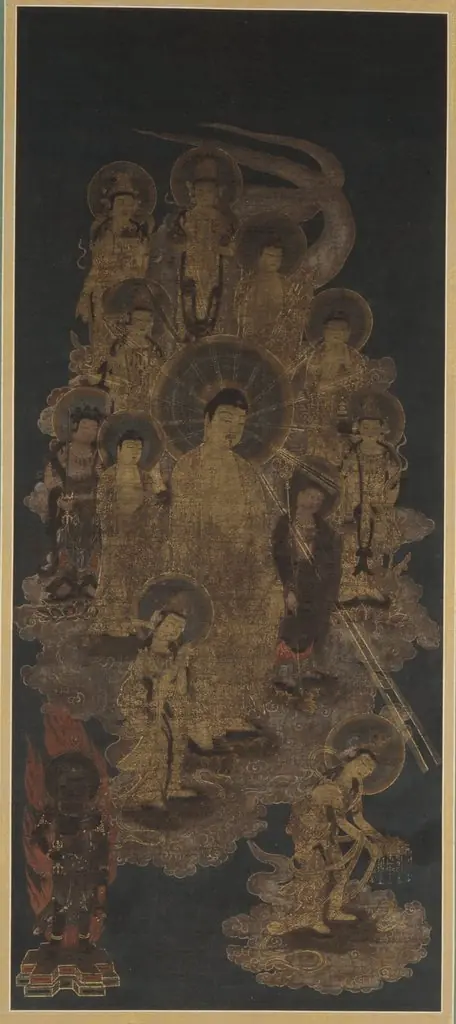 Thirteen Buddhas Welcoming the Dying Believer to the Western Pure Land
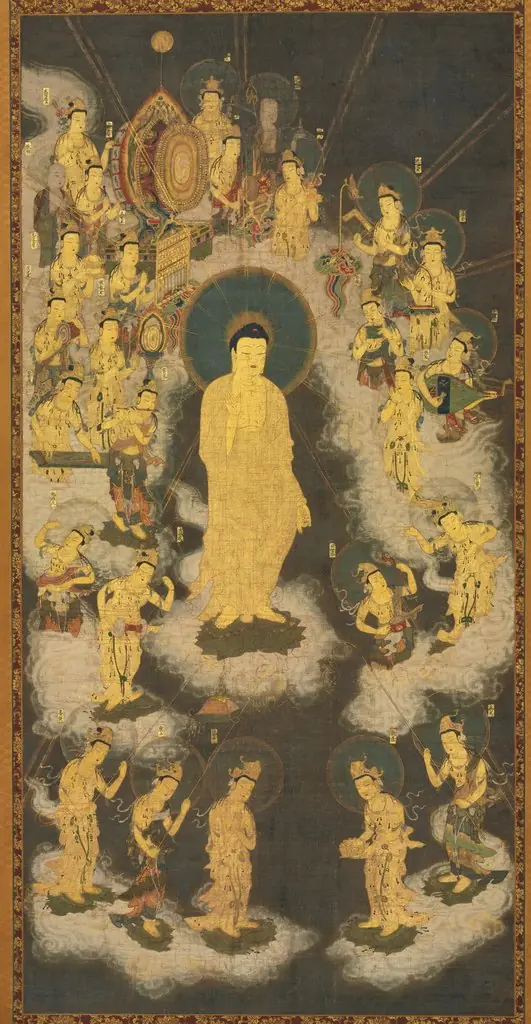 Welcoming Descent of Amida (Amida Raigō)
 Untitled
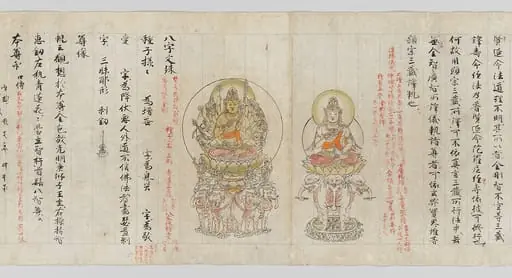 真言諸尊図像抄|Scroll from the Compendium of Iconographic Drawings (Zuzōshō)
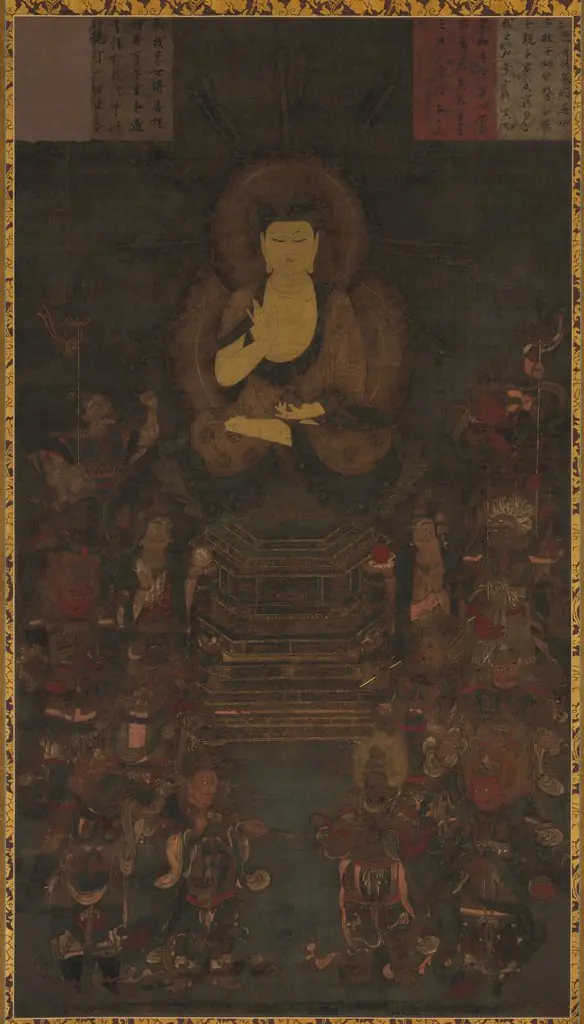 Medicine Master Buddha and the Twelve Divine Generals
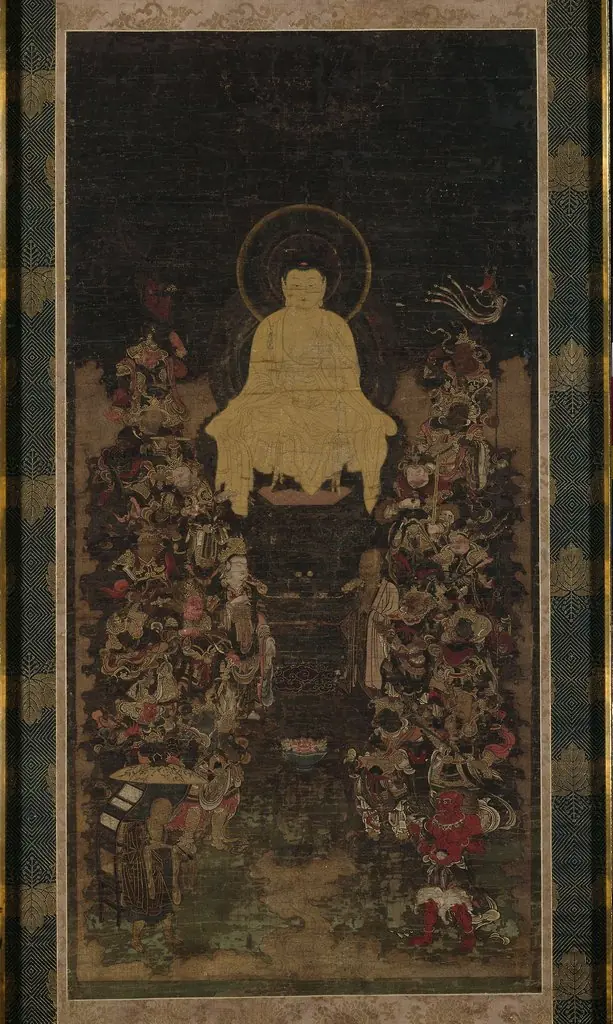 The Buddha Preaching the “Perfection of Wisdom” (Prajnaparamita) Sutra
 Untitled
 Untitled