Artwork
Portrait of Princess Charlotte Amalie, Daughter of Frederick IV, King of Denmark
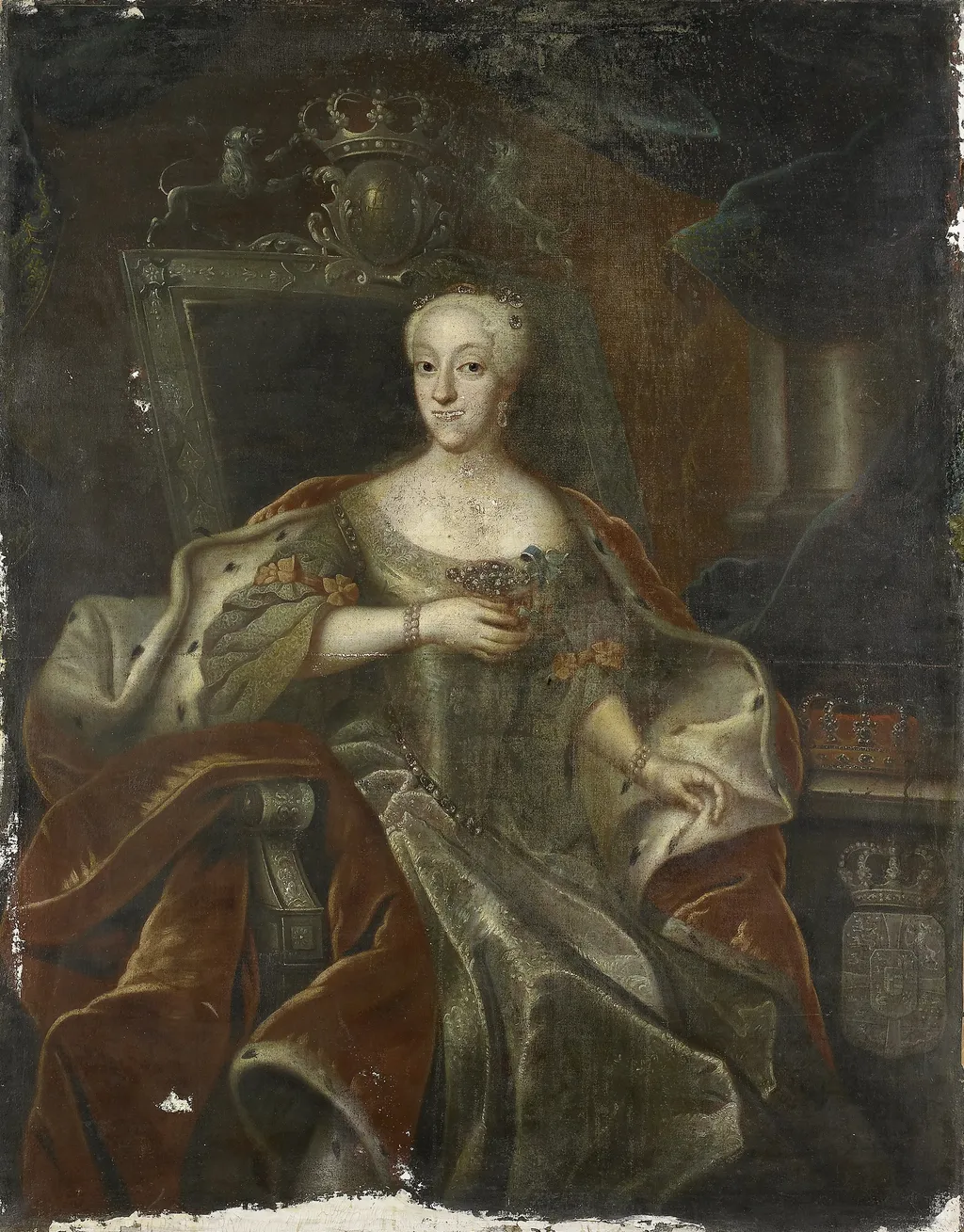
Portrait of Princess Charlotte Amalie, Daughter of Frederick IV, King of Denmark is an oil painting. It dates from 1760 and is held in the collection of the Rijksmuseum. The work is an oil portrait of Princess Charlotte Amalie, the daughter of Frederick IV of Denmark.
About this work
Overview
The work is an oil portrait of Princess Charlotte Amalie, the daughter of Frederick IV of Denmark. Rendered in a dark interior setting, the sitter is presented in an opulent gown, a small floral bouquet in hand, and a crown atop her head, conveying her royal status and refined bearing.
Subject & Meaning
The painting emphasizes the princess’s noble lineage and personal virtue through her serene expression and modest smile. The inclusion of a crown and luxurious attire underscores her position within the Danish court, while the restrained pose suggests dignity and the expectations of royal femininity in the early eighteenth century.
Technique & Style
Executed in oil on canvas, the artist employs a subdued palette with deep shadows that frame the illuminated figure. Fine brushwork captures the texture of silk and lace, and delicate modeling renders the folds of the cloak and the softness of the bouquet, creating a contrast between the richly detailed costume and the muted background.
History & Provenance
The portrait was likely commissioned during Charlotte Amalie’s lifetime to commemorate her status as a royal daughter. Over the centuries it has remained within Danish collections, eventually entering the holdings of the national museum, where it is displayed as part of the royal portrait series.
Artist & collection
