Artwork
Sleeping Poet
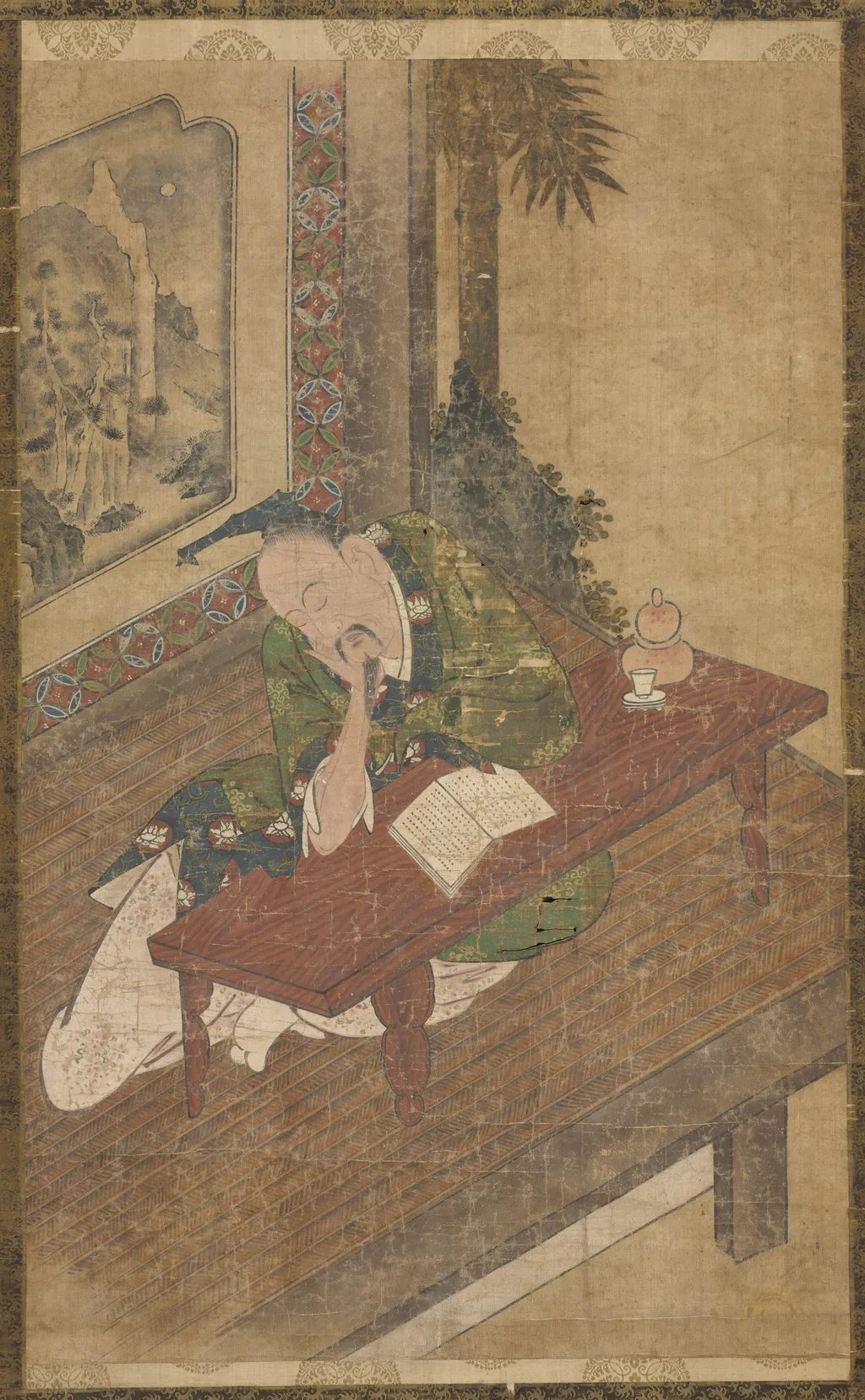
Sleeping Poet is an unspecified painting. It dates from 1749 and is held in the collection of the Cleveland Museum of Art.
About this work
Overview
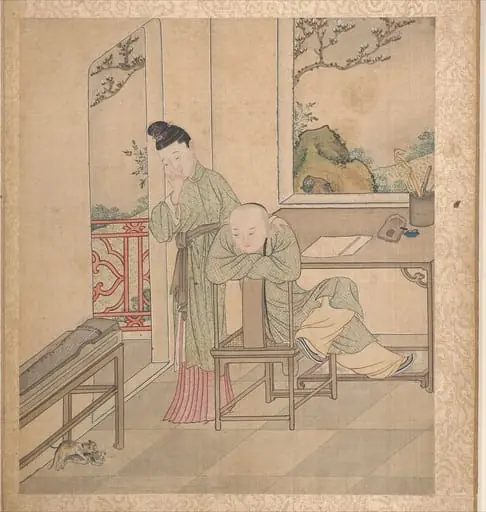
A modest table holds a book, a teacup and a candle holder, while a wall scroll behind shows a mountainous landscape and a bamboo shoot leans toward a window.
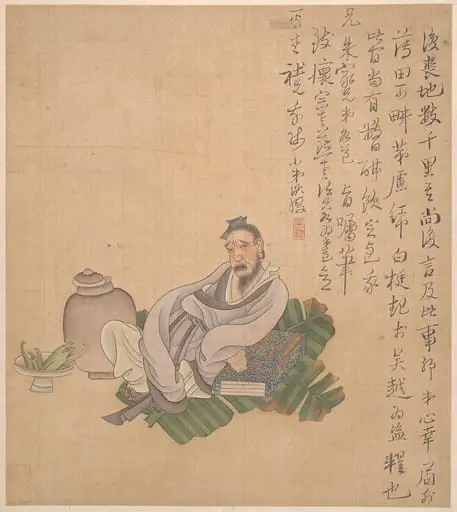
The work titled Sleeping Poet depicts a solitary figure reclined on a low bench, head supported by a hand, appearing half‑asleep. The sitter is dressed in a flowing robe of green and red, with a white fan placed nearby. A modest table holds a book, a teacup and a candle holder, while a wall scroll behind shows a mountainous landscape and a bamboo shoot leans toward a window. The palette is muted, evoking the texture of aged paper.
Subject & Meaning
The composition suggests a moment of quiet contemplation or reverie, perhaps a poet pausing between verses. The presence of literary objects—a book and a scroll—alongside the candle’s gentle light reinforces an atmosphere of study and introspection. The bamboo and mountain scroll introduce elements of traditional Chinese symbolism, hinting at a connection between nature, scholarship, and the creative mind.
Technique & Style
Rendered in soft, faded tones, the painting employs a delicate brushwork that blurs edges and creates a sense of stillness. The muted color scheme and subtle gradations of light give the surface the appearance of weathered paper, while the careful rendering of textures—fabric folds, the sheen of the teacup, the translucency of the fan—demonstrates a refined handling of material detail.
History & Provenance
The piece is part of the collection of the Cleveland Museum of Art, where it is displayed for public viewing. Its acquisition details, artist identity, and earlier ownership are not provided in the available description, limiting further provenance commentary.
Context
The setting combines interior domestic elements with traditional decorative motifs, reflecting a cross‑cultural aesthetic that was common in East Asian genre paintings. The inclusion of scholarly items aligns the work with a longstanding visual tradition that celebrates the contemplative life of literati.
Artist & collection