Artwork
Last Judgment
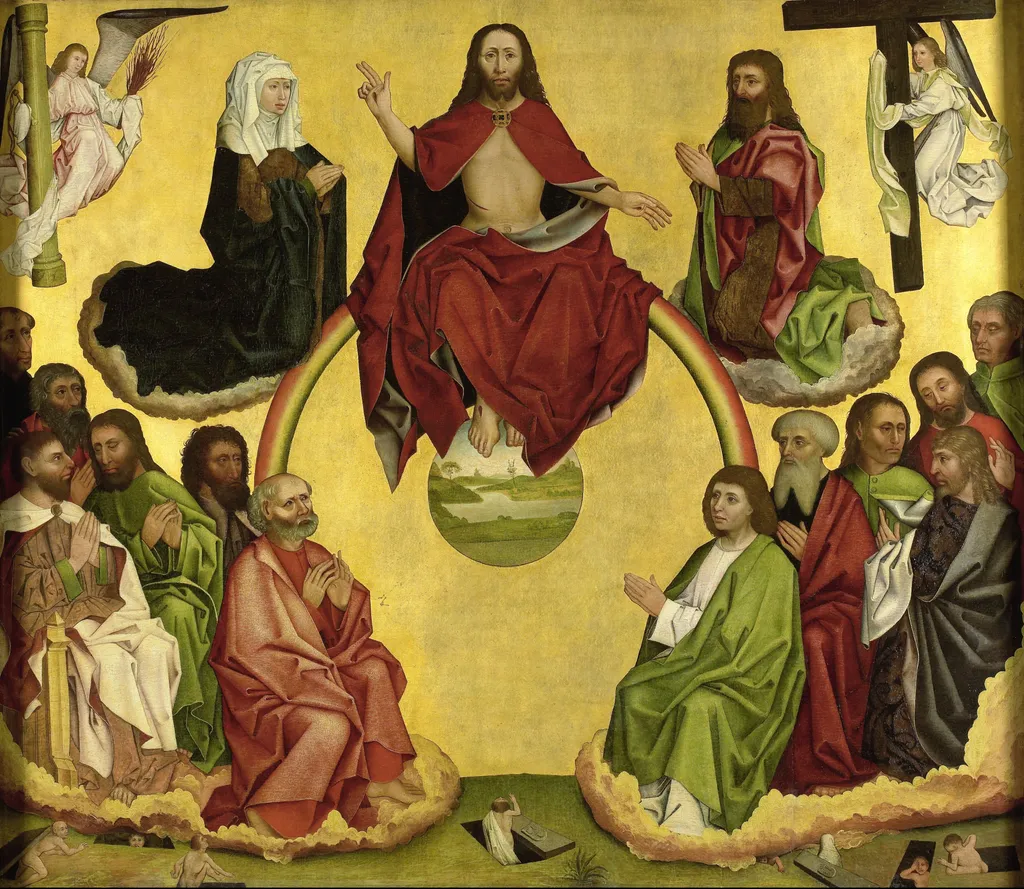
Last Judgment is an oil painting. It dates from 1500 and is held in the collection of the Rijksmuseum.
About this work
Overview
Central to the composition is a bearded figure in a red garment, suspended above a verdant landscape and extending a benediction with one hand.
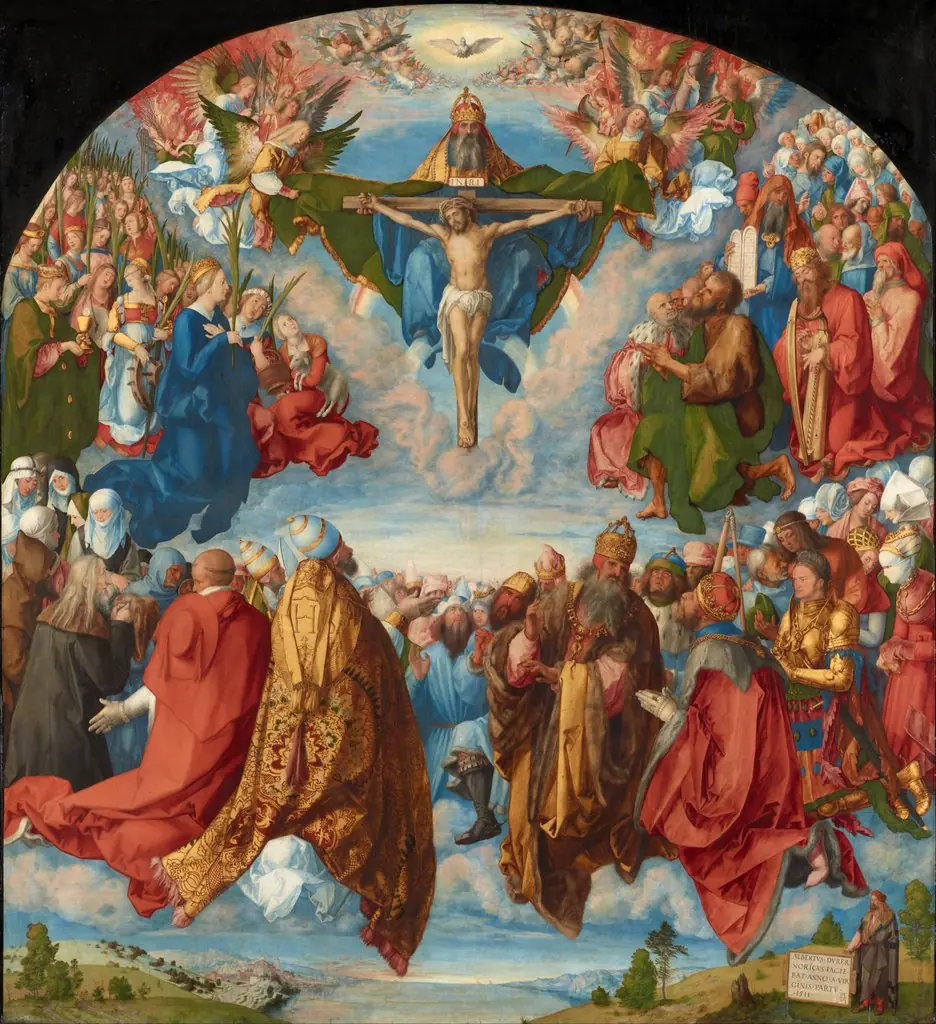
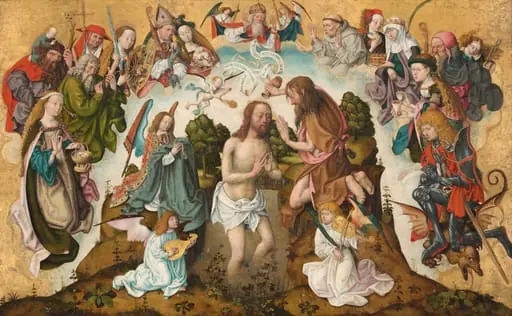
The work titled *Last Judgment* is an oil painting that presents a celestial scene dominated by a luminous, golden sky. Central to the composition is a bearded figure in a red garment, suspended above a verdant landscape and extending a benediction with one hand. Surrounding him are numerous human figures—some kneeling, others standing—who gesture upward or clasp their hands in reverence, while winged angels occupy the periphery.
Subject & Meaning
The painting visualizes the Christian eschatological theme of the final assessment of souls. The central bearded man, likely representing Christ, offers a blessing that separates the faithful from the condemned. The varied postures of the surrounding figures—kneeling, pointing, clasping—suggest individual responses to divine judgment, while the ascending tiny figures below imply souls rising toward salvation.
Technique & Style
Executed in oil, the artist employs a pronounced chiaroscuro that renders the figures with a radiant glow against a darker backdrop. Bold hues of red, green, and gold create stark contrasts, emphasizing the spiritual intensity of the scene. The composition balances dynamic movement—figures reaching upward—with a serene, almost static central authority, characteristic of late Renaissance devotional imagery.
Context
The depiction aligns with a long tradition of Last Judgment iconography that flourished in European art from the medieval period onward. By situating the divine figure above a terrestrial landscape, the work bridges earthly existence and heavenly authority, reflecting contemporary theological concerns about salvation, moral conduct, and the ultimate reckoning.
Artist & collection