Artwork
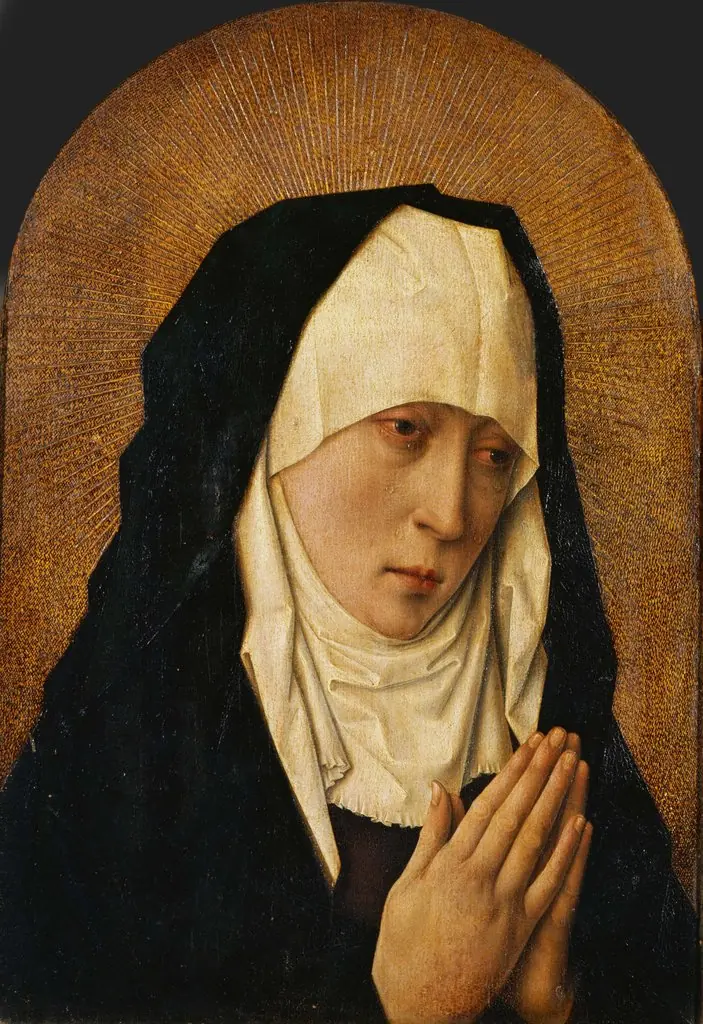
Our Lady of Sorrows from the parish church of St Ursula in Korzenna
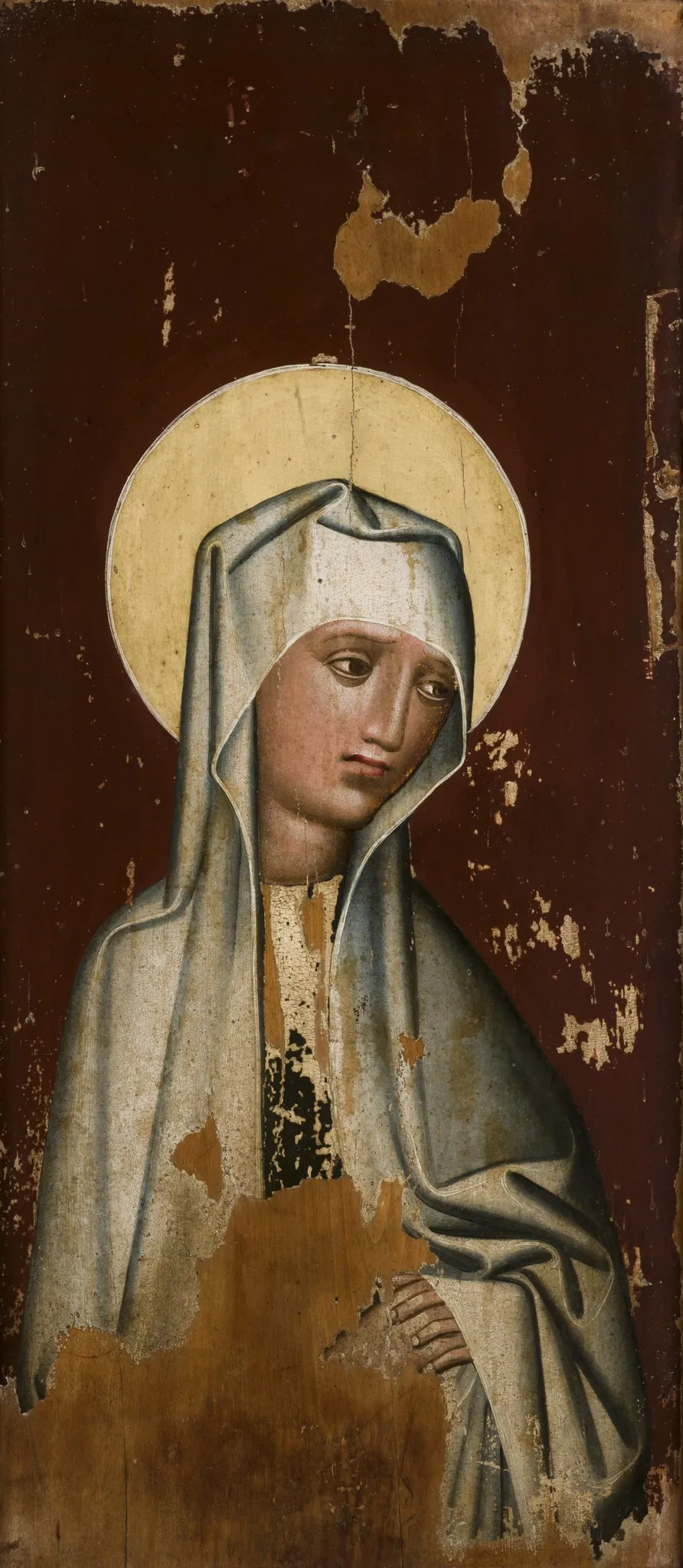
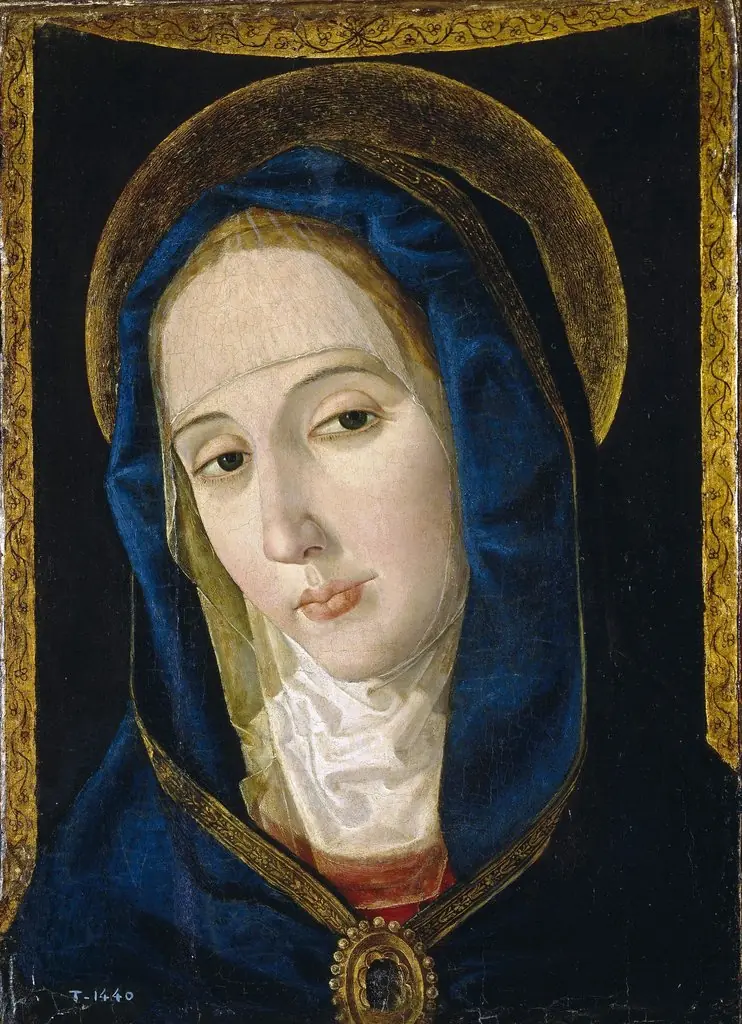
Our Lady of Sorrows from the parish church of St Ursula in Korzenna is an unspecified painting by the Northern Renaissance artist Unknown. It dates from 1450 and is held in the collection of the National Museum in Kraków. This late medieval panel painting depicts the Virgin Mary in a contemplative pose, originally from the parish church of St.
About this work
Overview
The work is now preserved in the National Museum in Kraków, where it is cataloged as a regional example of devotional imagery from the 15th century.
This late medieval panel painting depicts the Virgin Mary in a contemplative pose, originally from the parish church of St. Ursula in Korzenna. Executed in tempera on wood, it shows signs of age and partial paint loss, particularly along the edges and surface. The work is now preserved in the National Museum in Kraków, where it is cataloged as a regional example of devotional imagery from the 15th century.
Subject & Meaning
The figure represents the Virgin Mary as Our Lady of Sorrows, a devotional type emphasizing her grief over Christ’s Passion. Her downcast gaze, folded hands, and solemn expression convey quiet mourning. The golden halo affirms her sanctity, while the white robe and dark red background symbolize purity and the blood of Christ’s sacrifice, respectively. The obscured hands suggest humility and inward reflection.
Technique & Style
Painted in tempera on a wooden panel, the work employs flat, stylized forms typical of late Gothic religious art. Facial features are delicately rendered with minimal modeling, and the drapery is simplified into angular folds. The background’s uneven red tone, with irregular brown patches, may reflect original pigment degradation or later overpainting. The composition prioritizes symbolic presence over naturalism.
History & Provenance
The painting was created for the parish church of St. Ursula in Korzenna, a small village in southern Poland. It remained in situ until the 20th century, when it was transferred to the National Museum in Kraków for conservation and scholarly study. Its survival through centuries of religious and political change suggests local veneration and careful handling by the community.
Context
Produced during a period of heightened Marian devotion in Central Europe, the image aligns with broader trends in late medieval piety that emphasized the Virgin’s suffering. Similar depictions appear in regional altarpieces and processional icons, often used to inspire empathy and prayer. The painting’s modest scale and local origin reflect the devotional needs of a rural parish rather than urban patronage.
Legacy
As one of the few surviving devotional panels from Korzenna, it offers insight into the visual culture of small Polish communities in the late Middle Ages. Its preservation in a national collection underscores its value as a regional artifact, not for artistic innovation, but for its testimony to local religious practice and material continuity over centuries.
Artist & collection

 Domestic Scene
 Giacomo and Cardinal Marco, investing Andrea, Abbot of San Zeno, with his Benefice
 The Nymph of Fontainebleau
 Portrait of a Woman
 Madonna and Child with Saints in the Enclosed Garden
 Venus and Minerva
 Family Group of Four on Sofa
 Wall painting from Room H of the Villa of P. Fannius Synistor at Boscoreale