Artwork
Matthias, Emperor of the Holy Roman Empire (1557-1619)
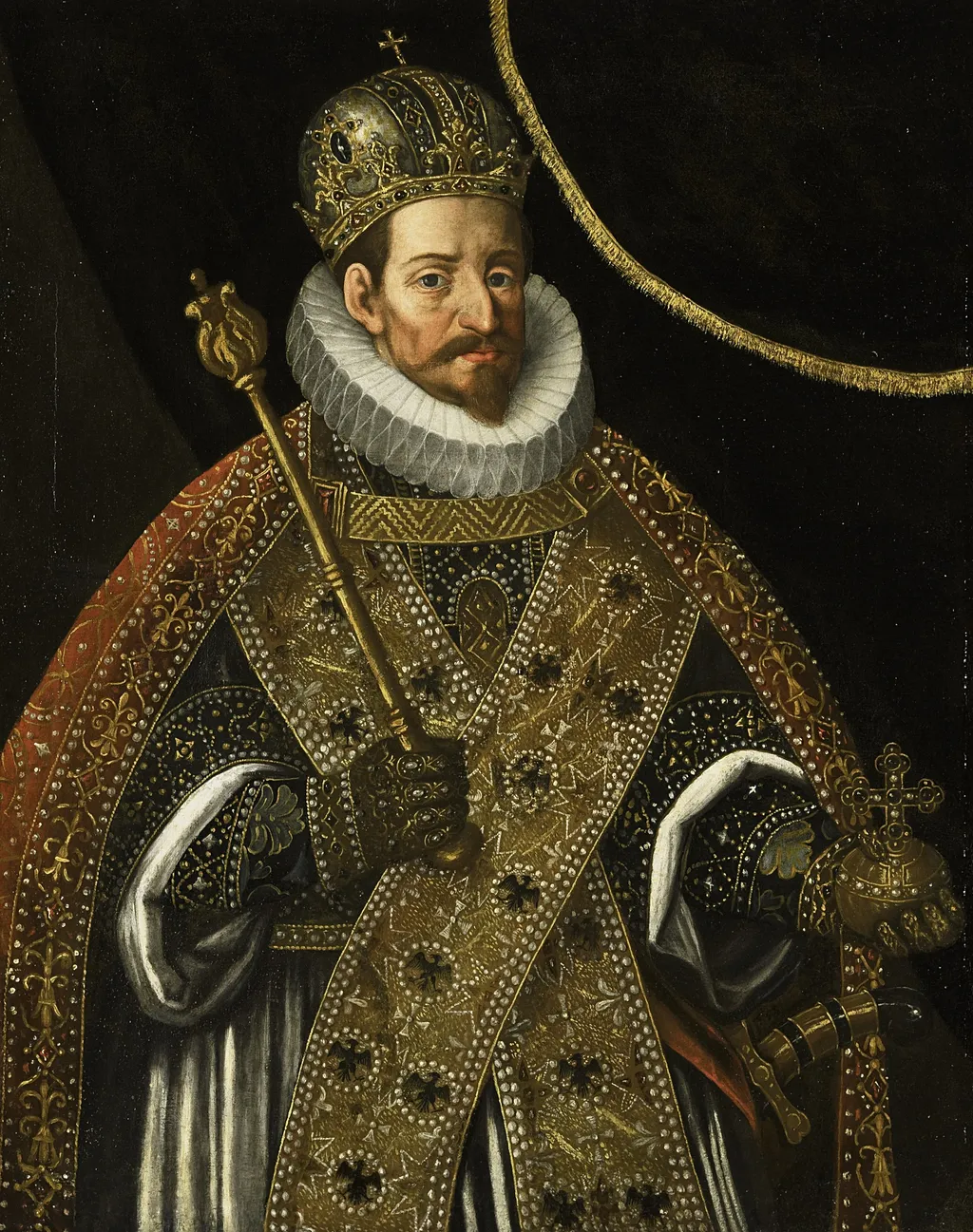
Matthias, Emperor of the Holy Roman Empire (1557-1619) is an oil painting. It dates from 1612 and is held in the collection of the Rijksmuseum. The oil painting depicts Matthias, Holy Roman Emperor from 1557 to 1619, presented in full regalia.
About this work
Overview
The oil painting depicts Matthias, Holy Roman Emperor from 1557 to 1619, presented in full regalia. He stands against a dark backdrop, illuminated by a focused light that highlights his crown and facial features, creating a pronounced three‑dimensional effect.
Subject & Meaning
Matthias is shown in opulent gold robes with a starched white collar, holding a golden orb in one hand and a scepter wrapped in red cloth in the other. The regal attire and symbols of authority emphasize his imperial status and the continuity of the Habsburg lineage.
Technique & Style
The work employs chiaroscuro, contrasting deep shadows beneath the chin with bright illumination on the crown, to model the figure’s volume. Fine detailing on the fabric suggests a dotted texture, possibly representing pearls or a meticulous paint application, enhancing the sense of texture and richness.
History & Provenance
Created in the late 16th or early 17th century, the painting’s provenance traces back to collections of European nobility, though specific ownership records are limited. Its survival in museum holdings reflects the continued interest in portraiture of imperial figures.
Context
Matthias’ reign was marked by religious tensions and political maneuvering within the Holy Roman Empire. Portraits of his likeness served both diplomatic and propagandistic purposes, reinforcing his legitimacy amid the confessional divides of the era.
Legacy
The portrait remains a reference point for scholars studying Habsburg iconography and the visual strategies used to convey sovereign authority during the early modern period, illustrating how light and materiality were harnessed to project power.
Artist & collection
