Artwork
Portrait of Charles V (1500-58), emperor of the Holy Roman Empire
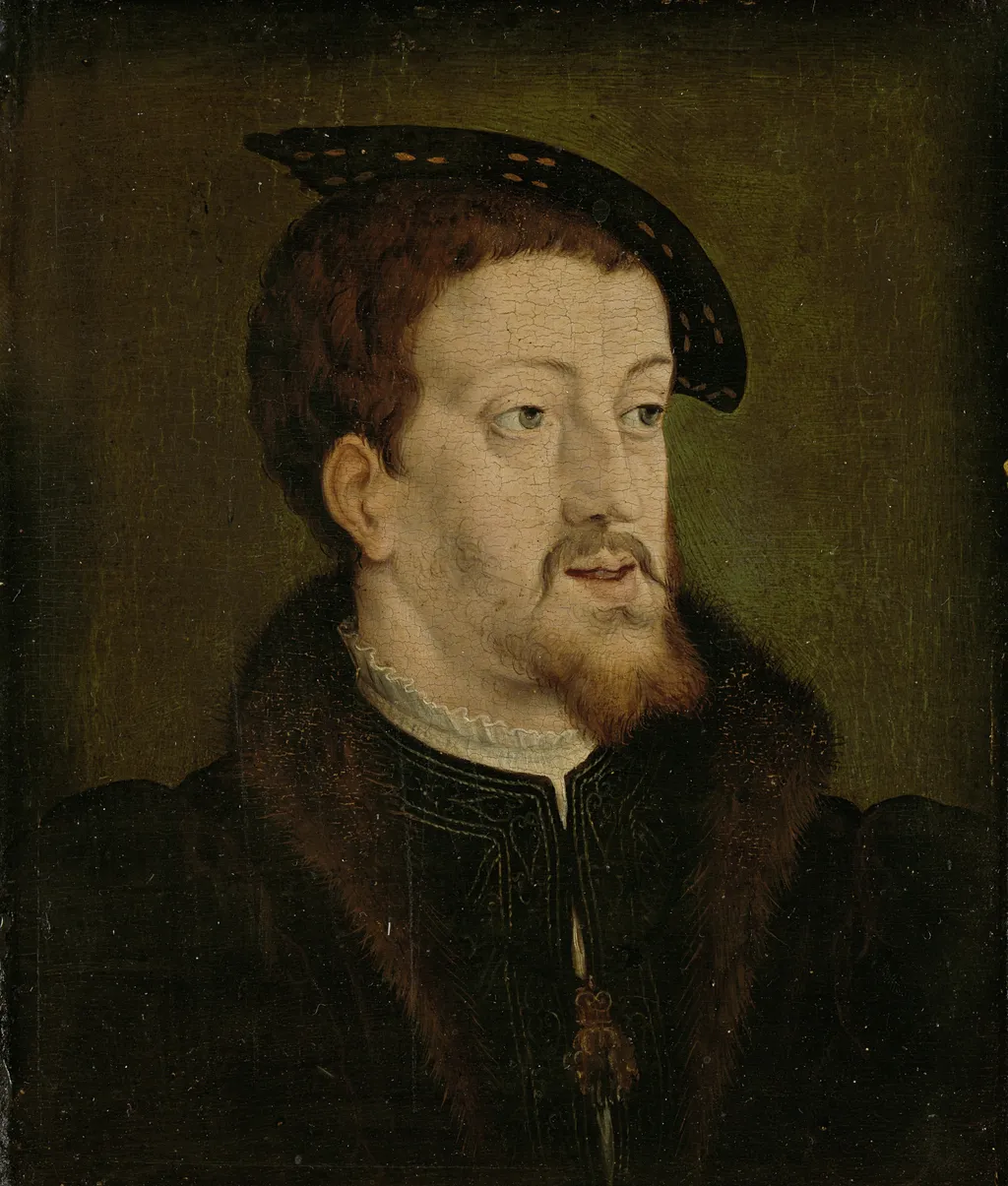
Portrait of Charles V (1500-58), emperor of the Holy Roman Empire is an oil painting. It dates from 1530 and is held in the collection of the Rijksmuseum. The portrait presents Charles V, Holy Roman Emperor, rendered in oil on canvas.
About this work
Overview
The portrait presents Charles V, Holy Roman Emperor, rendered in oil on canvas. The composition isolates the ruler against a dark, unadorned backdrop, directing attention to his facial features and attire. Dressed in a black velvet coat over a white shirt trimmed with lace, he wears a flat‑brimmed black hat and a distinctive red beard and moustache, conveying a solemn presence.
Subject & Meaning
As a visual record of imperial authority, the painting emphasizes the emperor’s dignified bearing and mature age. The restrained setting and sober clothing underscore his role as a unifying figure of the empire, while the vivid red of his facial hair provides a subtle focal point, hinting at personal identity within the broader political persona.
Technique & Style
The artist employs chiaroscuro, using gentle gradations of light and shadow to model the face, especially around the cheeks and beard, giving it a three‑dimensional solidity. Soft transitions between illuminated and recessed areas create a realistic texture on the velvet jacket and lace collar, while the muted background enhances the sculptural effect of the sitter’s features.
History & Provenance
Executed between 1500 and 1558, the work belongs to the late‑Renaissance period when portraiture served both documentary and propagandistic purposes. The painting has remained within imperial collections before entering a public museum, where it continues to be referenced as a representative image of Charles V’s reign.
Context
Created during a time of religious upheaval and territorial expansion, the portrait reflects the visual language of power prevalent in early 16th‑century Europe. Its sober palette and emphasis on individual likeness align with contemporary trends in court portraiture, which sought to convey stability and personal virtue amid political turbulence.
Artist & collection
