Artwork
Border from a Farhang-i Jahangiri Manuscript
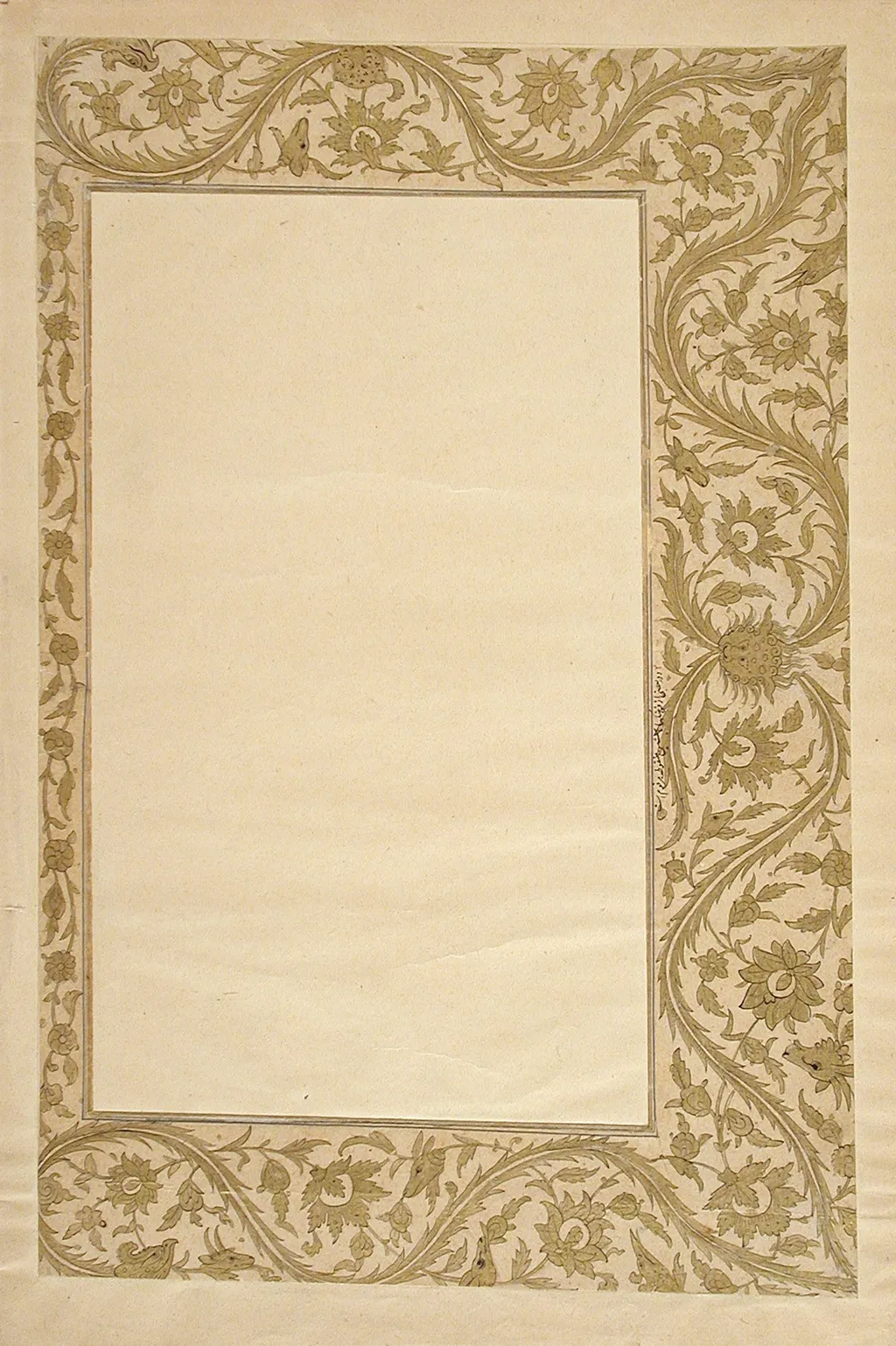
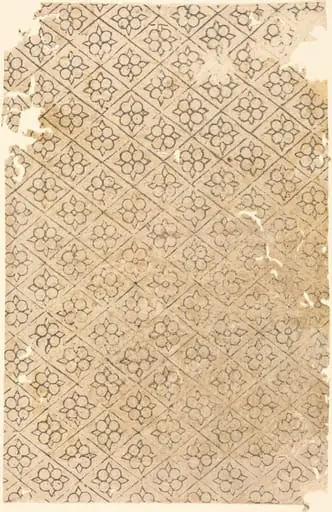
Border from a Farhang-i Jahangiri Manuscript is an unspecified painting by the Mughal Painting artist Unknown. It dates from 1608 and is held in the collection of the Los Angeles County Museum of Art. The work is a decorative border extracted from the Persian manuscript known as the Farhang-i Jahangiri.
About this work
Overview
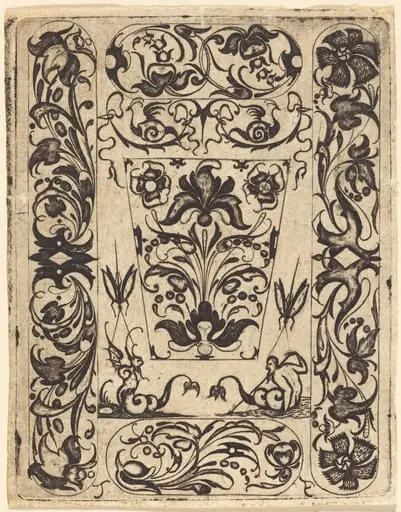
The work is a decorative border extracted from the Persian manuscript known as the Farhang-i Jahangiri. Executed as a miniature painting, it exemplifies the intricate ornamental framing that surrounded the text in this early 17th‑century codex.
Subject & Meaning
The border features a dense arrangement of vegetal motifs, interlaced vines, and stylised floral elements, typical of Safavid court aesthetics. Such designs served both to embellish the page and to convey the cultural refinement associated with the manuscript’s scholarly content.
Technique & Style
Rendered with fine brushwork on paper, the border employs the traditional Persian miniature palette of lapis, vermilion, and gold leaf. The composition relies on delicate line work and a balanced repetition of motifs, reflecting the highly refined courtly style of the period.
History & Provenance
The Farhang-i Jahangiri was compiled under the patronage of Shah Abbas I, and the border originates from one of its illuminated folios. The fragment entered the museum’s collection through a mid‑20th‑century acquisition of Persian manuscript materials.
Context
During the Safavid era, manuscript illumination reached a zenith, with borders playing a crucial role in the visual hierarchy of texts. The Farhang-i Jahangiri, a lexicon of Persian language and culture, exemplifies the era’s synthesis of scholarly purpose and artistic opulence.
Artist & collection

 Domestic Scene
 Giacomo and Cardinal Marco, investing Andrea, Abbot of San Zeno, with his Benefice
 The Nymph of Fontainebleau
 Portrait of a Woman
 Madonna and Child with Saints in the Enclosed Garden
 Venus and Minerva
 Family Group of Four on Sofa
 Wall painting from Room H of the Villa of P. Fannius Synistor at Boscoreale