Artwork
Portrait of Emperor Jahangir Riding an Elephant
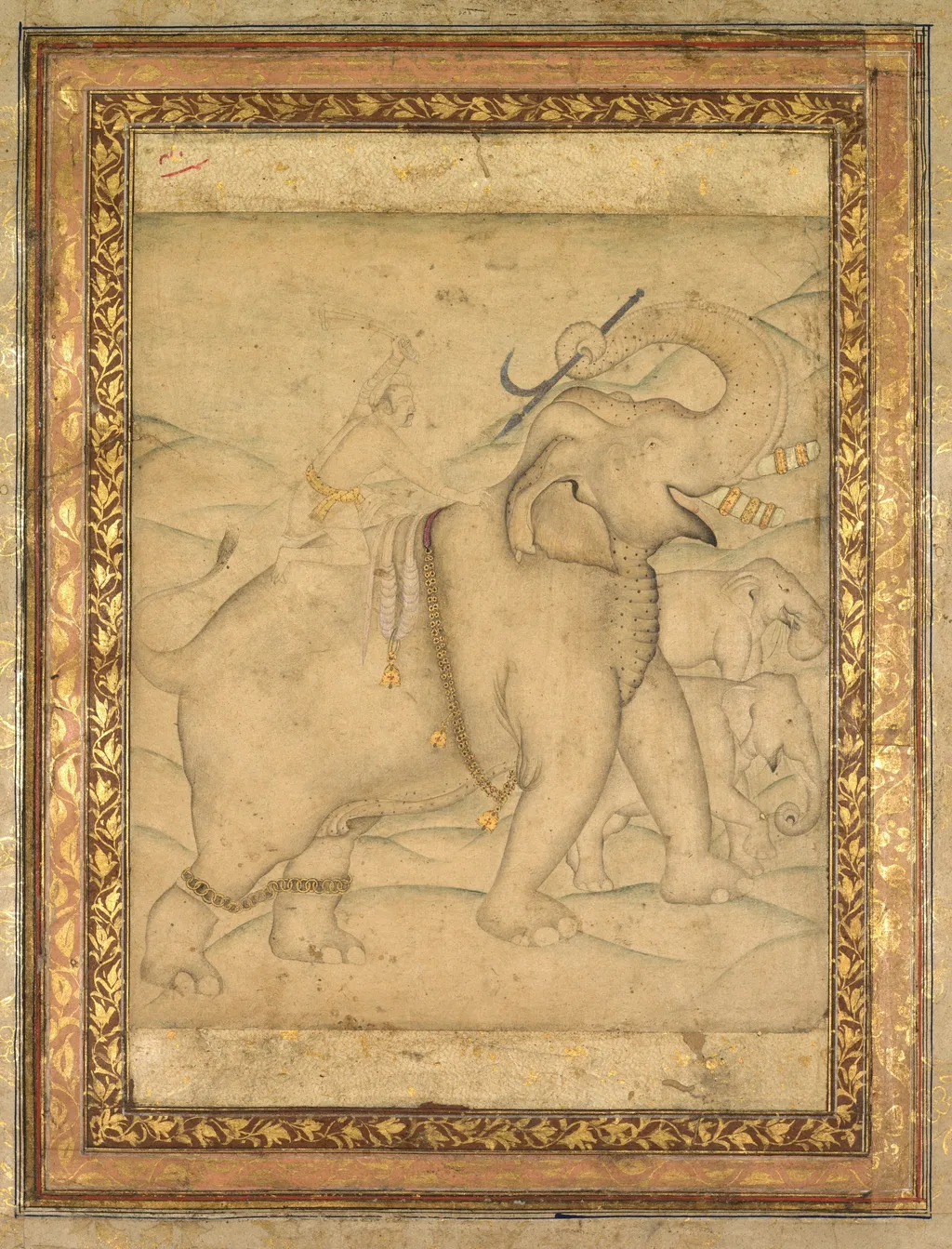
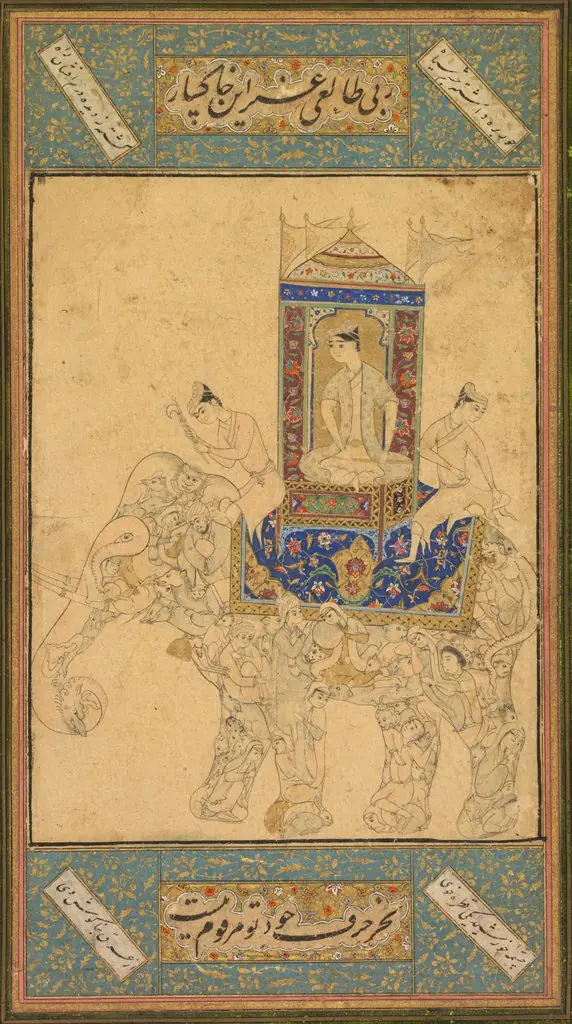
Portrait of Emperor Jahangir Riding an Elephant is an unspecified painting. It dates from 1724 and is held in the collection of the Cleveland Museum of Art. This painting portrays Emperor Jahangir atop an elaborately decorated elephant.
About this work
If you're interested in learning more about Indian art from this period, you might want to look up the subject "elephant".
This painting shows a man riding an elephant. The elephant is walking to the right, and the man is sitting on its back, holding a long object in his right hand. The man and the elephant are drawn in a simple style, with no background.
The man is wearing a long robe and a turban, and he has a long beard. The elephant is decorated with jewelry and other ornaments. The painting is done in a style that is typical of Indian art from the 18th century.
If you're interested in learning more about Indian art from this period, you might want to look up the subject "elephant".
Overview
This painting portrays Emperor Jahangir atop an elaborately decorated elephant. The composition is direct, focusing on the two central figures without an extensive background. It reflects an 18th-century Indian artistic approach, highlighting the emperor's regal presence and the animal's ceremonial adornments. Jahangir, distinguished by his traditional robe, turban, and beard, holds an elongated object, possibly a goad, as the elephant progresses towards the right side of the frame.
Subject & Meaning
The artwork depicts Emperor Jahangir, a prominent Mughal ruler, mounted on a richly caparisoned elephant. This imagery likely conveys imperial power and majesty, as elephants were historically significant symbols of royalty and strength in Indian culture. The emperor's composed demeanor, coupled with the animal's opulent ornamentation, reinforces his elevated status and authority, serving as a visual affirmation of his sovereignty.
Technique & Style
Rendered in a style typical of 18th-century Indian painting, this work features a straightforward and uncluttered aesthetic. The forms of the emperor and the elephant are delineated with clear lines and minimal background elements, directing the viewer's attention to the subjects. The intricate patterns on the elephant's coverings and the specific details of Jahangir's attire exemplify the period's focus on ceremonial and sartorial representation.
Context
The portrayal of elephants held considerable cultural and artistic significance in India, particularly within royal courts. Such depictions not only documented historical figures and events but also functioned as potent emblems of wealth, military strength, and imperial prestige. This painting aligns with a broader tradition of representing rulers engaged in activities that underscored their leadership and connection to important cultural symbols.
Artist & collection