Artwork
Portrait of Frank van Borselen (c. 1390-1470), Lord of Sint Maartensdijk
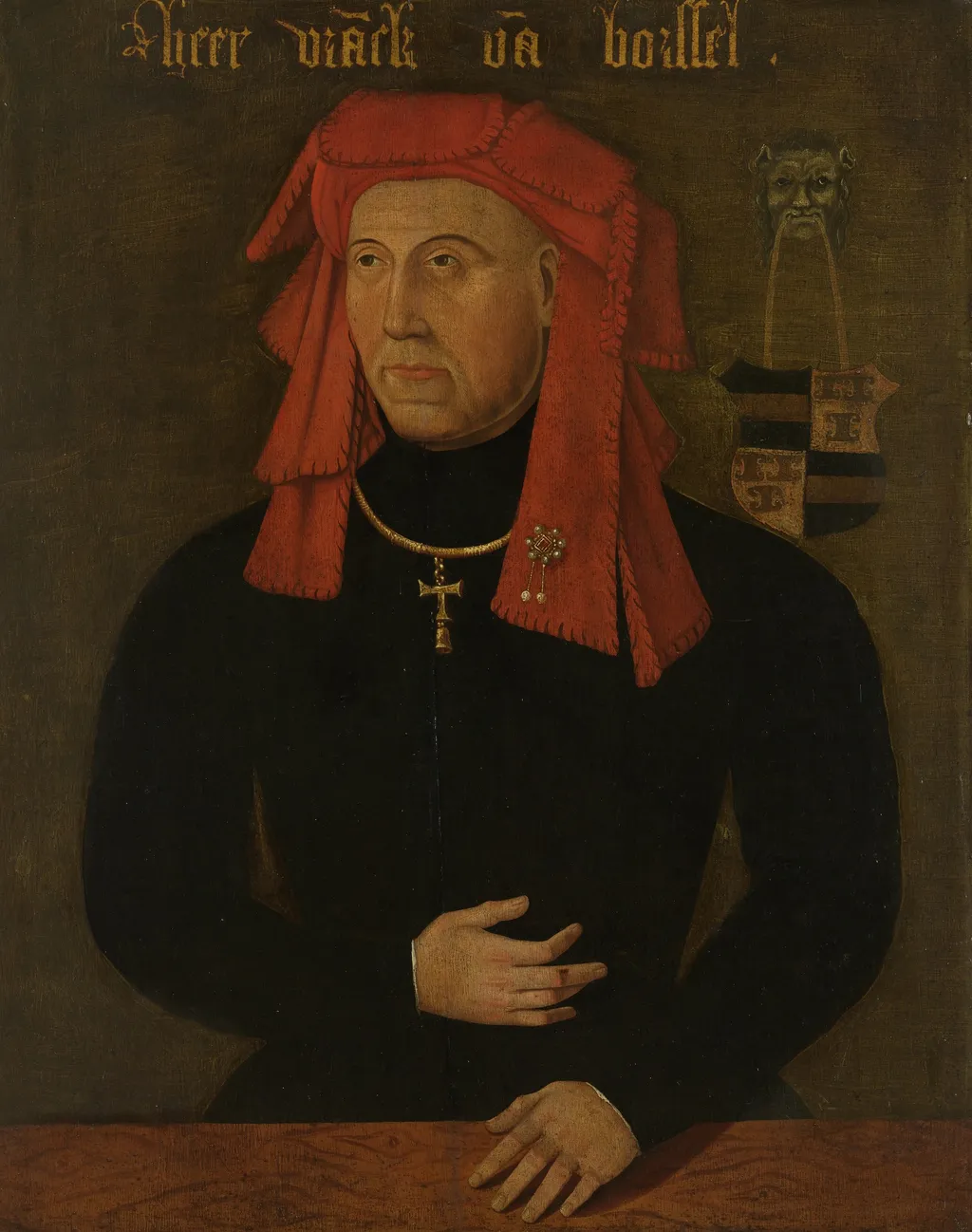
Portrait of Frank van Borselen (c. 1390-1470), Lord of Sint Maartensdijk is an oil painting. It dates from 1490 and is held in the collection of the Rijksmuseum. The work is a portrait of Frank van Borselen, a 15th‑century lord of Sint Maartensdijk.
About this work
Overview
The work is a portrait of Frank van Borselen, a 15th‑century lord of Sint Maartensdijk. Rendered in oil on panel, the figure is shown seated before a dark table, his expression solemn. He wears a black robe, a vivid red hat, and a gold chain bearing a cross, while a shield with an unusual face and heraldic devices hangs on the wall behind him.
Subject & Meaning
Frank van Borselen’s attire and insignia signal his high status, likely reflecting both secular authority and a connection to the church. The gold cross on his chain emphasizes piety, whereas the elaborate shield, displaying a distinctive visage and coat of arms, serves as a visual assertion of lineage and personal identity.
Technique & Style
The portrait employs oil paint, a medium that was only beginning to replace tempera in the early 15th century. Layers of translucent glazes build depth in the fabrics and flesh tones, creating subtle shifts of light that enhance the three‑dimensionality of the figure and the reflective quality of the metalwork.
Context
Created during a period when oil painting was spreading across the Low Countries, the work illustrates the transition toward richer colour modulation and finer detail. The combination of a formal pose, luxurious clothing, and heraldic display aligns with contemporary conventions for representing members of the nobility.
Artist & collection
