Artwork
Portrait of Maximilian I, Holy Roman Emperor
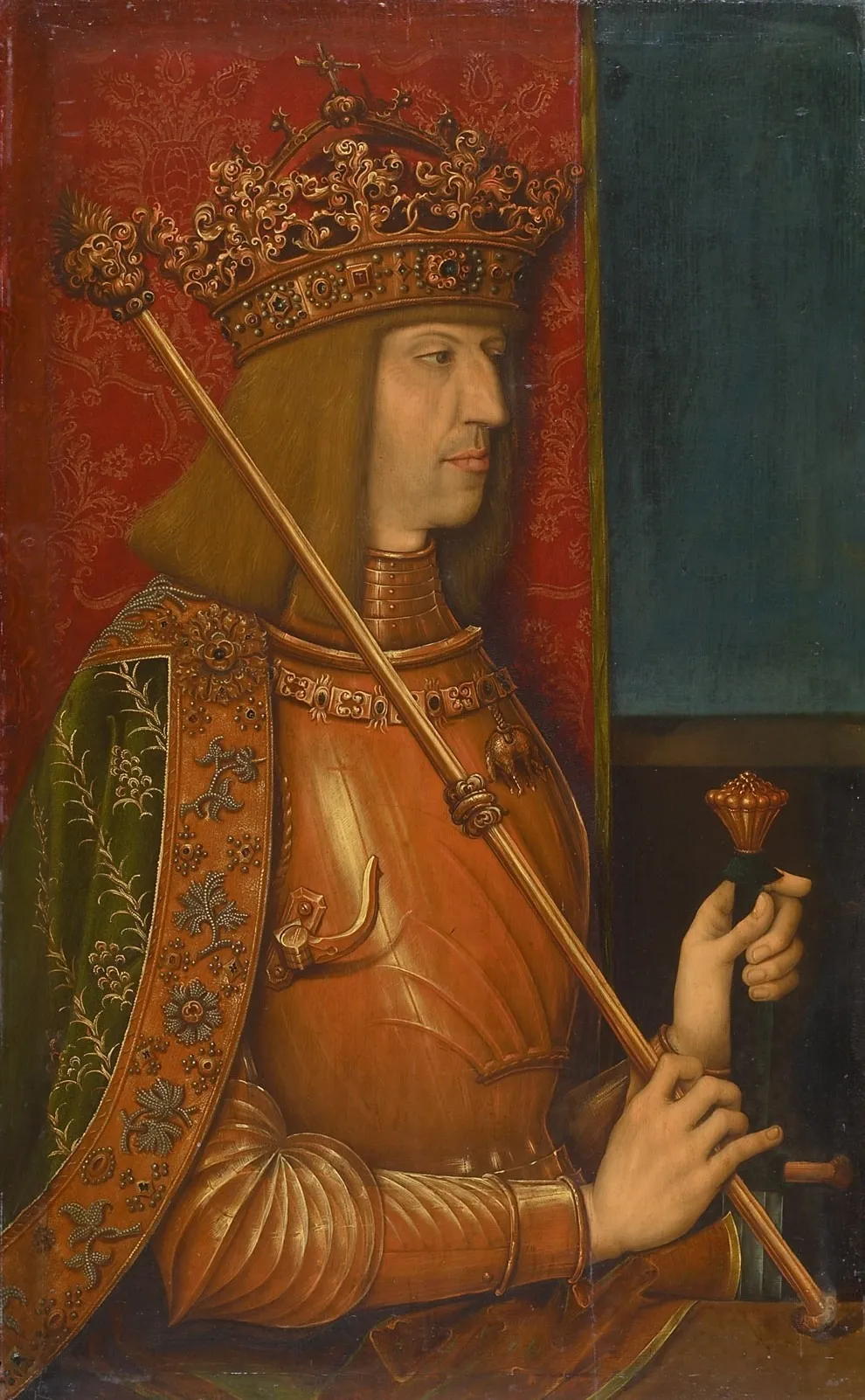
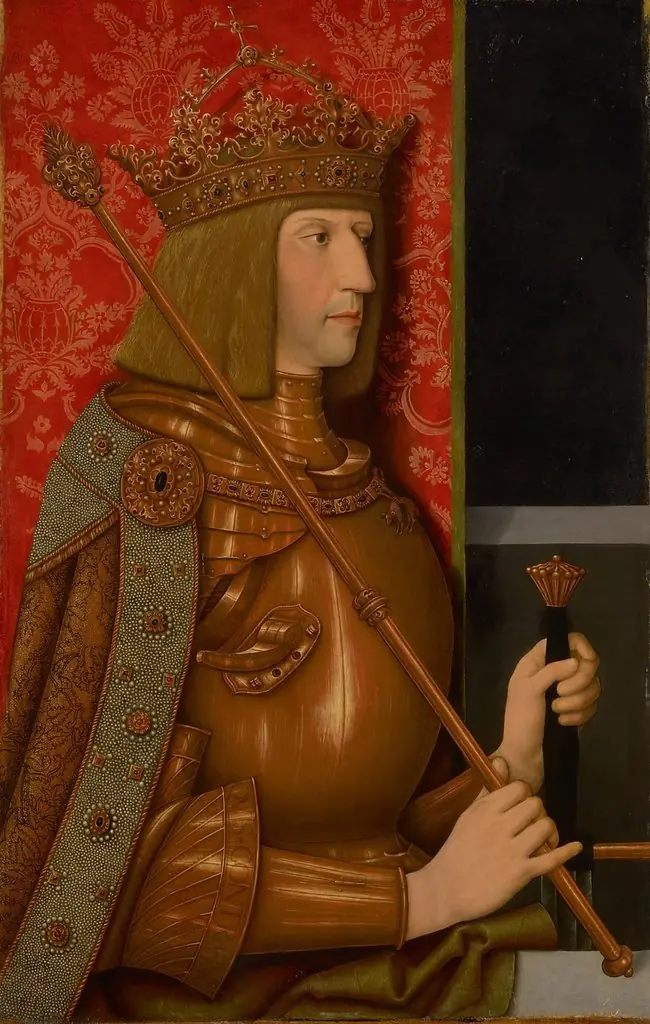
Portrait of Maximilian I, Holy Roman Emperor is an oil painting by the Northern Renaissance artist Unknown. It dates from 1507 and is held in the collection of the Kunsthistorisches Museum. The work is an oil painting portraying Maximilian I, Holy Roman Emperor, in full regalia.
About this work
Overview
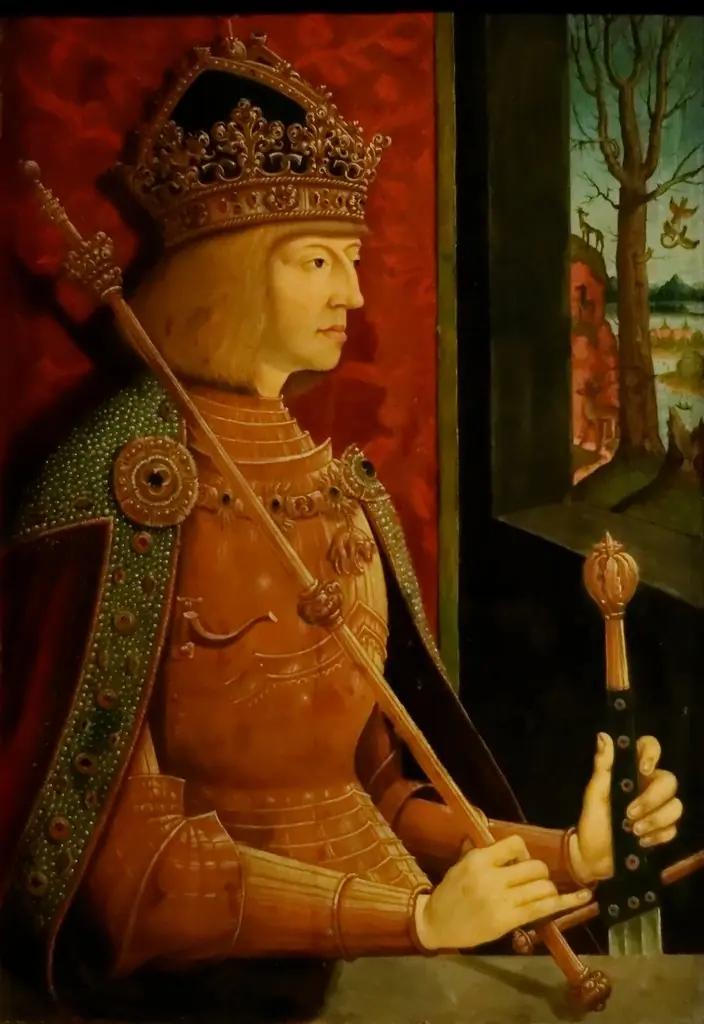
The work is an oil painting portraying Maximilian I, Holy Roman Emperor, in full regalia. He is depicted wearing elaborate armor, a golden crown, and a fur‑trimmed cloak of deep red, gold and green, while holding a scepter topped with a spherical ornament. The background is dark, allowing the illuminated figure to dominate the composition.
Subject & Meaning
The portrait emphasizes imperial authority through the combination of martial and regal elements. The armor and crown signal military leadership, whereas the richly patterned garments and scepter convey sovereign power and the continuity of the Habsburg dynasty.
Technique & Style
The artist employs chiaroscuro, using strong contrasts of light and shadow to model the emperor’s face, chest and armor, creating a three‑dimensional effect on a flat surface. Fine brushwork renders the metallic sheen of the armor and the intricate textures of the fabrics and fur.
History & Provenance
Created as a formal portrait of Maximilian I, the painting was likely commissioned during his reign (1493‑1519) to affirm his status. It has remained in European collections, passing through several noble houses before entering a public museum collection in the 20th century.
Context
The portrait reflects the early‑Renaissance trend of combining realistic portraiture with symbolic regalia. It aligns with contemporary depictions of rulers that sought to balance humanist interest in individual likeness with traditional iconography of power.
Legacy
As a visual record of Maximilian I’s appearance and self‑presentation, the painting informs scholars of imperial fashion, armor design, and the visual language of authority in the late 15th and early 16th centuries.
Artist & collection

 Domestic Scene
 Giacomo and Cardinal Marco, investing Andrea, Abbot of San Zeno, with his Benefice
 The Nymph of Fontainebleau
 Portrait of a Woman
 Madonna and Child with Saints in the Enclosed Garden
 Venus and Minerva
 Family Group of Four on Sofa
 Wall painting from Room H of the Villa of P. Fannius Synistor at Boscoreale