Artwork
Emperor Shah Jahan
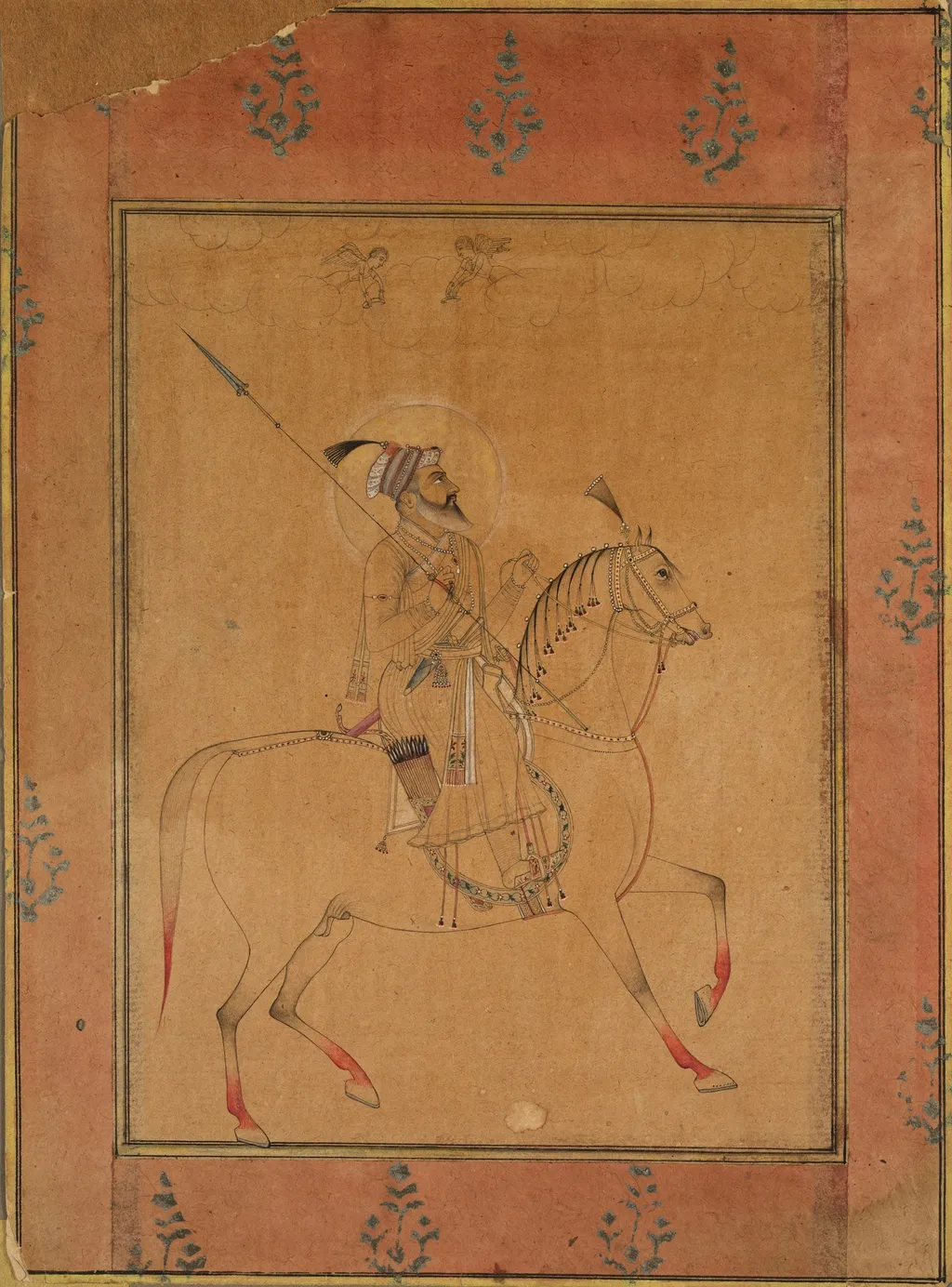
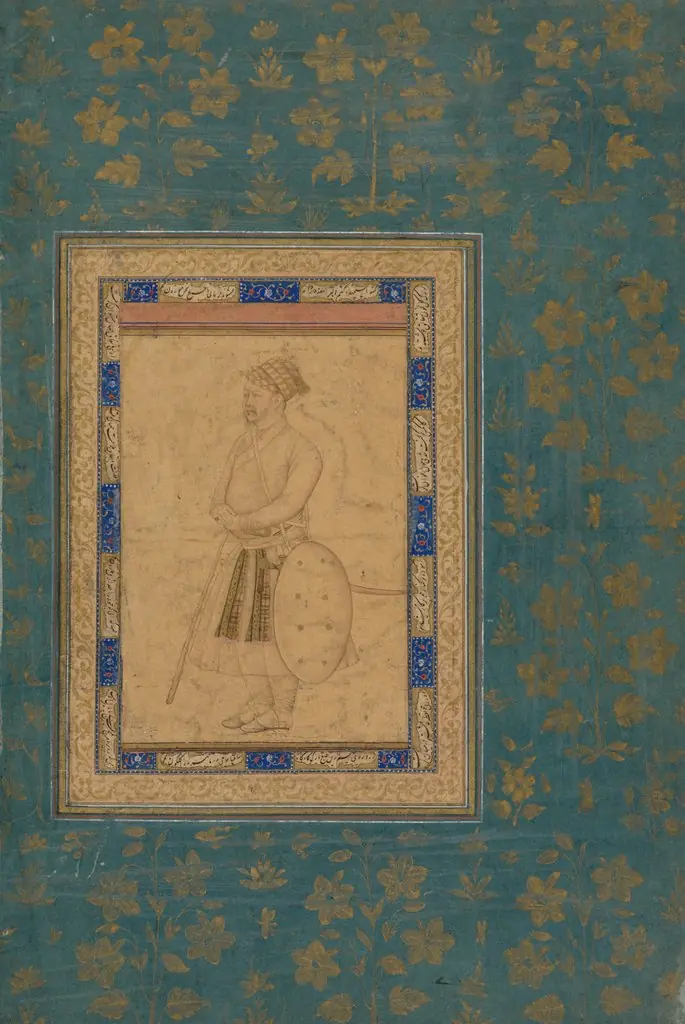
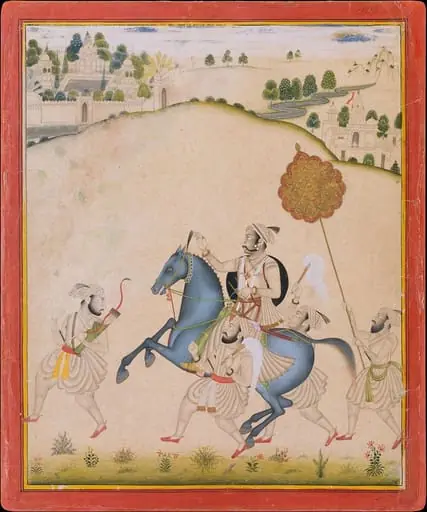
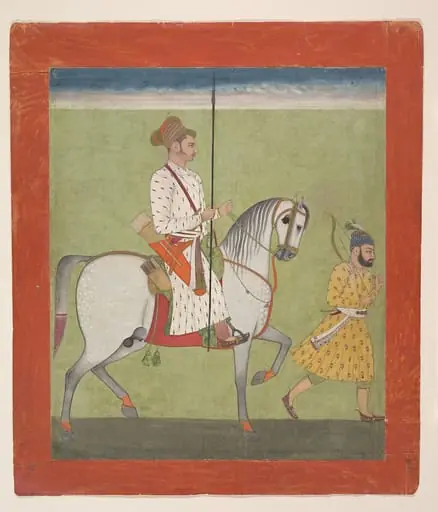
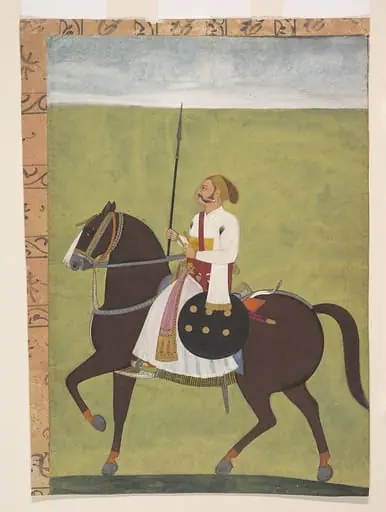
Emperor Shah Jahan is an unspecified painting. It dates from 1674 and is held in the collection of the Cleveland Museum of Art.
About this work
Overview
The work depicts a mounted figure, identified as Emperor Shah Jahan, charging on a richly adorned horse. He grasps a spear in one hand while the other holds the reins, his head crowned by a turban and surrounded by a luminous halo. The composition is framed by a decorative border of stylized foliage, and the palette consists of warm, earthy tones that lend the scene a manuscript‑like quality.
Subject & Meaning
The rider is presented as a sovereign warrior, the spear symbolising authority and martial prowess. The halo surrounding his face elevates the figure beyond mere mortal status, suggesting a divine or exalted legitimacy for Shah Jahan’s rule. The elaborate armor and horse decoration reinforce the imperial grandeur associated with the Mughal emperor.
Technique & Style
Executed in a miniature painting tradition, the piece employs fine brushwork to render intricate patterns on the horse’s trappings and the surrounding border. The use of a glowing halo effect and the flat, decorative background are characteristic of courtly manuscript illustration, while the warm, earthy pigments create a cohesive visual harmony.
Context
The painting likely originates from a Mughal manuscript or album, a format used to celebrate royal achievements and lineage. Such works were commonly commissioned to document significant events or to serve as visual propaganda, reinforcing the emperor’s image as both a warrior and a divinely sanctioned ruler.
Legacy
Images of Shah Jahan on horseback have persisted in South Asian visual culture, influencing later artistic representations of Mughal authority. The work exemplifies the synthesis of Persian miniature techniques with indigenous Indian motifs that defined Mughal court art during the 17th century.
Artist & collection