Artwork
Bouquet of Flowers in a Figured Gold and Silver Vase
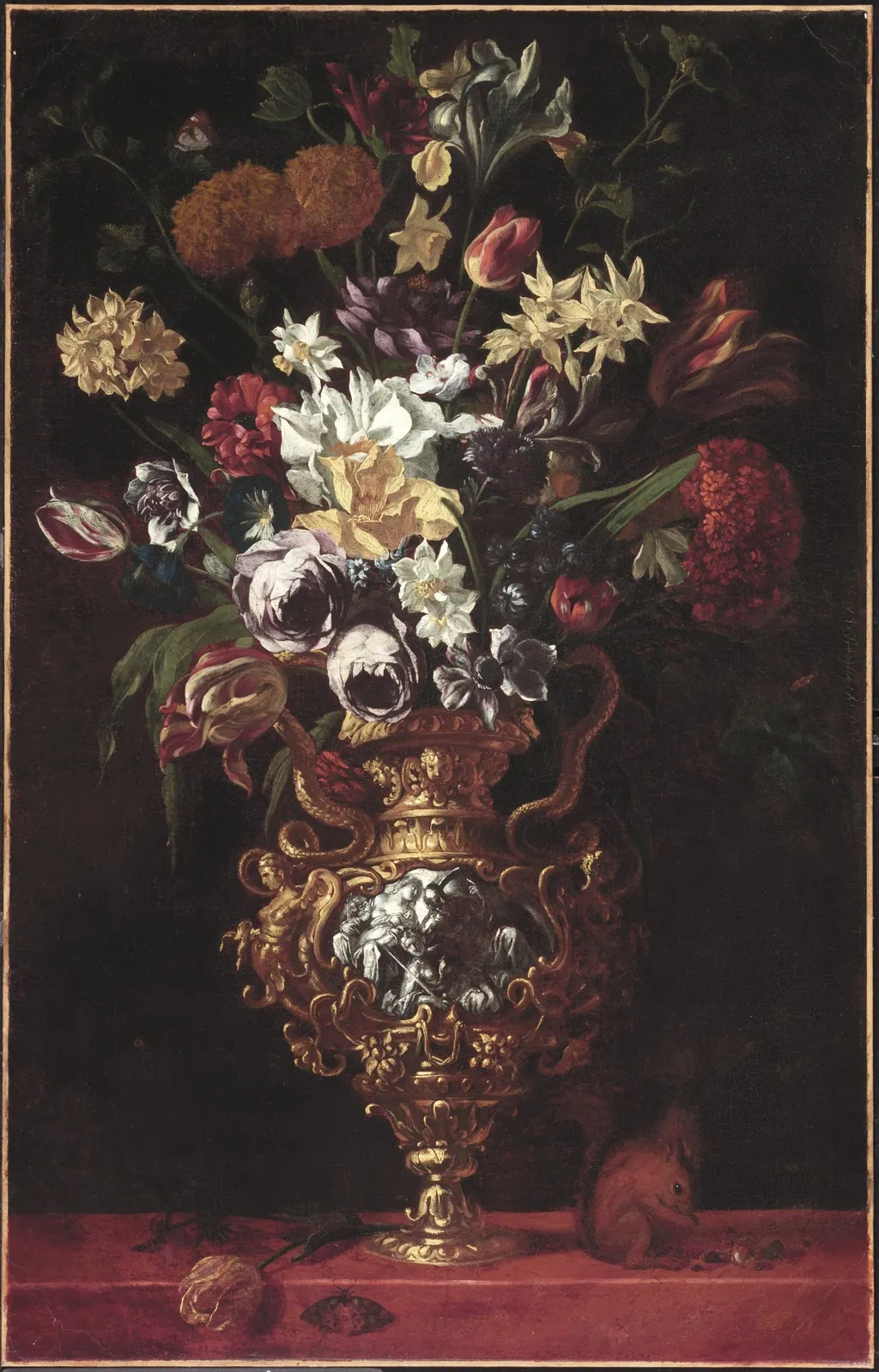
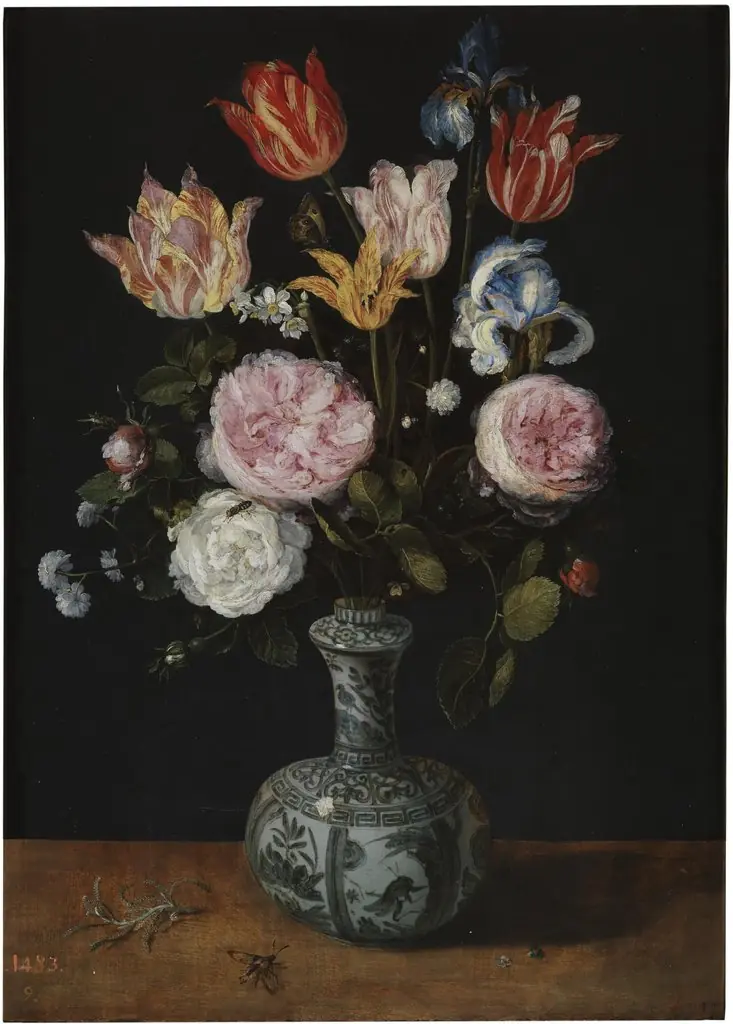
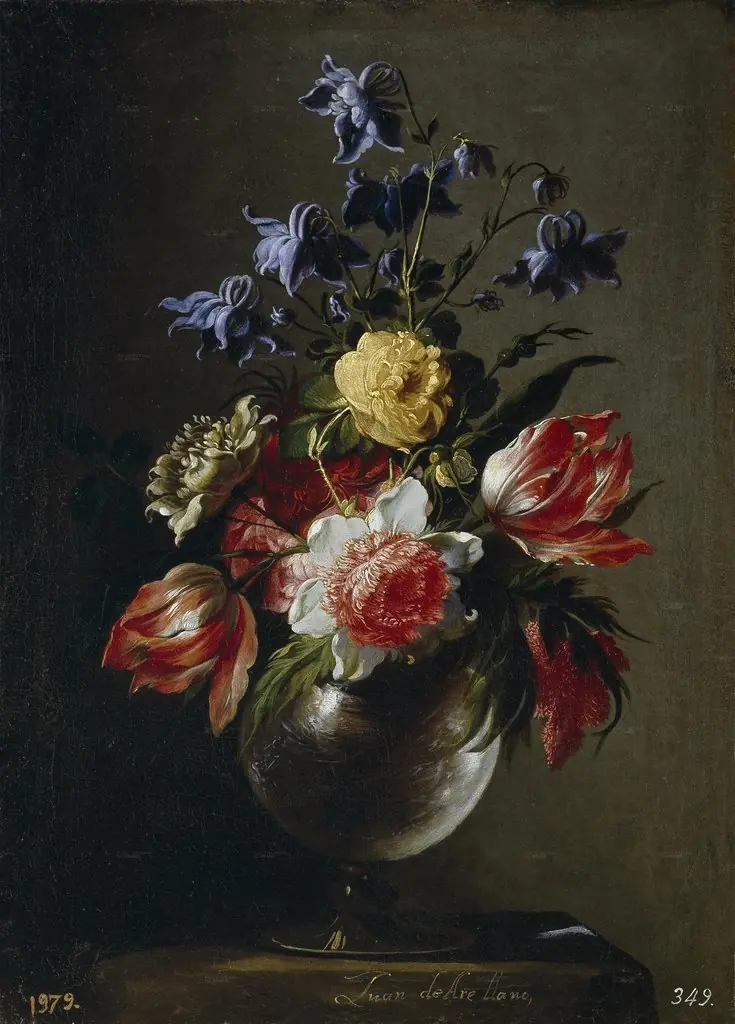
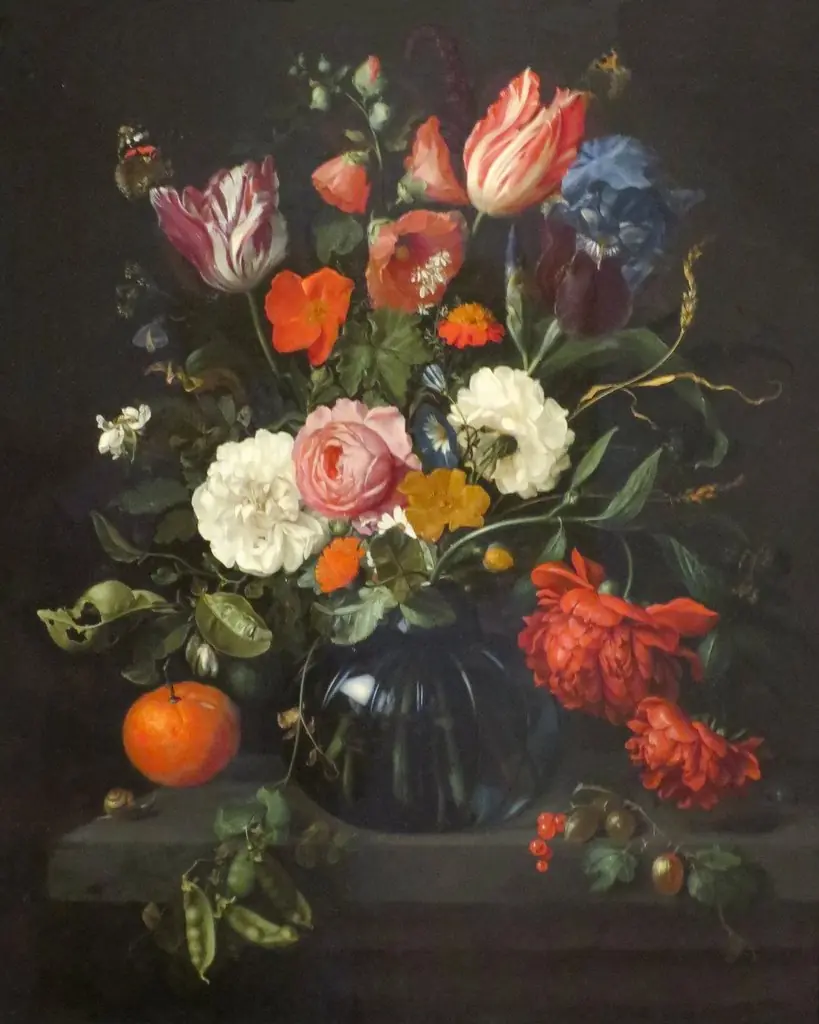
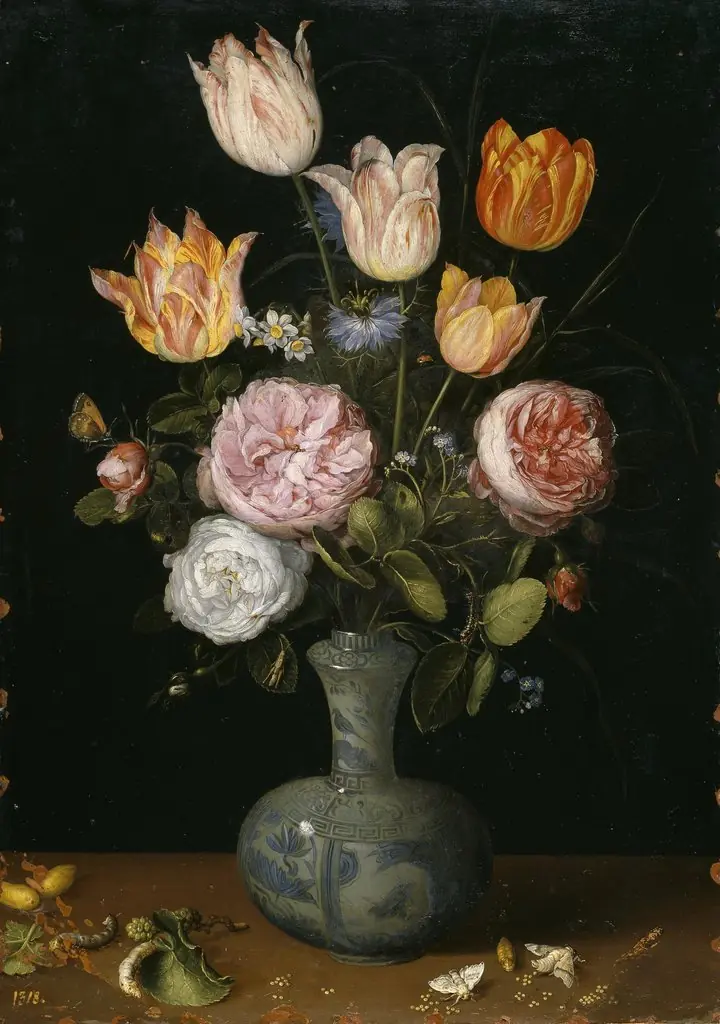
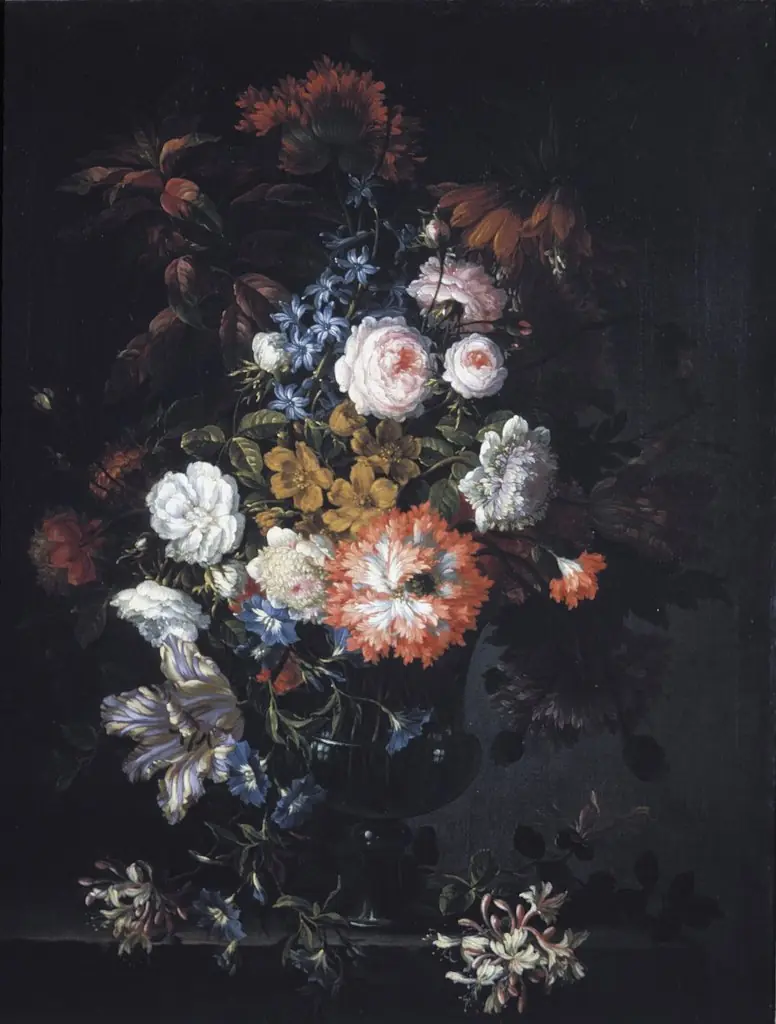
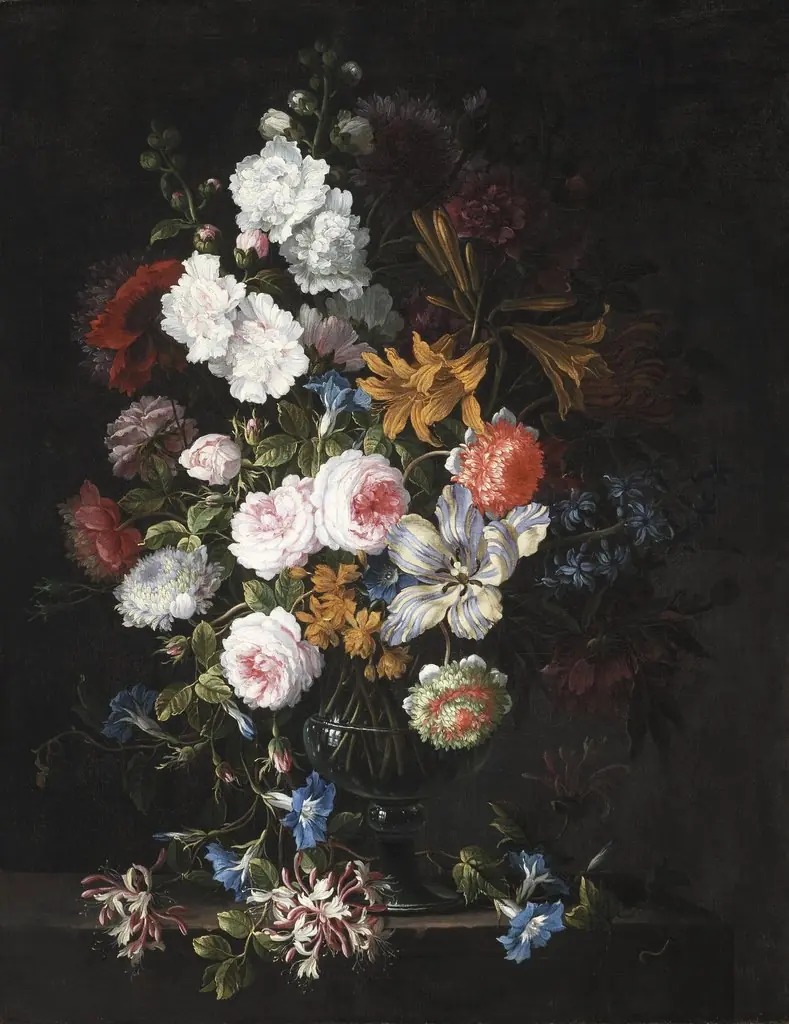
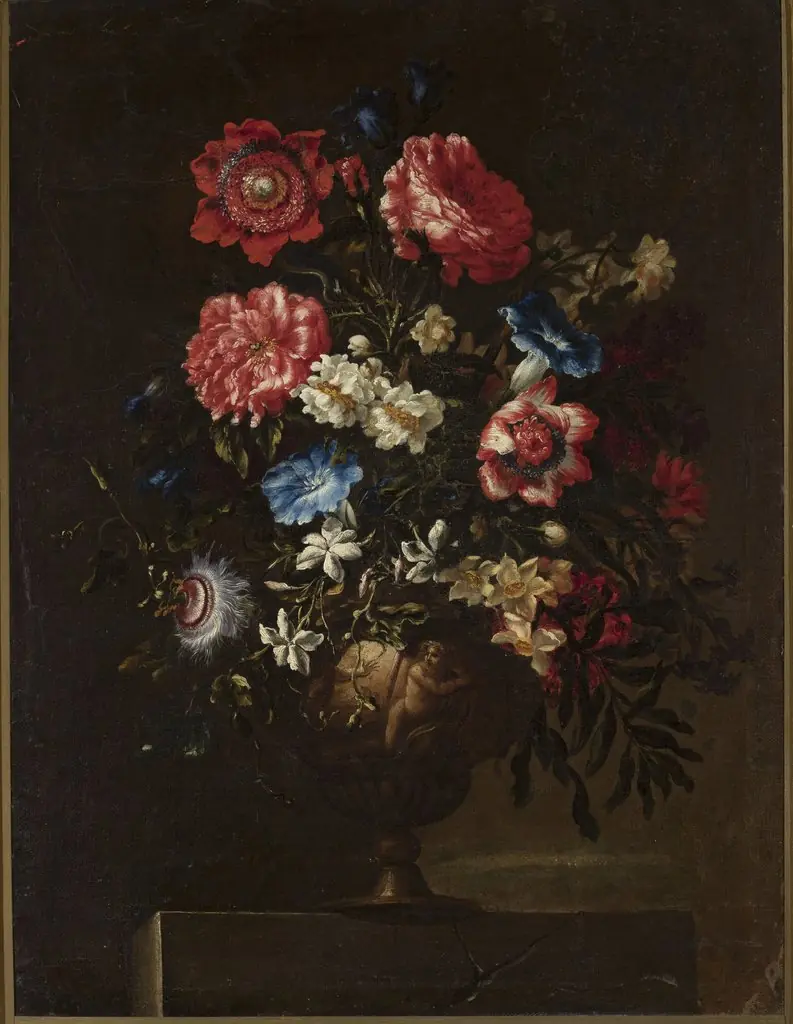
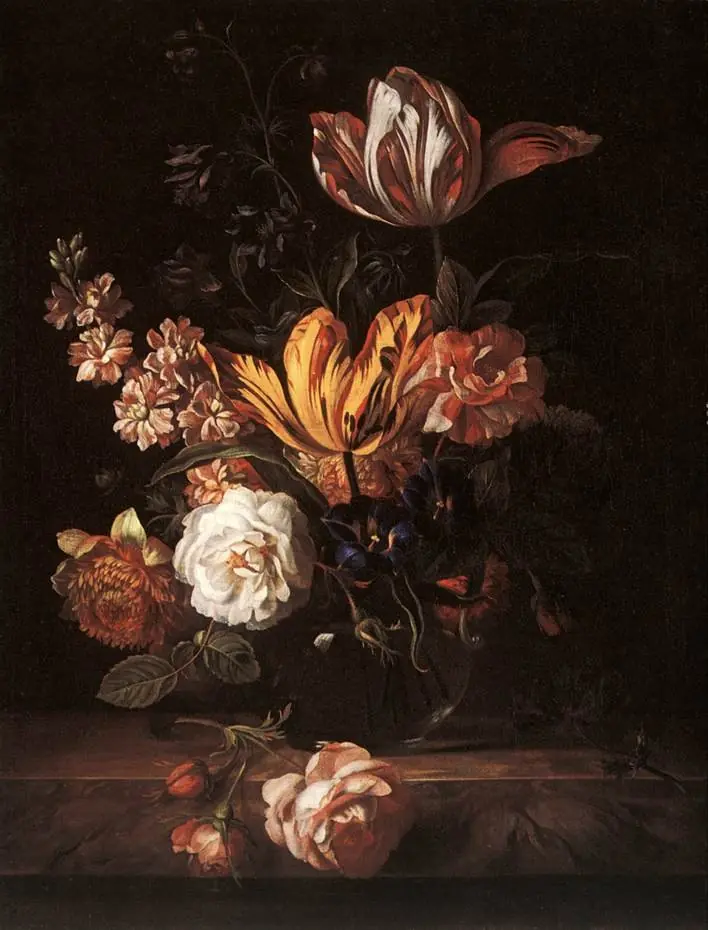
Bouquet of Flowers in a Figured Gold and Silver Vase is an oil painting by Unknown. It is held in the collection of the Detroit Institute of Arts. This oil painting depicts a richly decorated gold and silver vase brimming with a variety of blooming flowers.
About this work
Overview
Dark surroundings intensify the luminosity of the blooms and metallic surfaces, drawing attention to the interplay of texture and color.
This oil painting depicts a richly decorated gold and silver vase brimming with a variety of blooming flowers. The composition centers on the vessel’s elaborate surface, which features detailed engravings or embossing. Dark surroundings intensify the luminosity of the blooms and metallic surfaces, drawing attention to the interplay of texture and color. A small mouse on the right adds an unexpected, quiet detail to the scene.
Subject & Meaning
The arrangement of seasonal flowers in an ornate vessel reflects themes of transience and cultivated beauty, common in still-life traditions. The inclusion of a mouse, often a symbol of decay or humility, introduces a subtle counterpoint to the vase’s opulence. Together, the elements suggest a meditation on the fleeting nature of luxury and the quiet presence of the natural world within human-made splendor.
Technique & Style
The artist employs fine brushwork to render the reflective surfaces of the metal vase and the delicate petals of the flowers. Layered glazes create depth in the dark background, enhancing the luminosity of the foreground. The loose, naturalistic arrangement of the blooms contrasts with the rigid symmetry of the vase’s ornamentation, balancing organic vitality with crafted precision.
History & Provenance
The painting originates from the 17th-century Dutch tradition of still-life painting, where such compositions were valued for their technical mastery and symbolic depth. While specific ownership records are limited, its style aligns with works produced in the Netherlands during a period when detailed floral still lifes were highly sought after by private collectors.
Context
In the Dutch Golden Age, still-life paintings often served as displays of wealth, scientific curiosity, and moral reflection. The inclusion of rare flowers, imported porcelain, and precious metals reflected global trade networks. The mouse, a common motif in such works, reminded viewers of life’s impermanence, tempering the celebration of material beauty with contemplation of mortality.
Legacy
This painting contributes to a broader tradition of floral still lifes that influenced later European art. Its blend of naturalism and symbolic detail exemplifies how everyday subjects were elevated through careful observation and composition. Though not widely known today, it remains a representative example of the period’s dedication to capturing both beauty and its fragility.
Artist & collection

 Domestic Scene
 Giacomo and Cardinal Marco, investing Andrea, Abbot of San Zeno, with his Benefice
 The Nymph of Fontainebleau
 Portrait of a Woman
 Madonna and Child with Saints in the Enclosed Garden
 Venus and Minerva
 Family Group of Four on Sofa
 Wall painting from Room H of the Villa of P. Fannius Synistor at Boscoreale