Artwork
Entombment of Christ
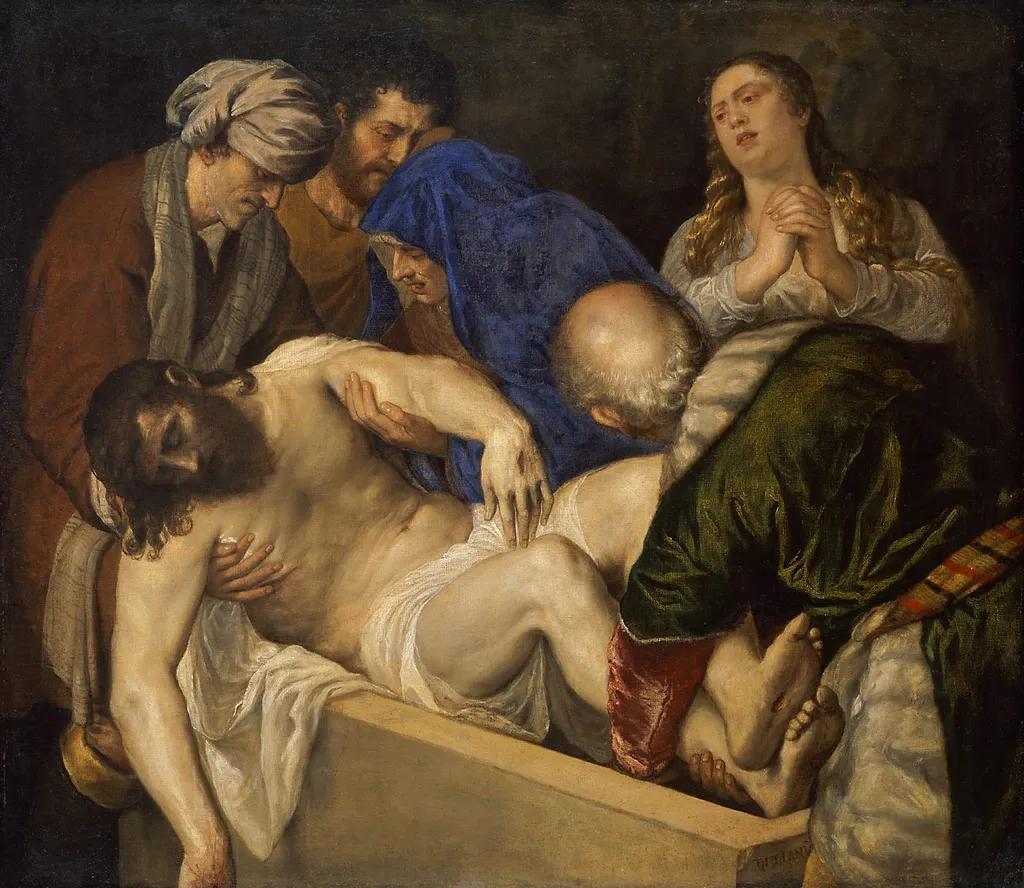
Entombment of Christ is an unspecified painting. It dates from 1550 and is held in the collection of the Kunsthistorisches Museum. The work depicts a solemn gathering around a lifeless, unclothed figure laid upon a stone slab.
About this work
Overview
Surrounding mourners, dressed in dark, richly textured garments, lean in or stand, their expressions conveying grief and concern.
The work depicts a solemn gathering around a lifeless, unclothed figure laid upon a stone slab. A small, vivid wound marks the side of the corpse, contrasting with the pallid flesh. Surrounding mourners, dressed in dark, richly textured garments, lean in or stand, their expressions conveying grief and concern. A kneeling woman reaches to touch the hand of the deceased, emphasizing the intimate sorrow of the scene.
Subject & Meaning
The composition centers on the moment of Christ’s entombment, emphasizing human response to death. The solitary wound serves as a visual reminder of the crucifixion’s physical suffering, while the varied gestures of the figures—leaning, standing, kneeling—illustrate communal mourning and reverence. The painting invites contemplation of sacrifice, loss, and the solemn duty of caretakers in the aftermath of the Passion.
Technique & Style
The artist employs a stark chiaroscuro, using deep shadows to envelop the background and illuminate the faces and the body’s wound. This contrast heightens the three-dimensionality of the figures and directs attention to emotional expressions. Rich, dark fabrics are rendered with careful brushwork, while the pale skin and the singular red spot of blood draw the viewer’s eye to the central narrative.
History & Provenance
The painting belongs to the tradition of Baroque religious works that focus on dramatic lighting and emotional intensity. Though specific details of its creation and ownership are not provided, its subject aligns with Counter‑Reformation commissions that sought to evoke piety through vivid, affective imagery.
Context
Set within a period when artists frequently explored biblical moments with heightened realism, the work reflects contemporary theological emphasis on Christ’s humanity and suffering. The use of luxurious clothing and somber tones situates the scene within a devotional framework intended for contemplation by viewers familiar with liturgical narratives.
Artist & collection
