Artwork
A prince conversing with a woman while taking refreshments on a terrace (recto); Calligraphy (verso)
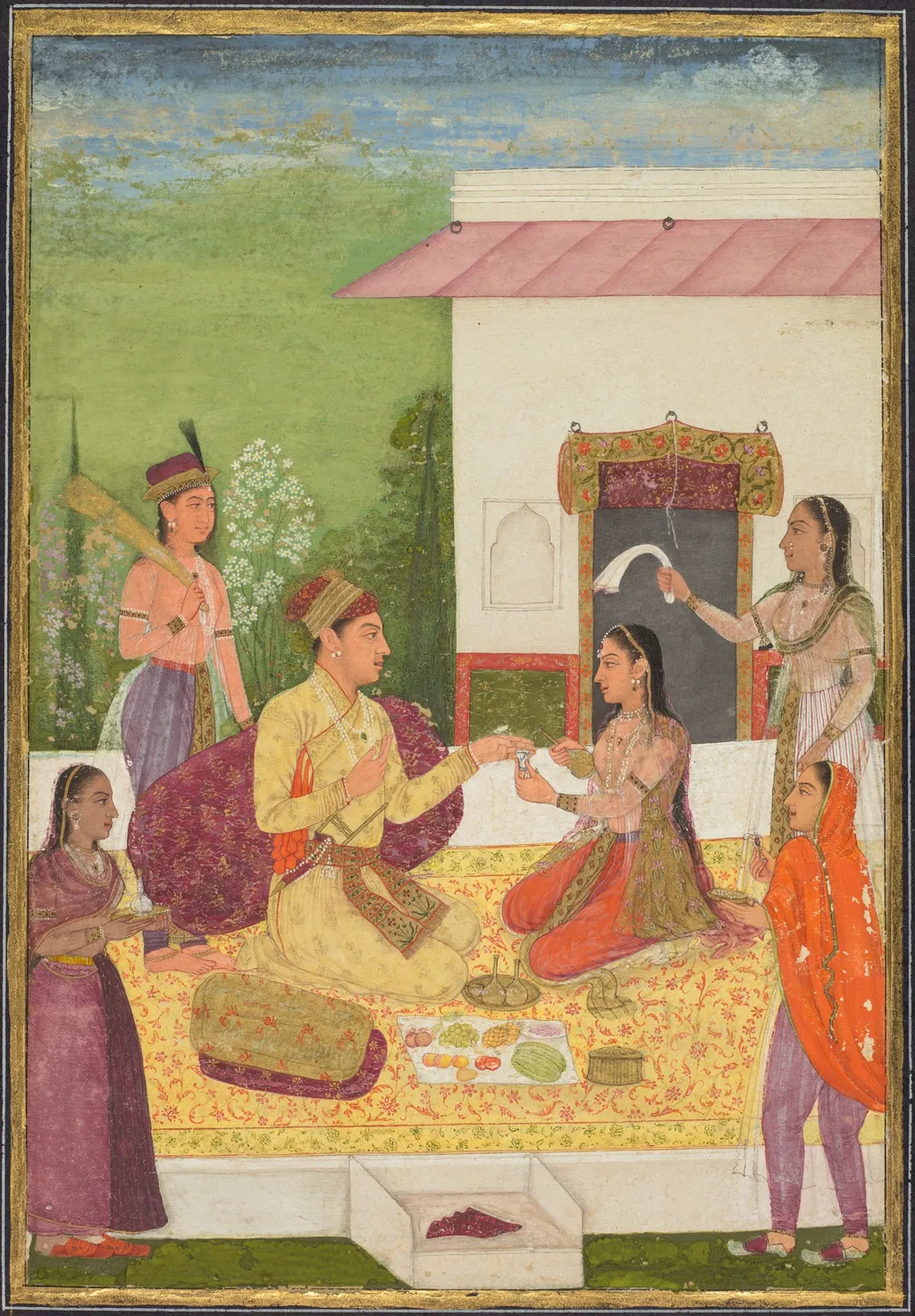
A prince conversing with a woman while taking refreshments on a terrace (recto); Calligraphy (verso) is an unspecified painting. It dates from 1715 and is held in the collection of the Cleveland Museum of Art. The work portrays a tranquil garden setting where a princely figure and a lady share a conversation on a terrace.
About this work
Overview
The work portrays a tranquil garden setting where a princely figure and a lady share a conversation on a terrace. The prince, attired in vivid yellow and red, sits cross‑legged upon a patterned blanket, while the woman opposite him wears an orange gown. Attendants attend the pair, one bearing a white cloth and another holding a large fan, contributing to the scene’s composed atmosphere.
Subject & Meaning
The composition suggests a moment of private discourse between royalty and a female companion, perhaps indicating diplomatic or courtly exchange. The inclusion of servants and the act of sharing refreshments underline themes of hospitality and refined leisure, while the warm, sun‑lit backdrop reinforces a sense of harmony and mutual respect within the courtly environment.
Technique & Style
Executed with a palette dominated by warm hues—yellows, reds, and oranges—the painting employs soft illumination that bathes the figures in a gentle glow. The brushwork delineates clothing and textiles with careful attention to pattern, while the background recedes through subtle tonal shifts, creating depth without disrupting the intimate focus on the central dialogue.
Context
Such depictions of princely leisure were common in courtly art of the period, reflecting the ideal of cultivated rulership. The presence of attendants and elaborate dress aligns with visual conventions that emphasized status and the ceremonial aspects of royal life, situating the scene within a broader tradition of aristocratic portraiture and genre scenes.
Legacy
While the painting’s authorship remains unidentified, its careful rendering of color and composition offers insight into the aesthetic preferences of its era. The work continues to serve as a reference for scholars studying representations of courtly interaction and the visual language of hospitality in pre‑modern Asian art.
Artist & collection