Artwork
Venus and Amor
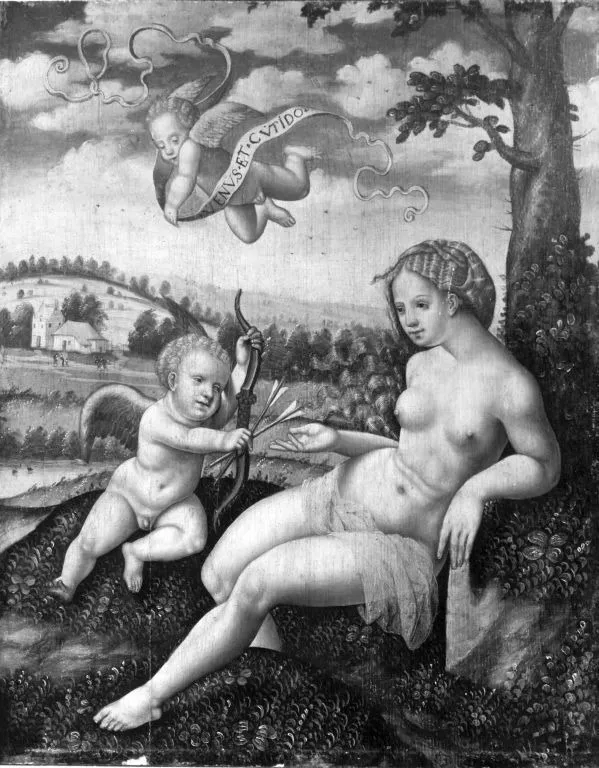
Venus and Amor is an oil painting. It dates from 1550 and is held in the collection of the Bavarian State Painting Collections.
About this work
Overview
Beside her kneels a plump, winged infant also bearing a bow, and above them a floating winged child holds a banner inscribed with the word "MUSETCVIDO.
The oil painting titled "Venus and Amor" depicts a serene, barefoot female figure reclining amid a carpet of foliage while clutching a bow. Beside her kneels a plump, winged infant also bearing a bow, and above them a floating winged child holds a banner inscribed with the word "MUSETCVIDO." The background recedes into a distant landscape of trees and structures, but the composition centers on the three figures.
Subject & Meaning
The central woman is identified as Venus, the classical goddess of love, portrayed in a relaxed pose that suggests contemplation or repose. The two winged children represent aspects of Cupid or Amor, each engaged with a bow, symbolizing the tools of desire. The banner’s cryptic inscription may allude to a personal motto or patron’s name, adding a layer of private significance to the otherwise mythological scene.
Technique & Style
The work employs chiaroscuro, using pronounced contrasts of light and shadow to model the bodies and give them a three‑dimensional presence. The illumination highlights the smooth skin of the figures and the delicate texture of the leaves, while deeper shadows recede into the background, creating depth and emphasizing the intimate grouping of the characters.
Context
Rendered in oil, the painting aligns with a tradition of mythological subjects popular in European art, where allegorical representations of love and desire were common. The inclusion of a personalized banner suggests the piece may have been commissioned for a specific patron, integrating classical iconography with individualized reference.
Artist & collection
