Artwork
Chinese Literatus Viewing a Valley
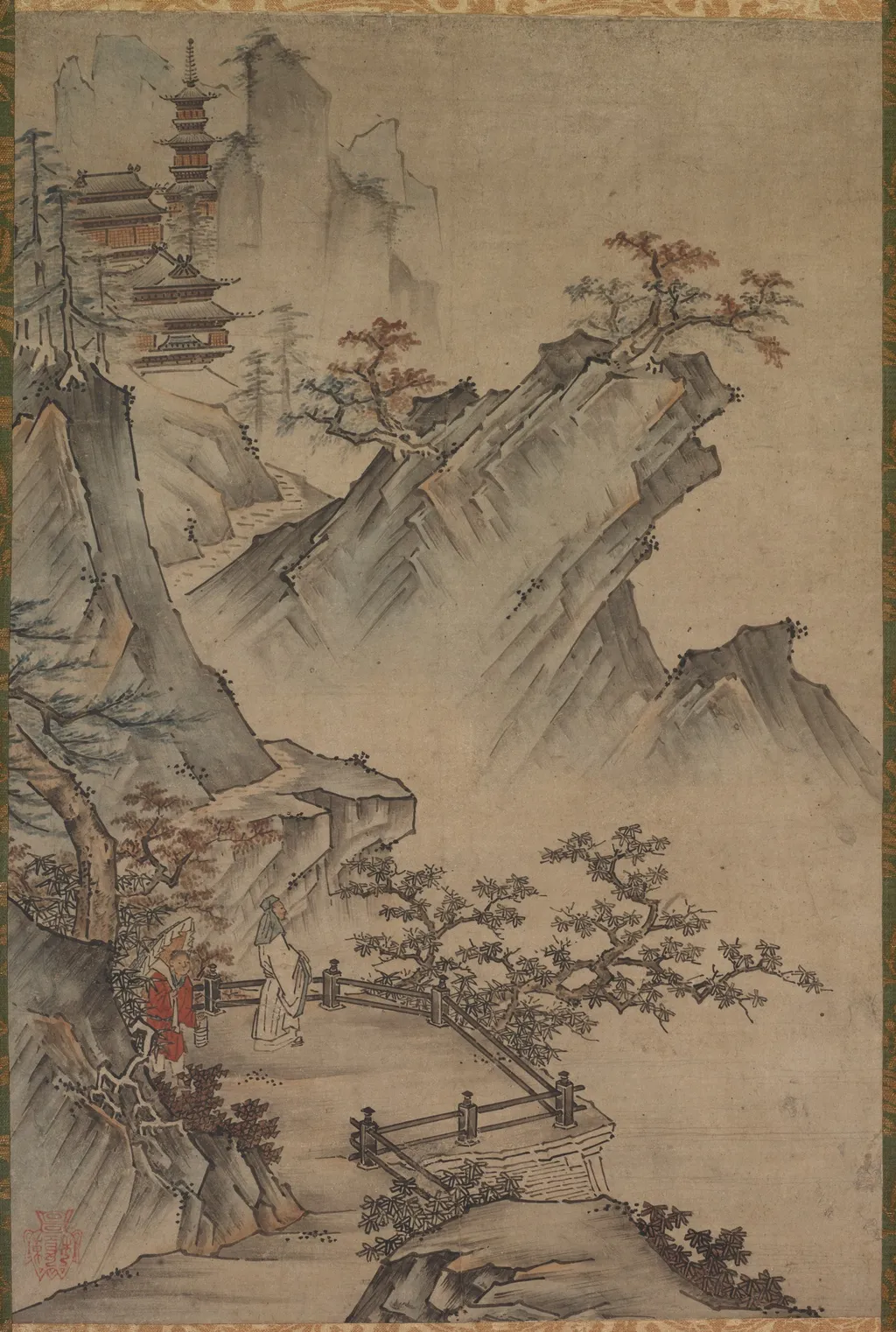
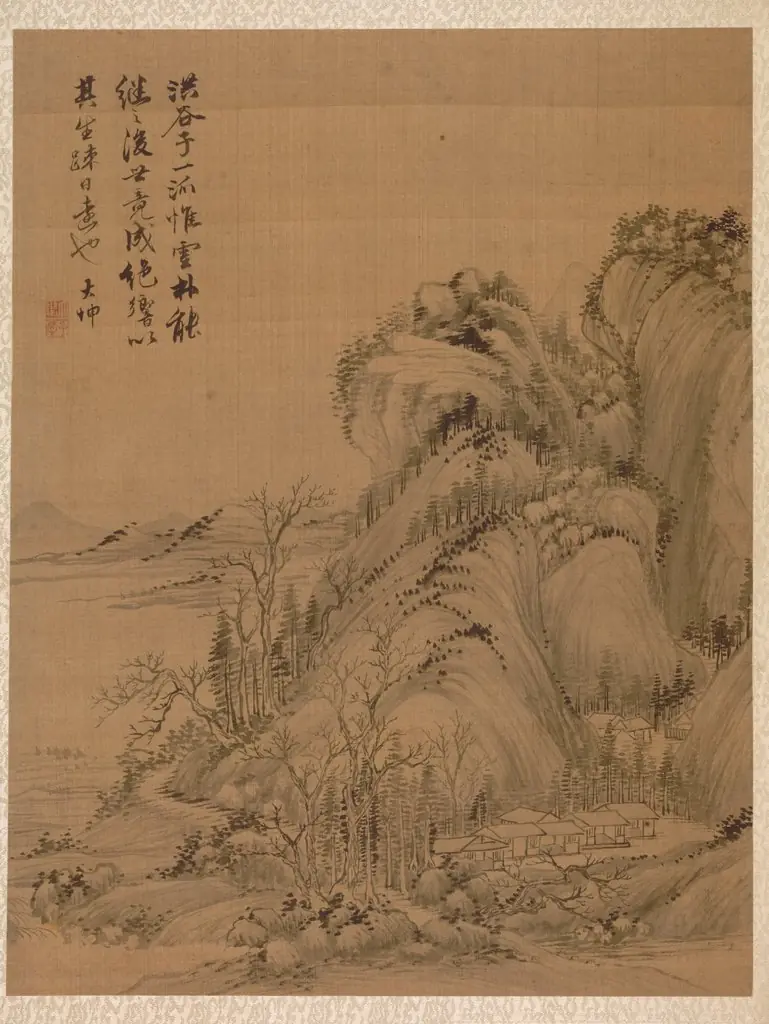
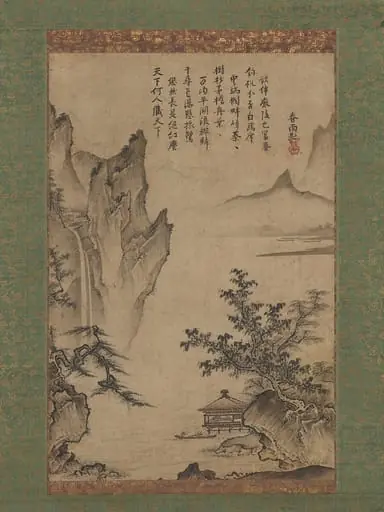
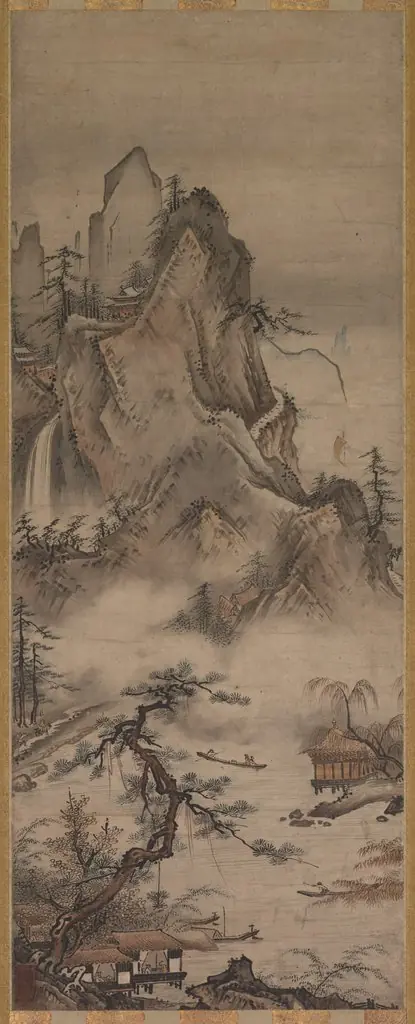
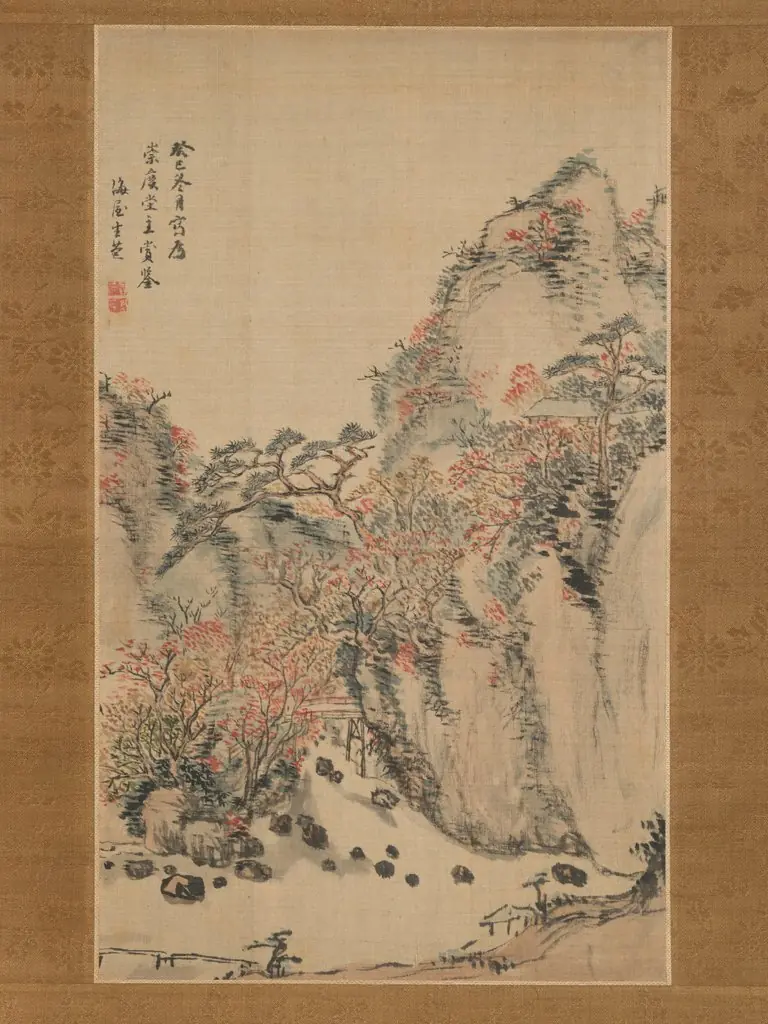
Chinese Literatus Viewing a Valley is an unspecified painting. It dates from 1612 and is held in the collection of the Cleveland Museum of Art. The work depicts a precipitous mountain landscape dominated by a towering, multi‑storey pagoda set on the left side.
About this work
Overview
A narrow path near the summit supports two figures—one clothed in red, the other in white—who gaze outward across a curving bridge that spans a deep valley.
The work depicts a precipitous mountain landscape dominated by a towering, multi‑storey pagoda set on the left side. A narrow path near the summit supports two figures—one clothed in red, the other in white—who gaze outward across a curving bridge that spans a deep valley. Sparse, leafless trees punctuate the rocky cliffs, creating a composition that balances human presence with vast natural space.
Subject & Meaning
The two travelers, positioned on the high path, suggest a scholarly or contemplative journey, a common motif in literati painting where the act of viewing a distant valley symbolizes intellectual reflection. The contrasting robes may denote differing roles or statuses, while the bridge below serves as a visual conduit linking the earthly realm with the expansive scenery beyond, inviting viewers to consider the relationship between humanity and nature.
Technique & Style
Executed with swift, expressive brushwork, the painting employs a light, airy handling that emphasizes atmospheric depth. Subtle chiaroscuro—deliberate contrasts of light and shadow—renders the mountain’s volume and the pagoda’s architecture, while the loose strokes convey movement and the fleeting quality of the landscape. The overall style aligns with the literati tradition’s preference for spontaneity over meticulous detail.
Context
Created within the Chinese literati tradition, the piece reflects the scholarly class’s interest in integrating poetry, calligraphy, and painting to convey personal sentiment. The inclusion of a pagoda—a symbol of Buddhist learning—alongside solitary figures underscores the era’s synthesis of religious, philosophical, and aesthetic concerns, situating the work within a broader cultural dialogue about nature, knowledge, and the self.
Artist & collection