Artwork
Babur meeting with Sultan Ali Mirza at the Kohik River, from a Babur-nama (Memoirs of Babur)
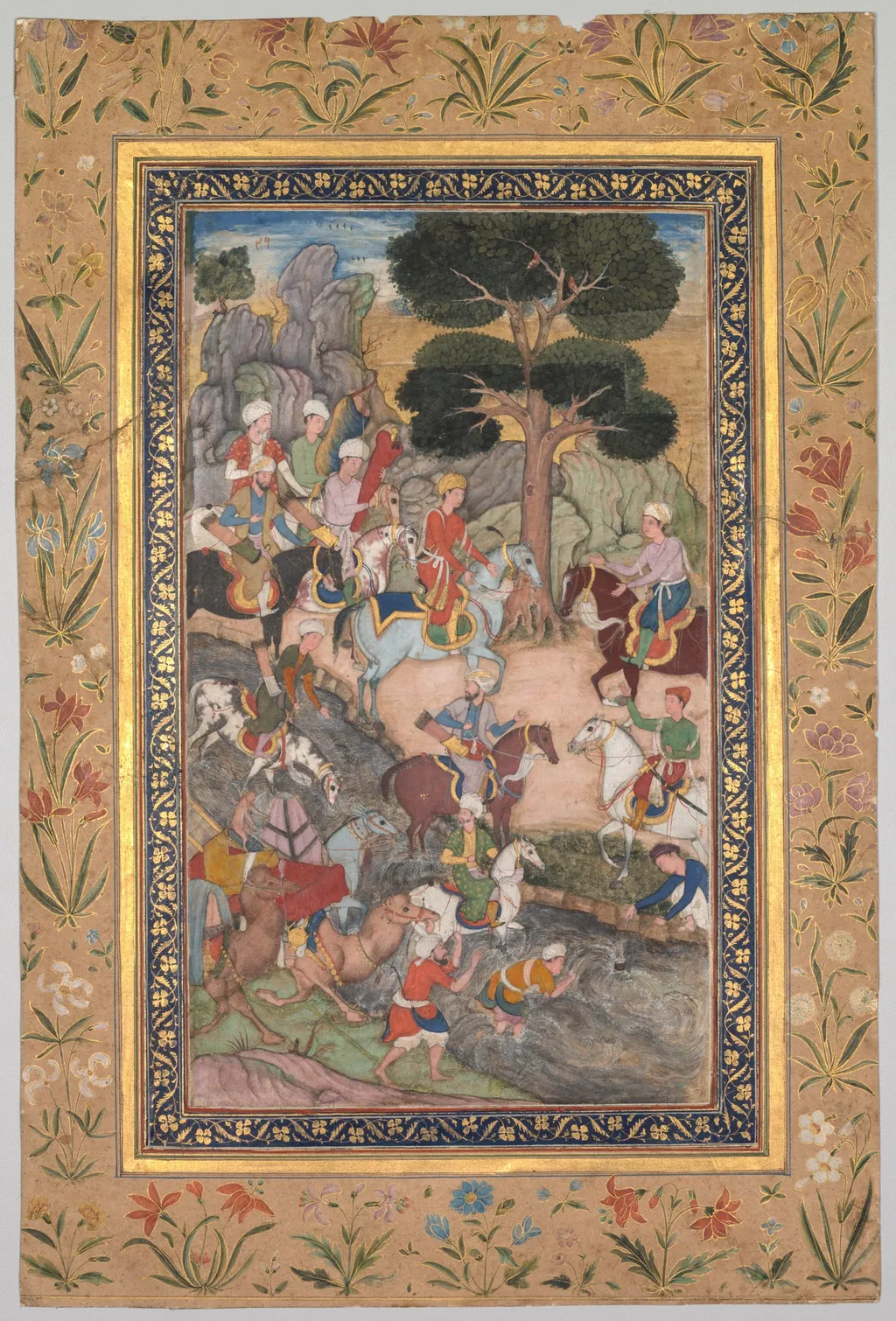
Babur meeting with Sultan Ali Mirza at the Kohik River, from a Babur-nama (Memoirs of Babur) is an unspecified painting. It dates from 1596 and is held in the collection of the Cleveland Museum of Art. The work depicts a lively riverbank encounter, with numerous horsemen gathered along the water’s edge.
About this work
Overview
The work depicts a lively riverbank encounter, with numerous horsemen gathered along the water’s edge. Figures in vivid attire mingle with more modestly dressed riders, while a few onlookers stand near the shore. The composition is framed by ornamental borders rendered in gold, blue and red, adding a decorative finish to the scene.
Subject & Meaning
The painting illustrates a historic meeting between Babur, the founder of the Mughal Empire, and Sultan Ali Mirza at the Kohik River. The gathering of mounted courtiers and the informal interaction suggest a diplomatic or celebratory occasion, emphasizing the importance of personal alliances in early‑sixteenth‑century Central Asian politics.
Technique & Style
Executed in a miniature‑painting tradition, the piece employs bright pigments—particularly reds, greens and blues—to achieve a dynamic visual impact. Fine brushwork renders the horses’ splashing hooves and the intricate patterns of the border, while the shallow perspective creates a sense of depth across the river landscape.
History & Provenance
The image originates from a illustrated copy of the Babur‑nama, the memoirs of Babur, which were widely copied in Persianate courts. The specific manuscript’s ownership trail is not fully documented, but such illustrations were typically produced for royal patrons or scholarly collections.
Context
Illustrations in the Babur‑nama served both as visual records of the emperor’s campaigns and as didactic tools, reinforcing his legitimacy and the cultural sophistication of his court. The scene reflects the broader artistic milieu of the early Mughal period, where Persian miniature conventions merged with local Central Asian motifs.
Artist & collection
