Artwork
The Lovelorn Heroine, from a Sat Sai of Bihari
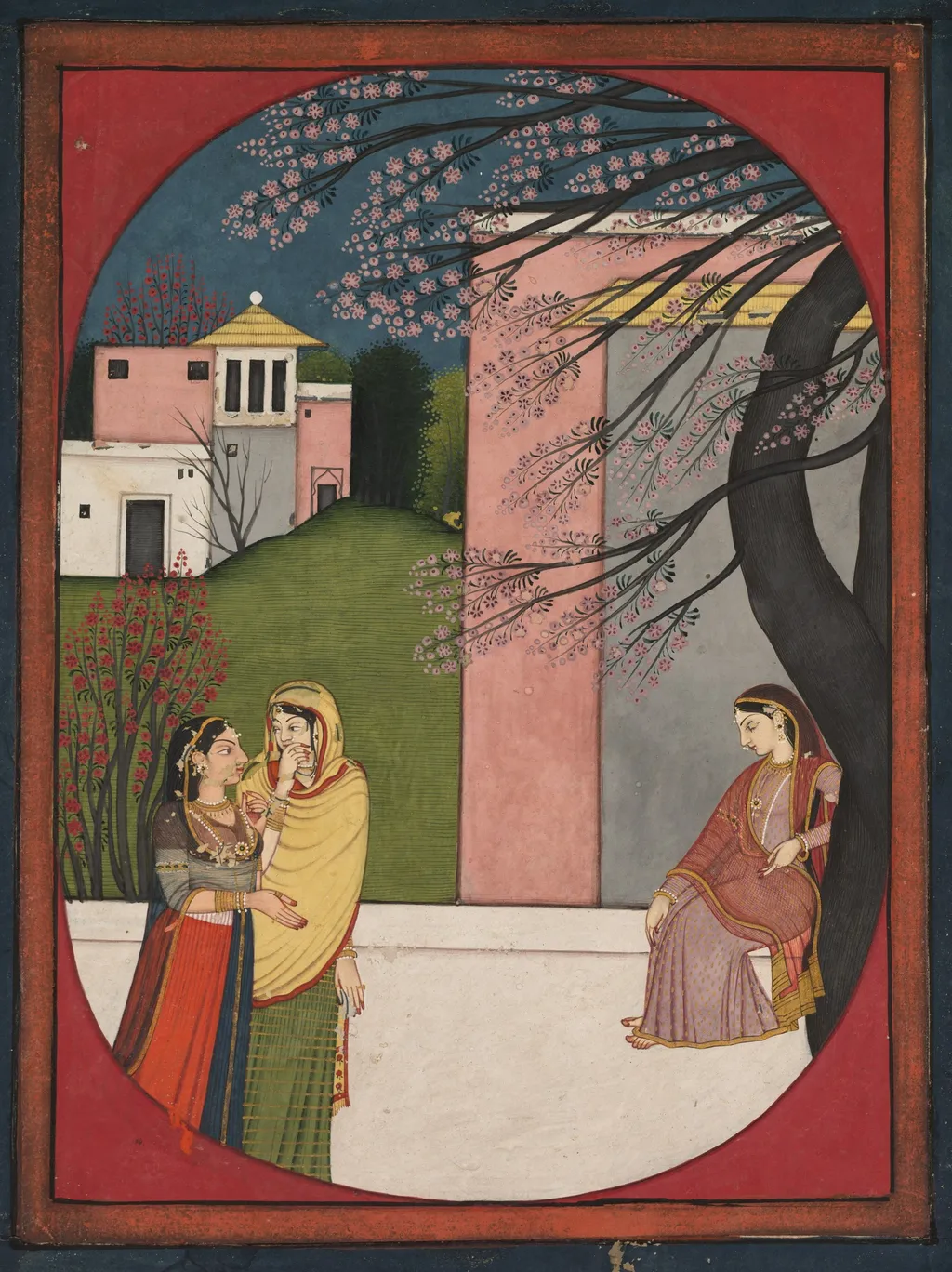
The Lovelorn Heroine, from a Sat Sai of Bihari is an unspecified painting. It dates from 1793 and is held in the collection of the Cleveland Museum of Art.
About this work
Overview
The work, titled “The Lovelorn Heroine, from a Sat Sai of Bihari,” depicts a garden scene with two women framed by foliage.
The work, titled “The Lovelorn Heroine, from a Sat Sai of Bihari,” depicts a garden scene with two women framed by foliage. One figure stands beside a plain white wall, wearing a yellow headscarf and a green skirt patterned with red stripes, while the other is seated on a ledge in a red‑gold costume, holding a fan. A pink domed building rises behind them on a verdant hill, with cherry blossoms visible in the distance.
Subject & Meaning
The composition presents a narrative moment, likely drawn from the Bihari literary source indicated in the title. The juxtaposition of the standing and seated figures, their elaborate dress and the serene garden setting suggest themes of longing and romantic contemplation, common in courtly love stories of the region. The surrounding blossoms and architecture reinforce a sense of idealized beauty and emotional distance.
Technique & Style
Executed in a bright yet restrained palette, the painting balances vivid reds, greens, and soft blues with delicate gold detailing on the garments. Fine brushwork renders intricate embroidery and jewelry, while the surrounding branches function as a natural frame, creating a window‑like effect. The overall style blends decorative richness with a calm compositional harmony, characteristic of traditional Indian miniature influences adapted to a larger format.
Context
The piece belongs to a series illustrating scenes from the “Sat Sai of Bihari,” a literary work that celebrates romantic heroism. Its visual language reflects the 19th‑century Indian court aesthetic, where narrative painting served both decorative and didactic purposes. The inclusion of architectural elements such as the pink domed structure situates the scene within an imagined, idealized landscape rather than a specific locale.
Legacy
While the painting is part of a broader collection of works that explore similar themes, its detailed portrayal of costume and setting provides valuable insight into period fashion and garden design. The work continues to be referenced in comparative studies of South Asian narrative art, illustrating how visual storytelling conveyed literary motifs across media.
Artist & collection