Artwork
Portrait of Sigismund Augustus (1520–1572), King of Poland
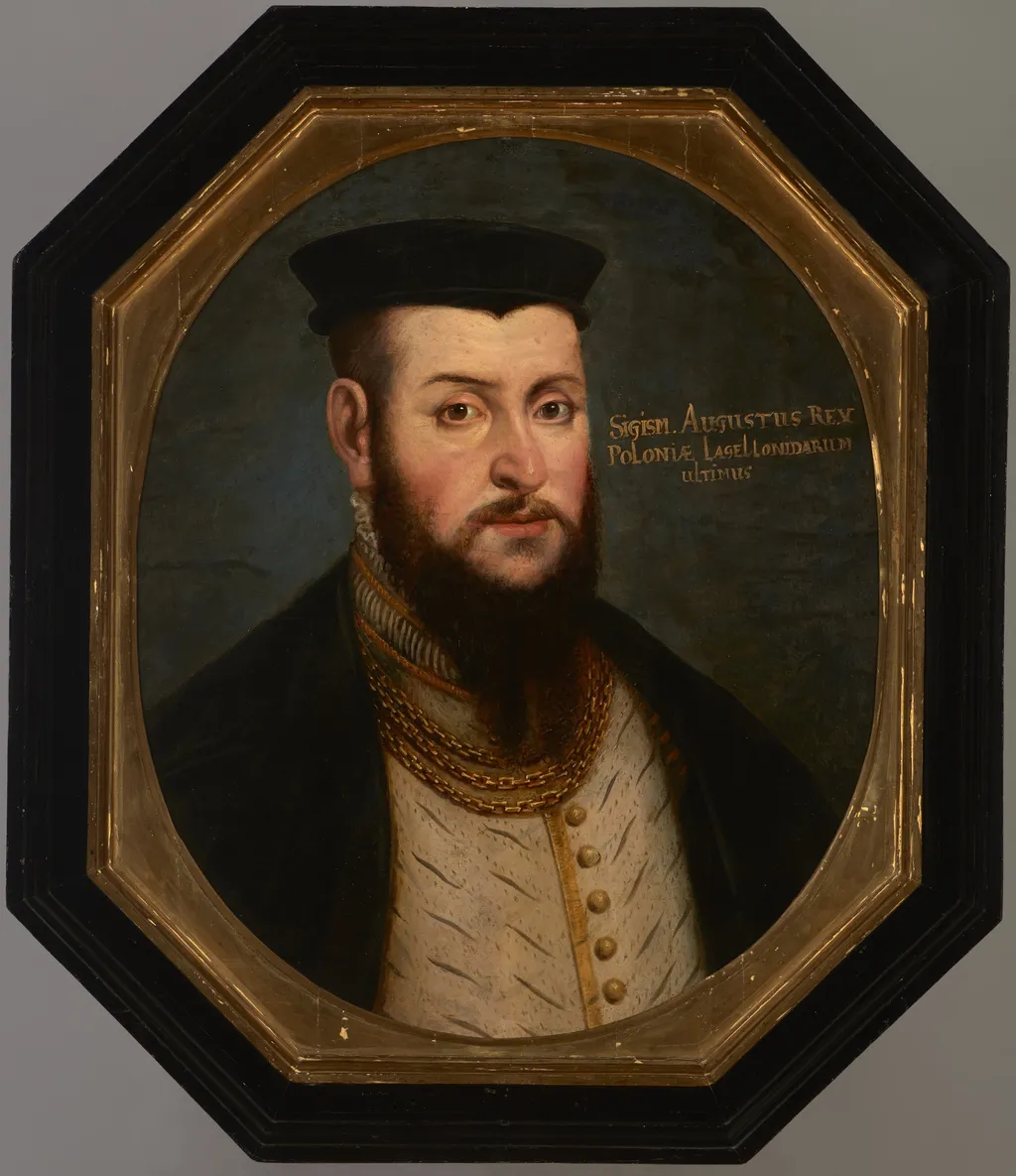
Portrait of Sigismund Augustus (1520–1572), King of Poland is an oil painting by the Flemish Baroque painting artist Unknown. It dates from 1650 and is held in the collection of the National Museum in Kraków. This oil painting depicts Sigismund Augustus, King of Poland, rendered in a restrained, formal style.
About this work
Overview
The subject is shown in three-quarter view against a dark, unadorned background, emphasizing his presence without distraction.
This oil painting depicts Sigismund Augustus, King of Poland, rendered in a restrained, formal style. The subject is shown in three-quarter view against a dark, unadorned background, emphasizing his presence without distraction. His attire and accessories signal his royal status, while the lighting focuses attention on his face and upper body. The Latin inscription on the gold frame confirms his identity and title, anchoring the portrait in its political context.
Subject & Meaning
Sigismund Augustus is portrayed with solemn dignity, his trimmed beard and direct gaze conveying authority and composure. The high-collared jacket with gold buttons and the chain around his neck are symbols of royal rank, not personal ornamentation. The absence of regalia like crowns or scepters suggests a preference for understated power. The portrait functions as a statement of legitimacy, intended for public or diplomatic circulation rather than private devotion.
Technique & Style
The artist employs chiaroscuro to model the king’s face and clothing, using subtle gradations of light and shadow to create volume and depth. The dark background enhances the three-dimensionality of the figure, while the texture of fabric and metal is rendered with precision. Brushwork is controlled and smooth, avoiding dramatic flourishes. The composition is tightly framed, focusing solely on the sitter’s upper torso and head, reinforcing the portrait’s formal intent.
History & Provenance
The painting likely originated in the mid-16th century, commissioned during Sigismund Augustus’s reign as part of a broader effort to visually assert royal authority. It may have been created by a court artist, possibly from the Polish-Lithuanian court or a foreign painter working in the region. The original context of display is uncertain, but its preservation with the original Latin-inscribed frame suggests it was valued as an official likeness from an early date.
Context
During Sigismund Augustus’s rule, Poland-Lithuania was a major European power navigating religious upheaval and dynastic alliances. Portraiture served as a tool of statecraft, reinforcing legitimacy amid political complexity. Unlike Italian Renaissance portraits, which often included elaborate settings, this work reflects a Northern European preference for austerity and psychological presence. The emphasis on clothing and facial expression aligns with contemporary trends in Habsburg and Polish court imagery.
Legacy
The portrait remains a key visual record of one of Poland’s most significant monarchs. Its restrained aesthetic influenced later depictions of Polish royalty, favoring dignity over spectacle. While not widely reproduced in its time, its survival and continued display in institutional collections attest to its historical importance as a document of early modern kingship and the visual culture of the Polish-Lithuanian Commonwealth.
Artist & collection

 Domestic Scene
 Giacomo and Cardinal Marco, investing Andrea, Abbot of San Zeno, with his Benefice
 The Nymph of Fontainebleau
 Portrait of a Woman
 Madonna and Child with Saints in the Enclosed Garden
 Venus and Minerva
 Family Group of Four on Sofa
 Wall painting from Room H of the Villa of P. Fannius Synistor at Boscoreale
 Portrait of Jan Demetriusz Solikowski
 Portrait of a Man in a Cape
 Portrait of Joachim II, Elector of Brandenburg
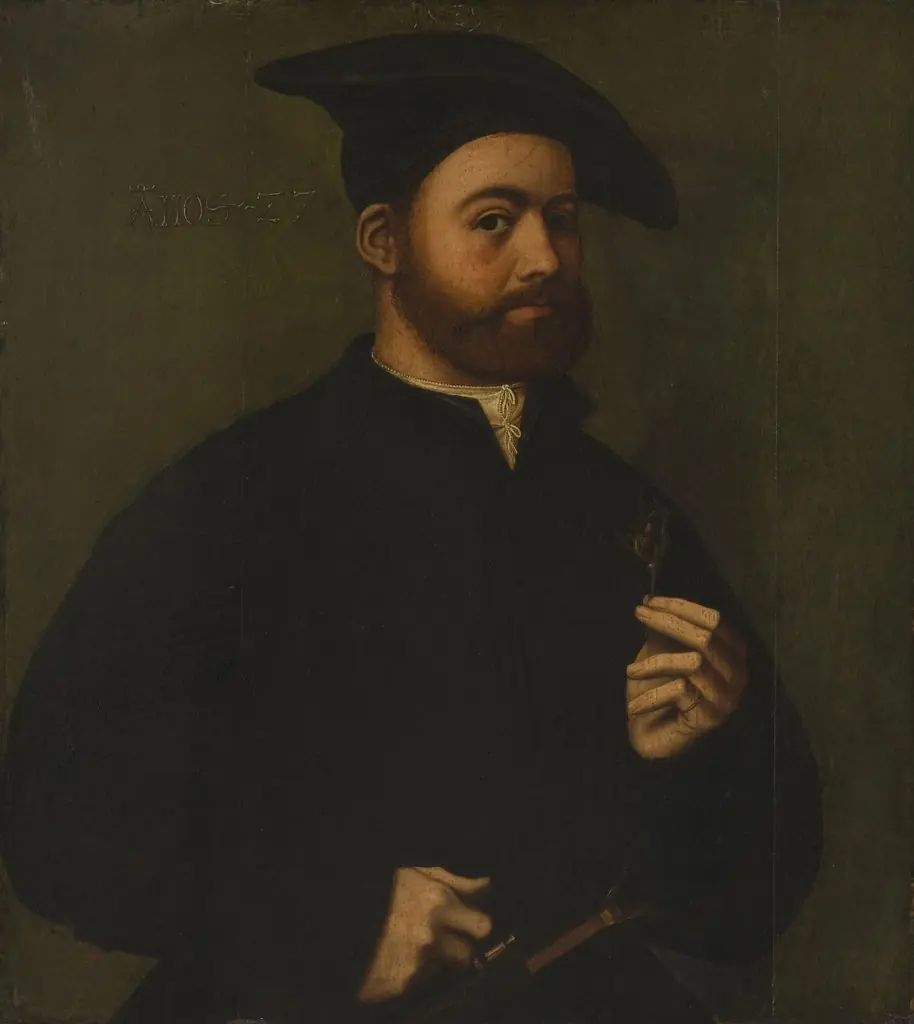 Portrait of a Man Holding a Rose
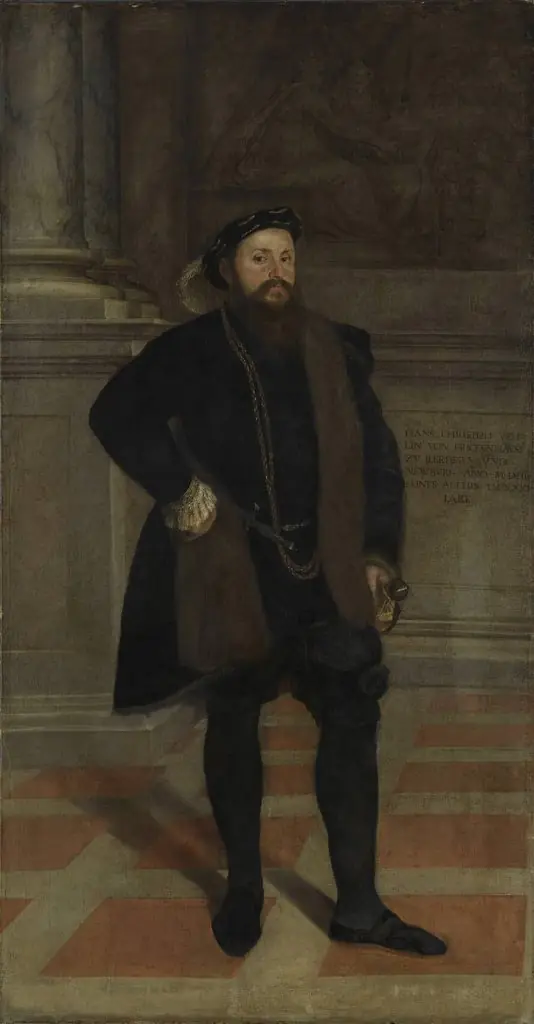 Hans Christoph I. Vöhlin von Frickenhausen (1522-1576)
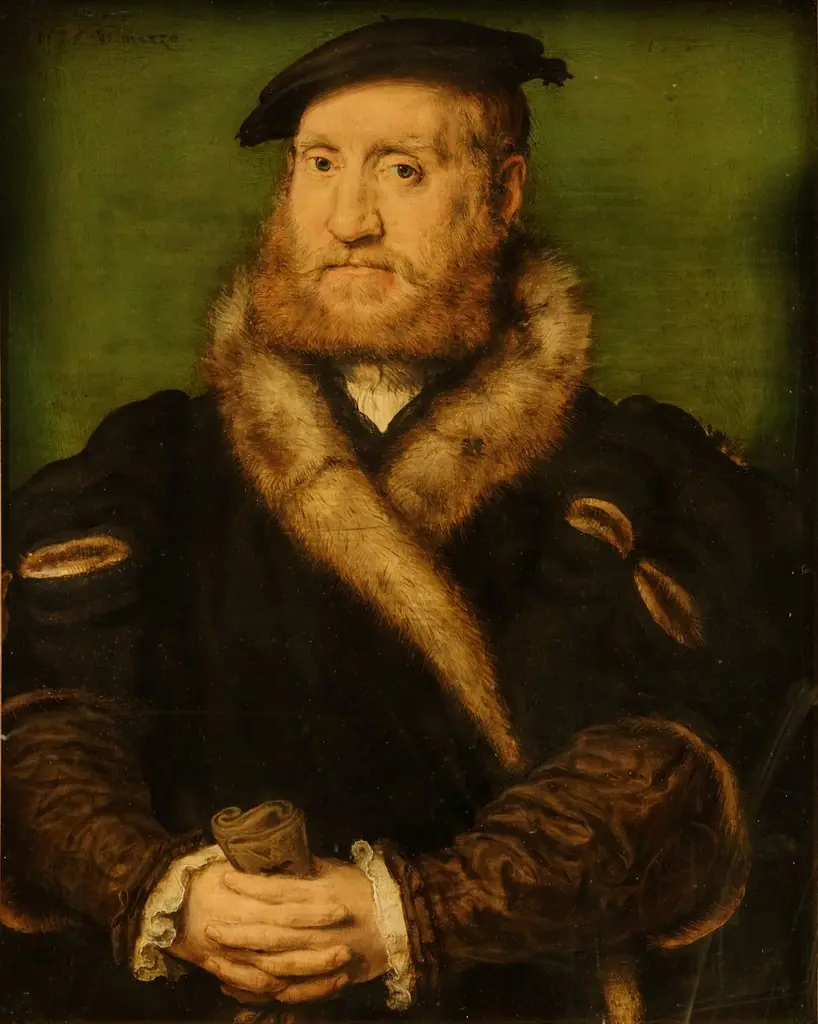 Bearded Man in a Fur Coat
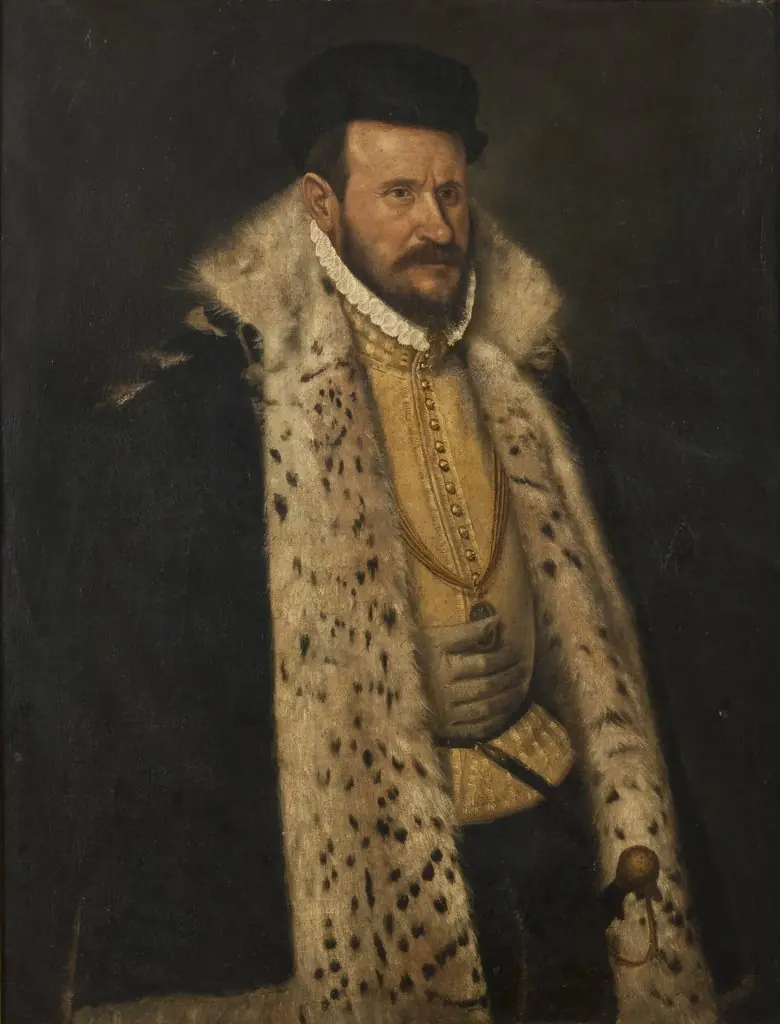 Portrait of a Man in a Furlined Coat
 Sir William Butts
 Male Portrait
 Portretul lui Nicholas Throckmorton