Artwork
The Old Infirmary, Derby
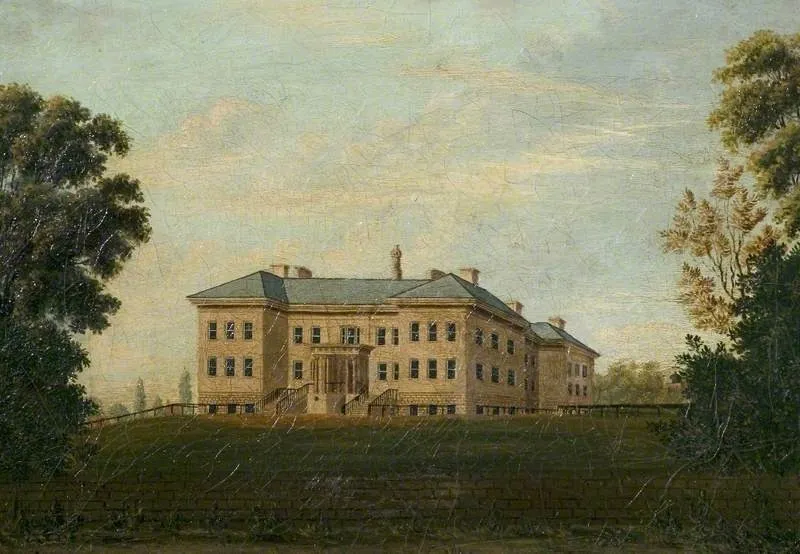
The Old Infirmary, Derby is an oil painting by the Realist artist Unknown. It dates from 1843 and is held in the collection of the Derby Museum and Art Gallery.
About this work
Overview
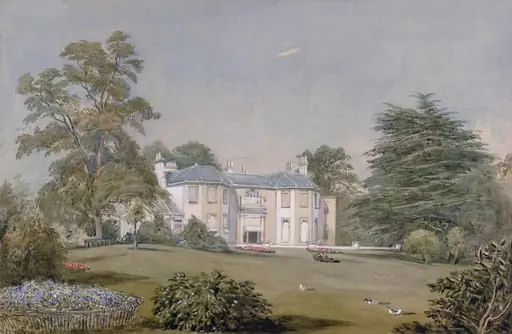
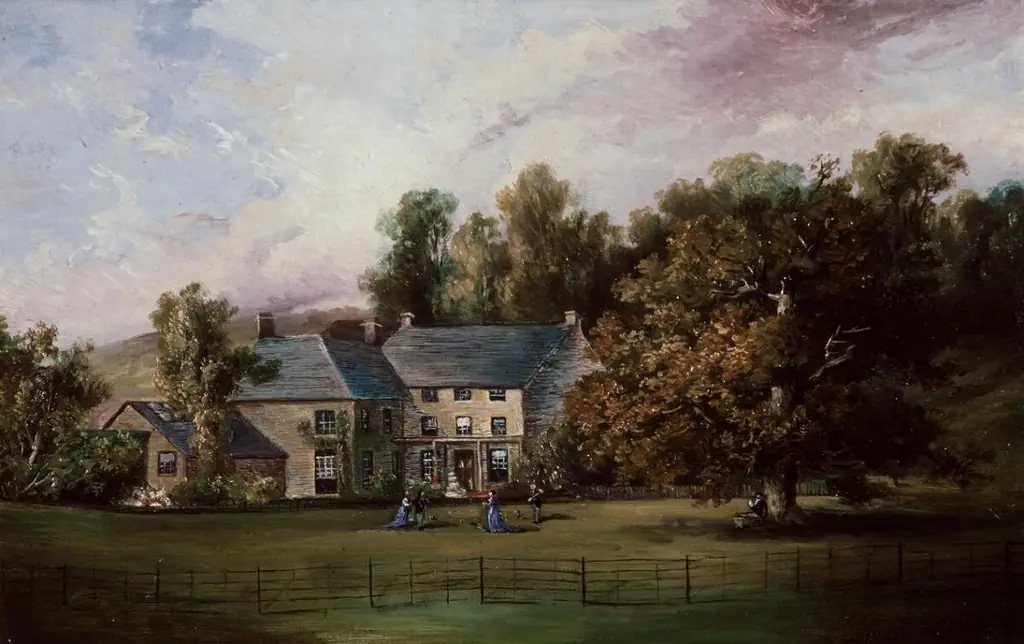
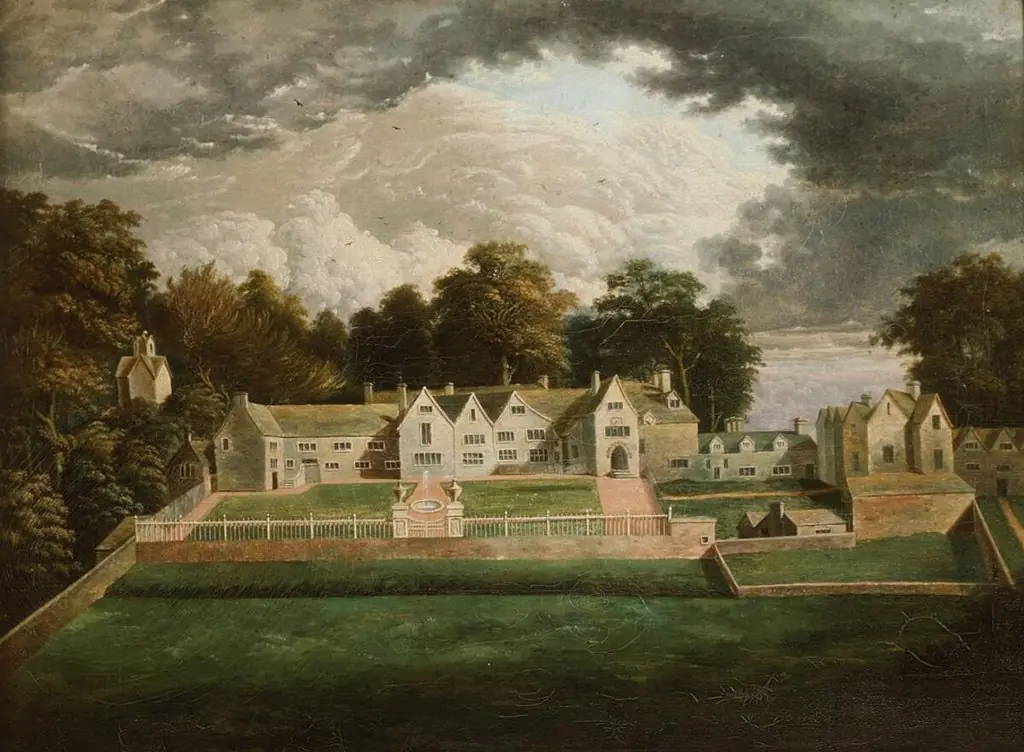
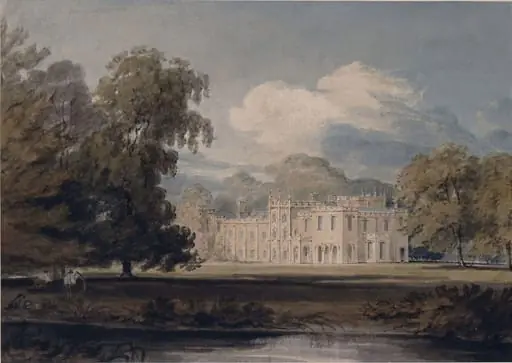
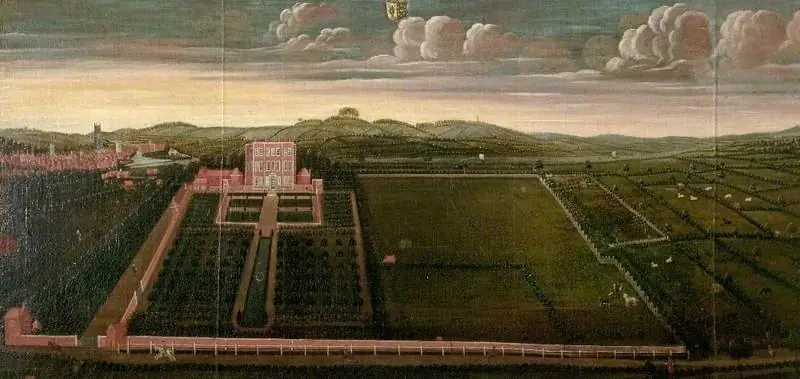
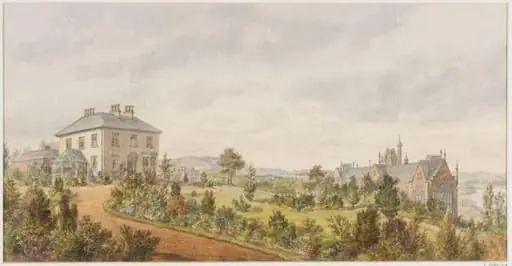
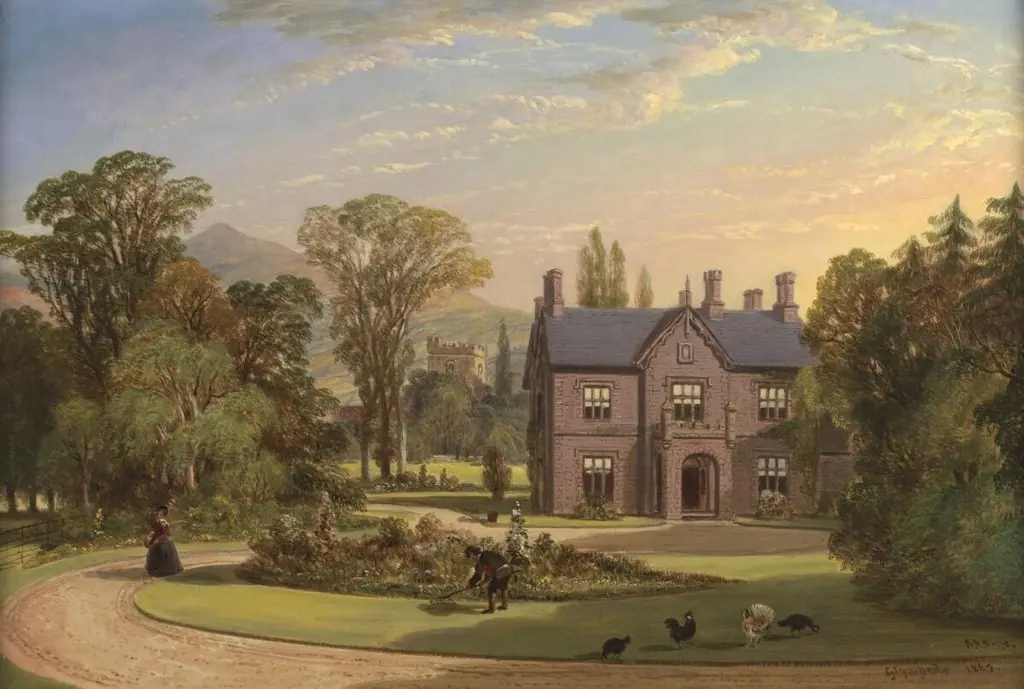
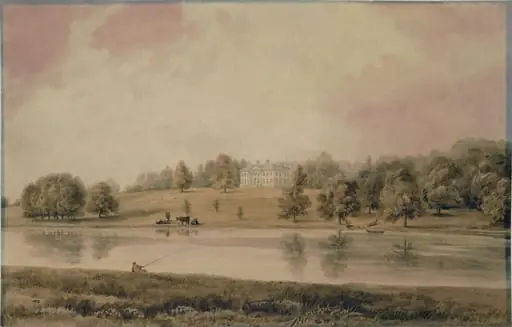
The Old Infirmary, Derby is an oil painting portraying a substantial stone building with a slate roof and prominent chimneys.
The Old Infirmary, Derby is an oil painting portraying a substantial stone building with a slate roof and prominent chimneys. Set within a quiet landscape of trees and open grass, the structure is framed by a low fence and a soft, cloud-dappled sky. Rendered in a realistic manner, the work emphasizes tactile surfaces—rough masonry, leafy foliage, and weathered wood—without overt dramatization or idealization.
Subject & Meaning
The subject is a former infirmary in Derby, a functional civic building that once served medical needs. Its depiction without human figures or narrative action suggests a quiet contemplation of institutional architecture. The painting invites attention to the building’s endurance and integration into its natural surroundings, reflecting a modest reverence for utilitarian structures of the past.
Technique & Style
The artist employs oil paint with careful attention to surface texture and light modulation. Stone walls are rendered with subtle variations in tone to suggest depth and weathering, while foliage is built up in layered brushwork. The lighting is even and naturalistic, avoiding strong contrasts; the effect is one of quiet observation rather than theatrical emphasis.
History & Provenance
The painting records a specific building in Derby, likely constructed in the 18th or early 19th century. Its preservation in paint indicates local interest in documenting civic architecture. While the artist’s identity and exact date of creation are not specified in available records, the work aligns with regional traditions of topographical painting common in provincial England during the 1800s.
Context
During the period this painting was made, there was growing interest in recording the built environment as urban and institutional landscapes changed. The infirmary, once a center of community care, was being reimagined or replaced in many towns. This painting captures the structure before major modernization, preserving its appearance as part of a broader cultural effort to document vernacular architecture.
Legacy
The painting contributes to a quiet archive of regional architectural history. Though not widely exhibited beyond local collections, it remains a valuable record of a building’s form and setting. Its restrained realism offers insight into how ordinary structures were perceived and valued by contemporaries, separate from grander artistic narratives.
Artist & collection

 Domestic Scene
 Giacomo and Cardinal Marco, investing Andrea, Abbot of San Zeno, with his Benefice
 The Nymph of Fontainebleau
 Portrait of a Woman
 Madonna and Child with Saints in the Enclosed Garden
 Venus and Minerva
 Family Group of Four on Sofa
 Wall painting from Room H of the Villa of P. Fannius Synistor at Boscoreale