Artwork
Madonna and Child Enthroned
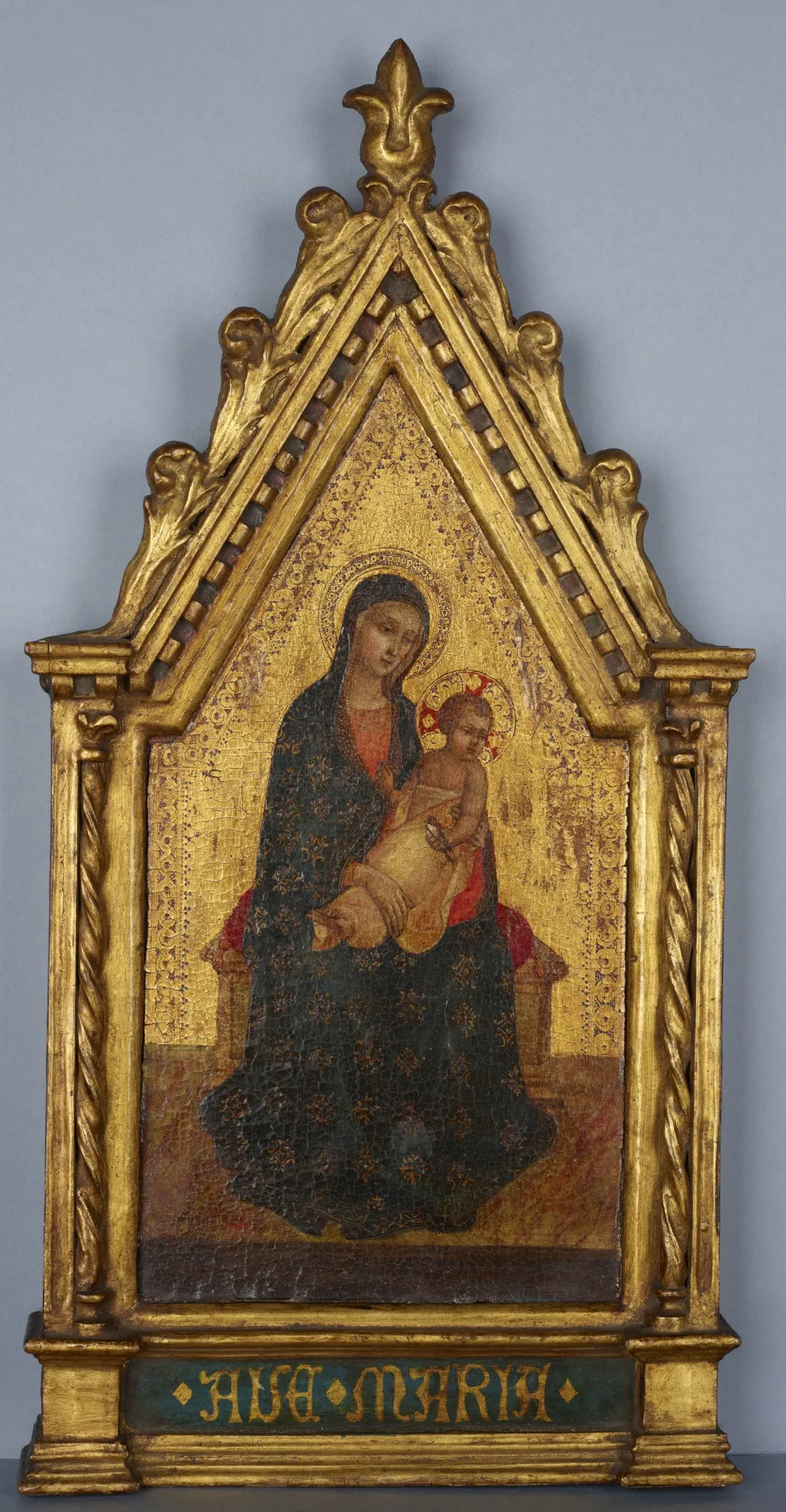
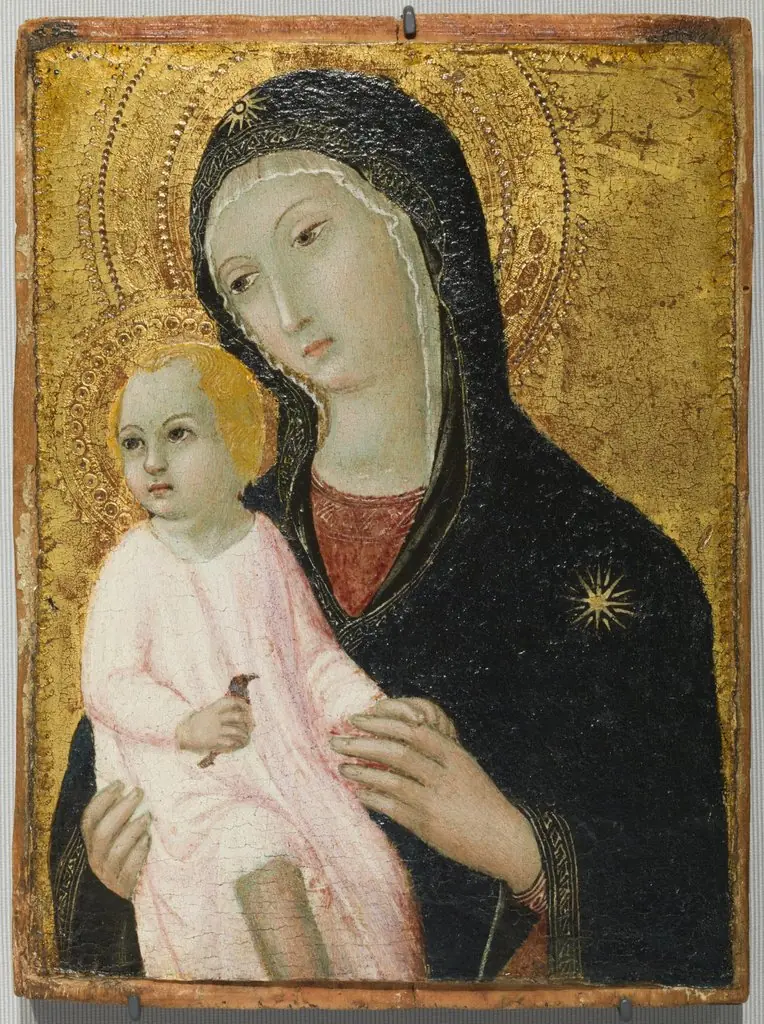
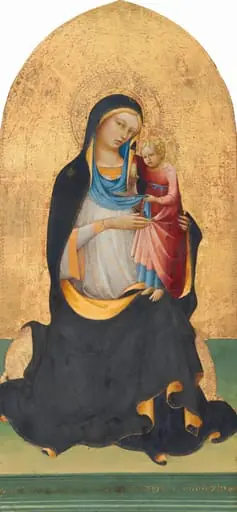
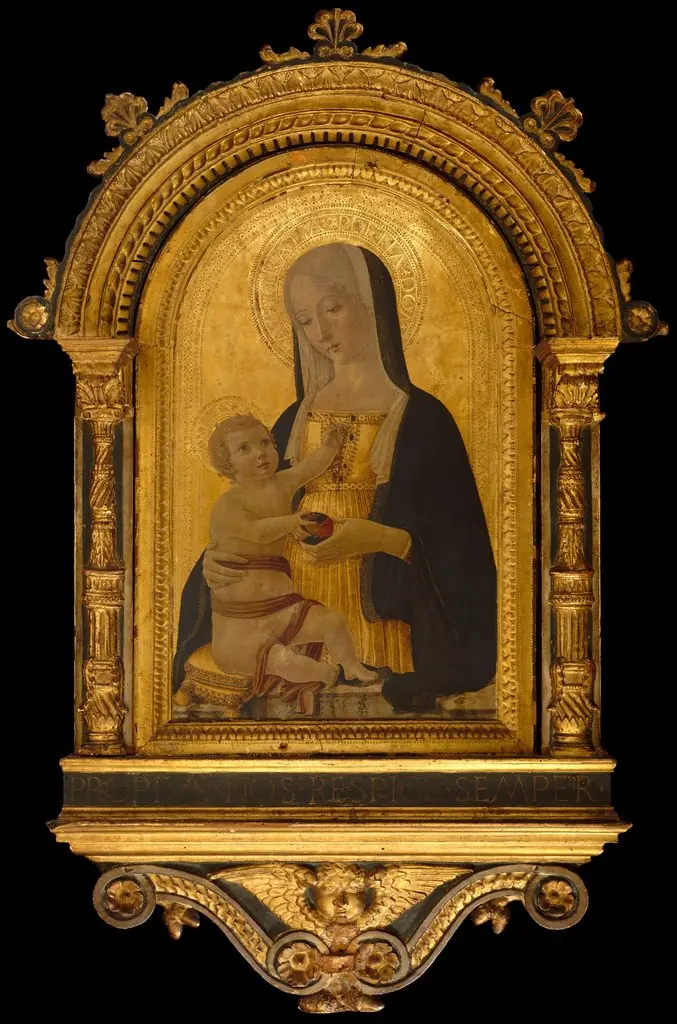
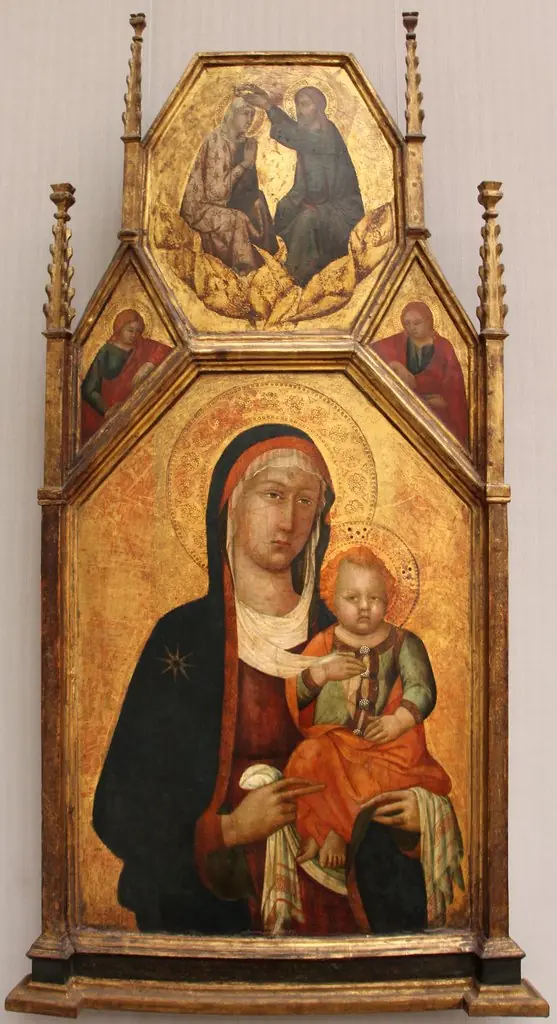
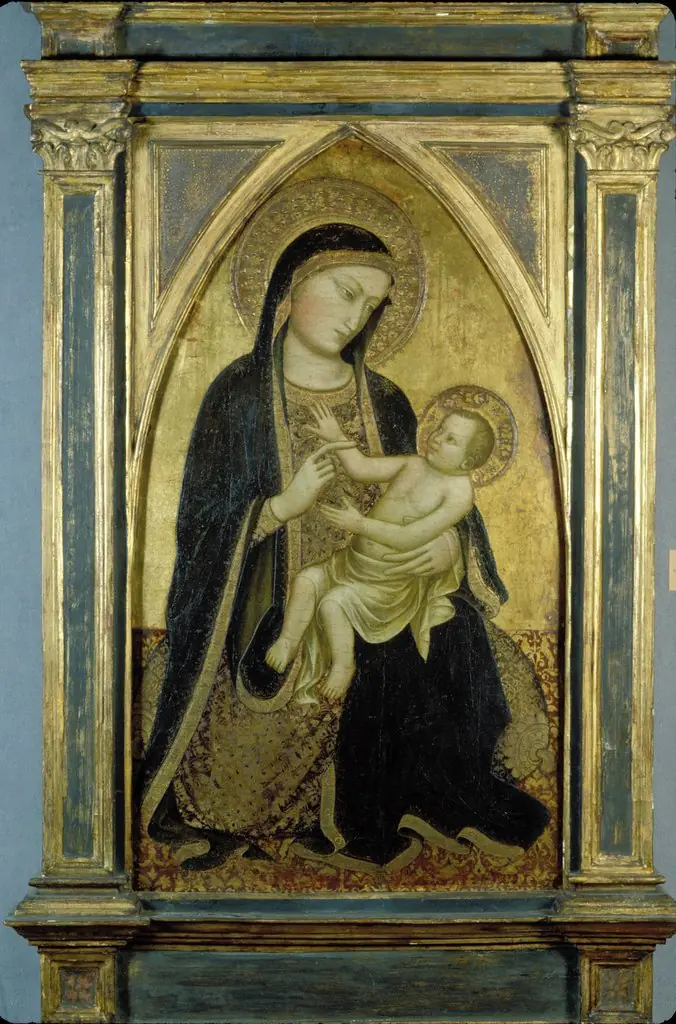
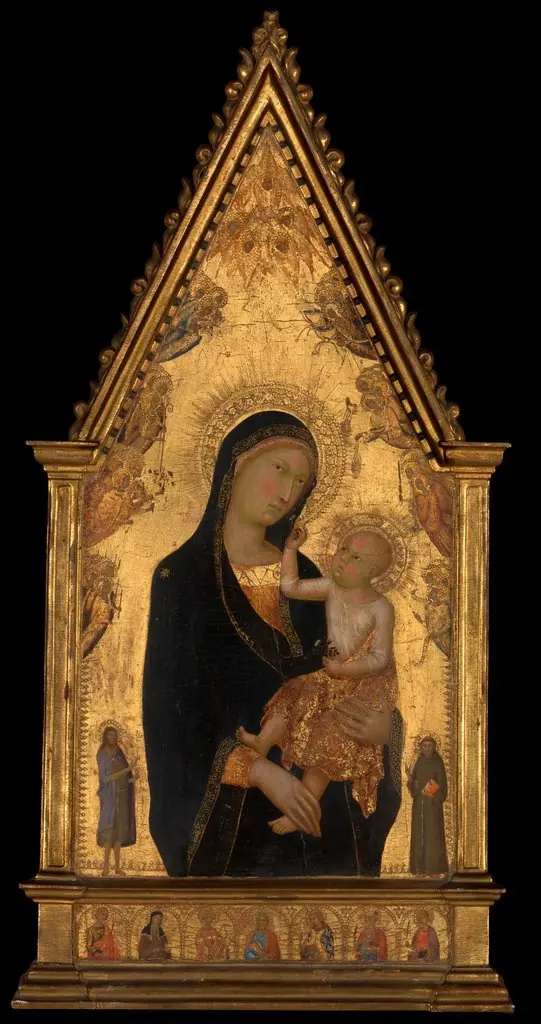
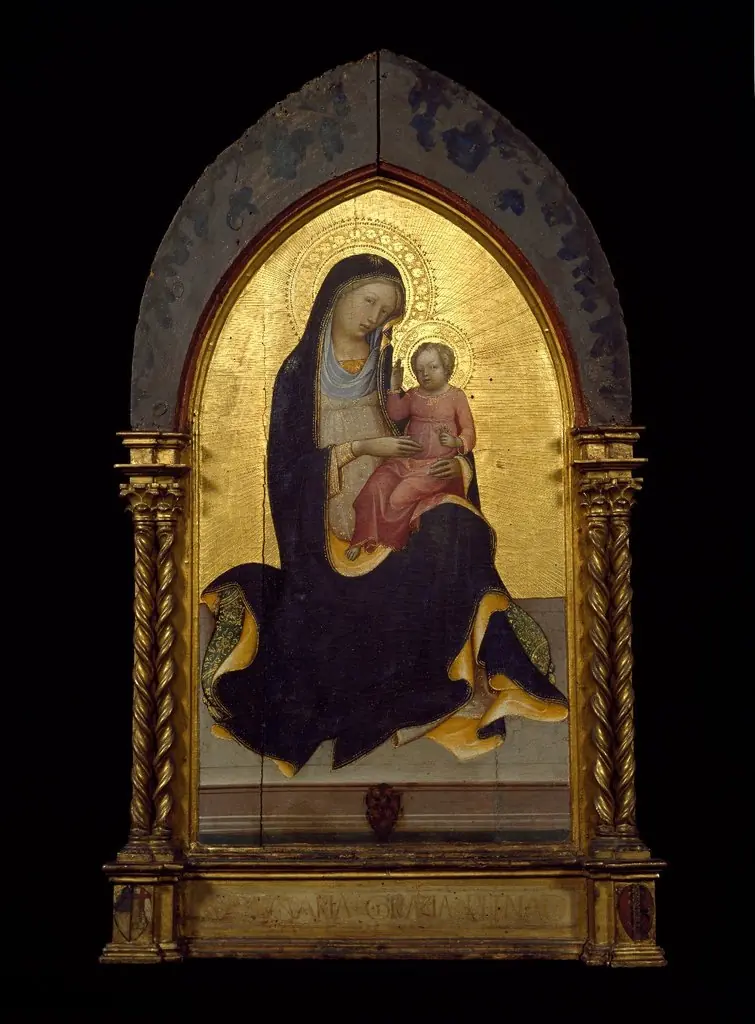
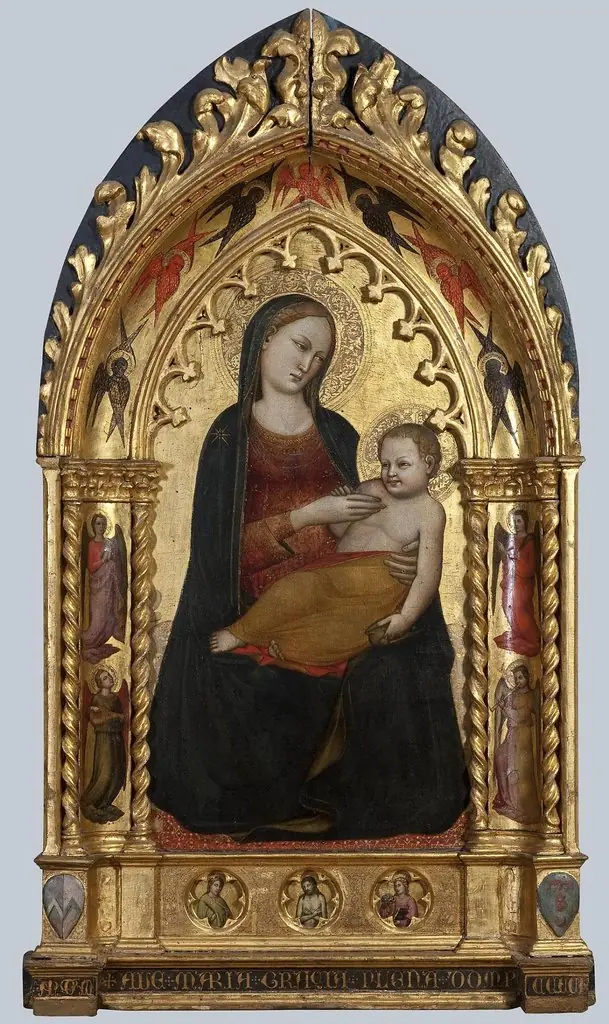
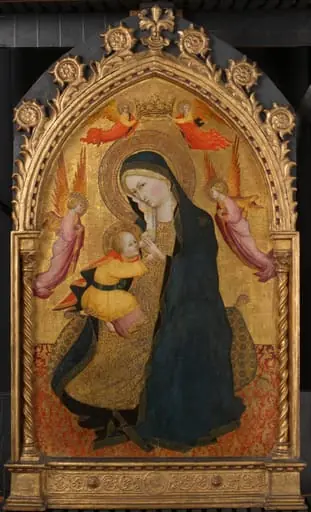
Madonna and Child Enthroned is an unspecified painting by Unknown. It is held in the collection of the National Museum in Kraków. This painting depicts the Virgin Mary seated on a raised throne with the Christ Child on her lap.
About this work
Overview
This painting depicts the Virgin Mary seated on a raised throne with the Christ Child on her lap. Both figures are rendered with formal symmetry and heightened spiritual presence. The gold background and architectural arch frame elevate the scene beyond ordinary space, signaling its sacred nature. Inscribed at the base are the words 'AVE MARIA,' reinforcing the devotional purpose of the image.
Subject & Meaning
The Virgin Mary and the Christ Child represent central figures in Christian theology: Mary as the Mother of God and the Child as the incarnate divine.
The Virgin Mary and the Christ Child represent central figures in Christian theology: Mary as the Mother of God and the Child as the incarnate divine. Their enthroned posture reflects Mary’s role as Queen of Heaven, while the Child’s halo signifies his divinity. The inscription 'AVE MARIA' invokes the angelic greeting from the Gospel of Luke, anchoring the image in liturgical tradition and personal prayer.
Technique & Style
The figures are rendered with elongated proportions and rigid, frontal poses typical of late medieval iconography. The dark blue mantle of Mary, accented by a red sash, contrasts with the flat gold background, enhancing their otherworldly presence. Details are minimized; emphasis is placed on symbolic clarity rather than naturalism, aligning with devotional conventions of the period.
History & Provenance
Though specific origins are undocumented, the composition and style suggest it was created in Italy during the 13th or early 14th century, likely for private or small-scale ecclesiastical use. The gold leaf background and formal structure reflect Byzantine influences common in pre-Renaissance religious art. Its survival indicates it was preserved within a devotional context, possibly in a household or chapel.
Context
During the medieval period, images of the Madonna and Child served as focal points for prayer and veneration. This type of representation was widespread across Europe, particularly in regions influenced by Byzantine traditions. The use of gold backgrounds and throne-like seating was standard, designed to convey divine authority and transcendence rather than earthly realism.
Legacy
This work exemplifies the enduring visual language of Marian devotion before the naturalistic shifts of the Renaissance. Its formal qualities influenced later altarpieces and devotional panels, preserving the symbolic vocabulary of sacred imagery. Though stylistically archaic by later standards, it remains a clear expression of medieval spiritual priorities and artistic discipline.
Artist & collection

 Domestic Scene
 Giacomo and Cardinal Marco, investing Andrea, Abbot of San Zeno, with his Benefice
 The Nymph of Fontainebleau
 Portrait of a Woman
 Madonna and Child with Saints in the Enclosed Garden
 Venus and Minerva
 Family Group of Four on Sofa
 Wall painting from Room H of the Villa of P. Fannius Synistor at Boscoreale