Artwork
Initiation of a new Member of the Bentvueghels in Rome (Schildersbent)
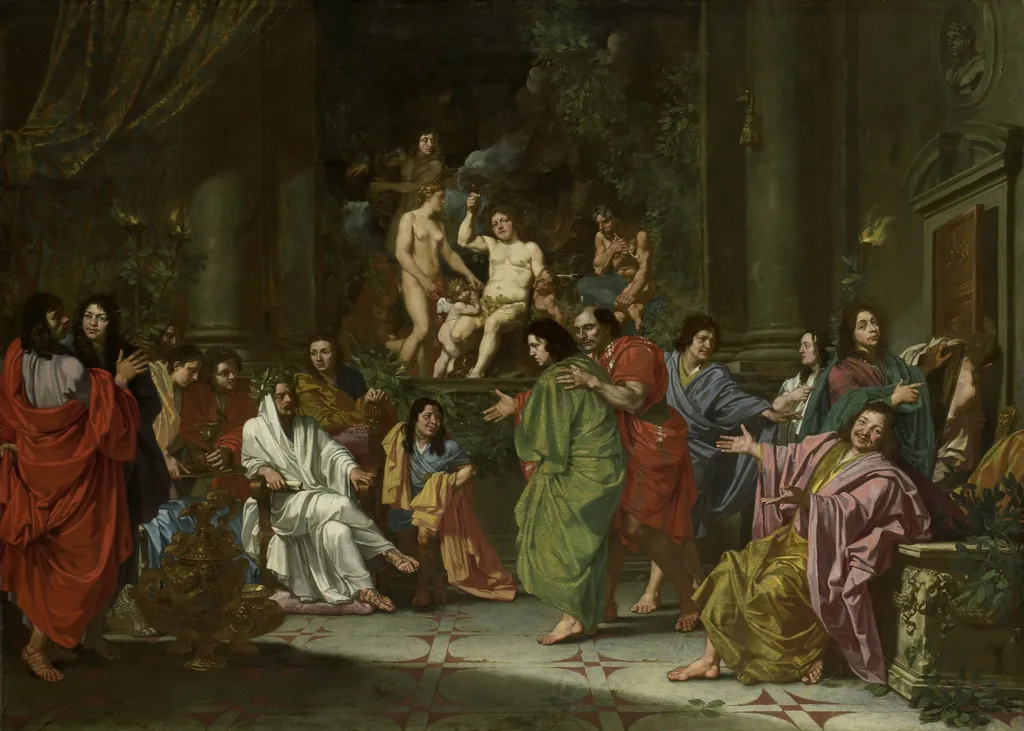
Initiation of a new Member of the Bentvueghels in Rome (Schildersbent) is an oil painting. It dates from 1660 and is held in the collection of the Rijksmuseum. The canvas records an initiation rite of the Bentvueghels, a loose association of Dutch and Flemish artists active in 17th‑century Rome.
About this work
Overview
The canvas records an initiation rite of the Bentvueghels, a loose association of Dutch and Flemish artists active in 17th‑century Rome. Central to the composition is a bustling interior where prospective members and their witnesses gather, while ethereal, partially nude figures hover above, suggesting a liminal space between the earthly ceremony and a more mythic realm.
Subject & Meaning
The work portrays the formal welcoming of a new participant into the Bentvueghels, a fraternity known for its playful, sometimes ribald rituals. The juxtaposition of clothed revelers with semi‑nude, instrument‑bearing specters may allude to the transition from ordinary life to the artistic camaraderie and creative freedom the group prized.
Technique & Style
Executed in oil, the painting employs strong chiaroscuro to model the figures and to separate the grounded crowd from the weightless attendants above. The artist renders the tiled floor and richly draped costumes with precise brushwork, while the floating bodies are softened through delicate modeling and a muted palette, enhancing their otherworldly presence.
History & Provenance
Created during the height of the Bentvueghels’ activity in Rome, the piece likely served as a visual record for members or patrons interested in the group’s customs. Its later ownership passed through several European collections before entering a museum setting, where it has been catalogued as an informative example of artists’ social networks in the Baroque period.
Context
The Bentvueghels functioned as a support network for expatriate painters, offering mutual assistance and a venue for shared rituals that contrasted with the formal Accademia di San Luca. This painting captures that informal, convivial atmosphere, reflecting broader trends of artist guilds and the exchange of ideas across national borders in early modern Europe.
Artist & collection
