Artwork
Legend of Durga
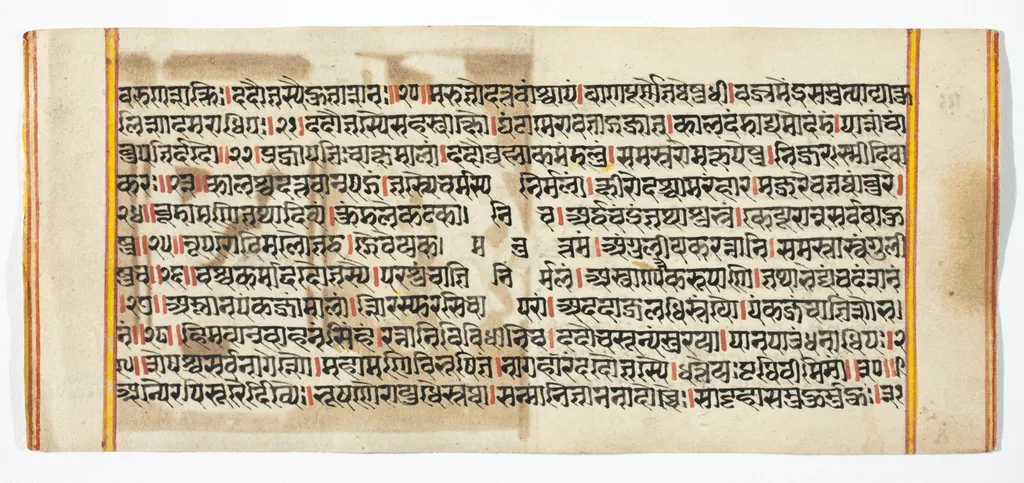
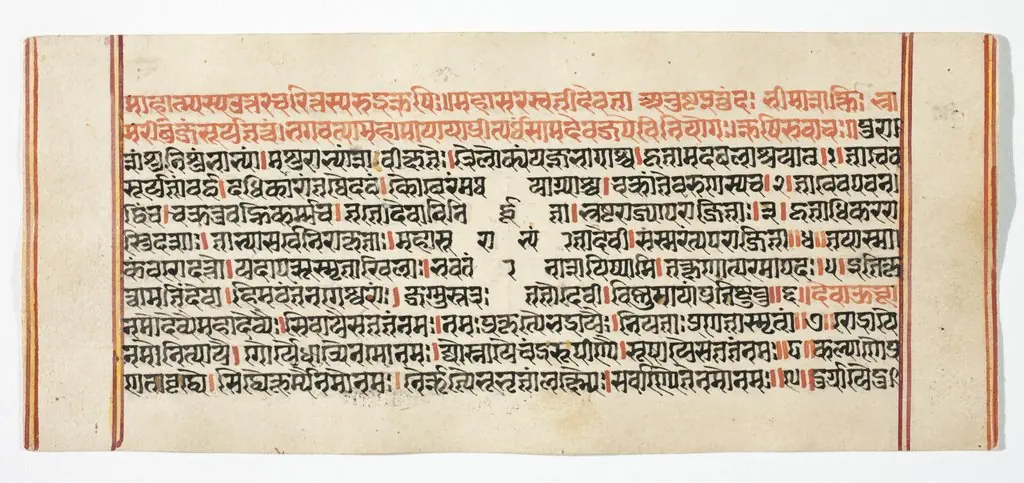
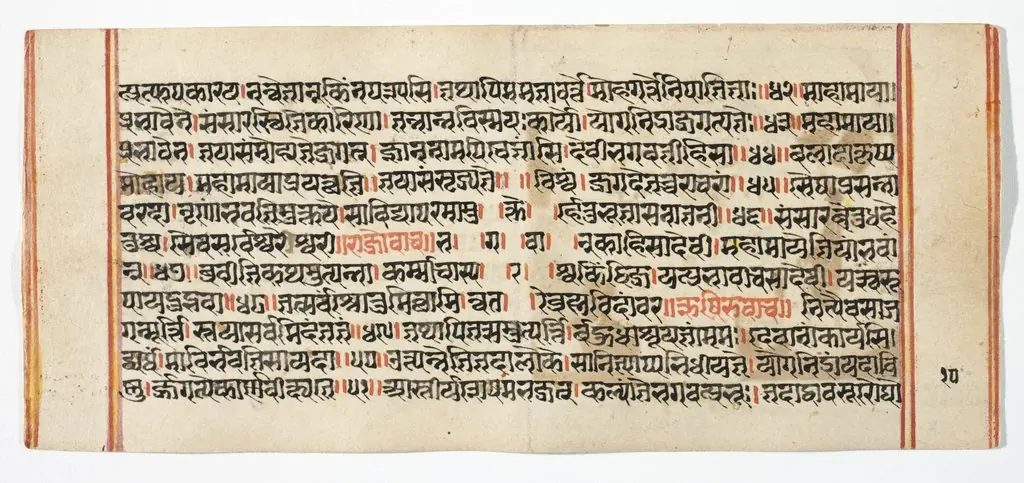
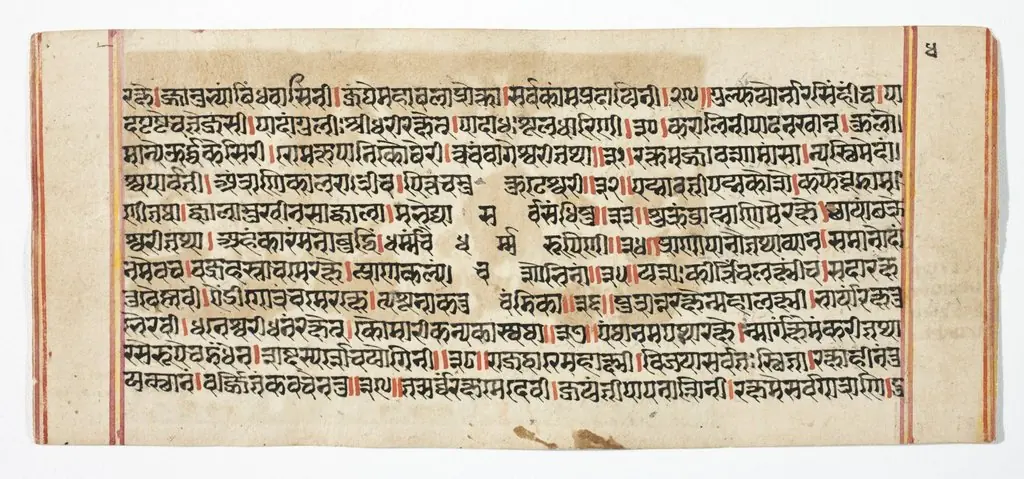
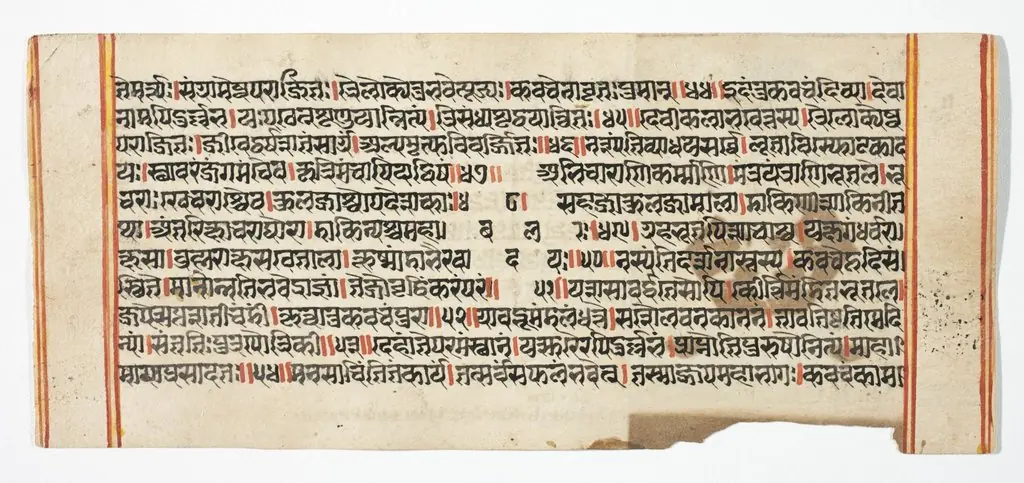
Legend of Durga is an unspecified painting by Unknown. It is held in the collection of the Detroit Institute of Arts.
About this work
Overview
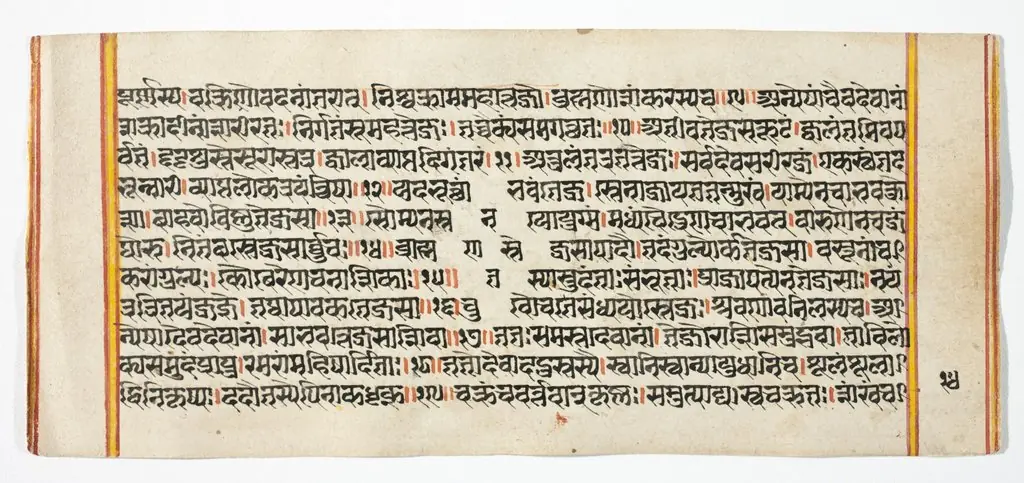
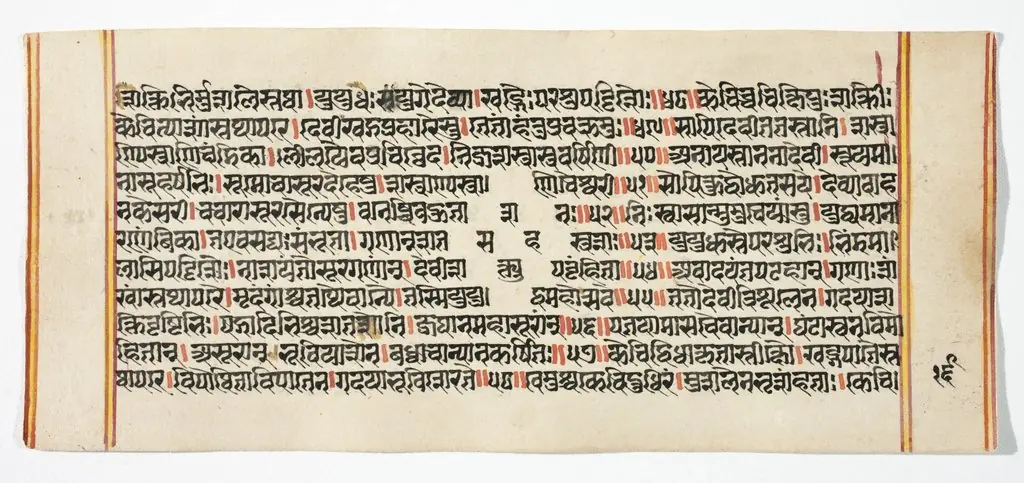
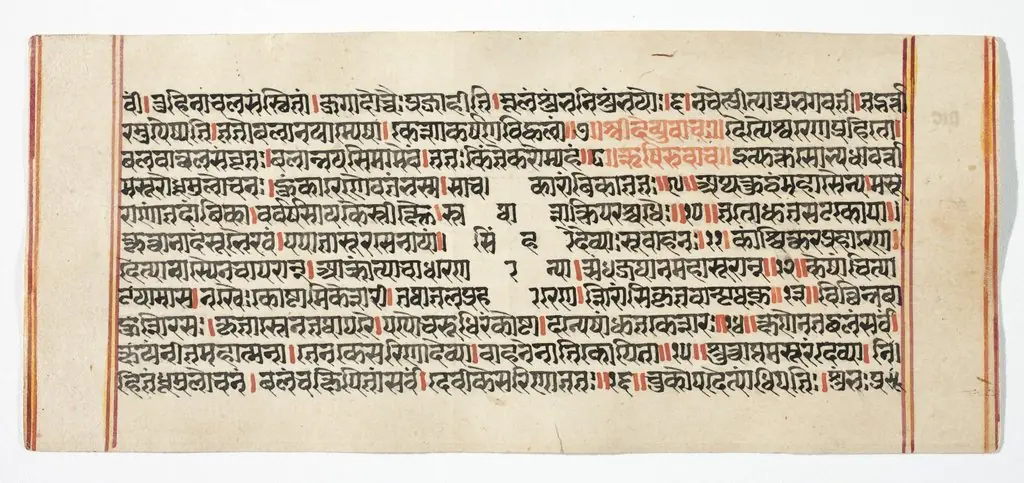
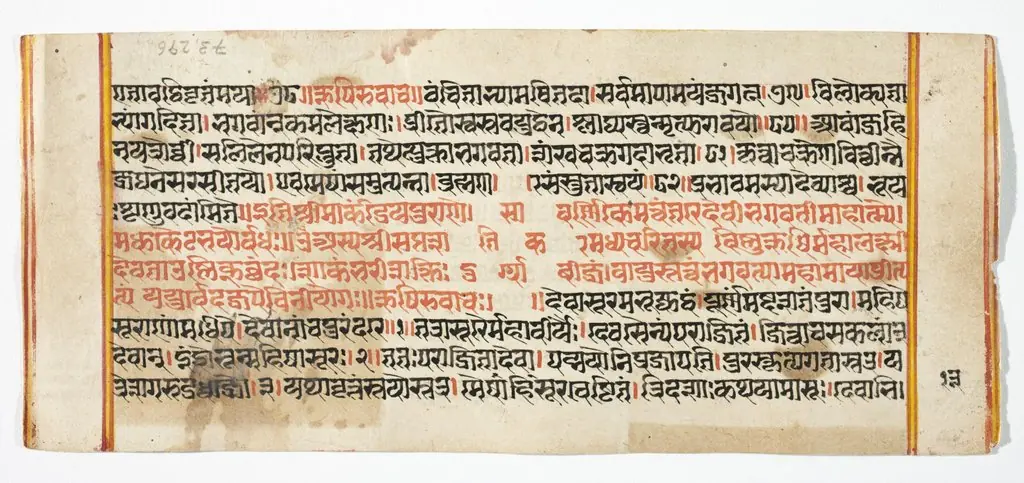
The page exhibits signs of extensive use—yellowing, staining, and minor tears—suggesting it was part of a devotional or ritual object handled over generations.
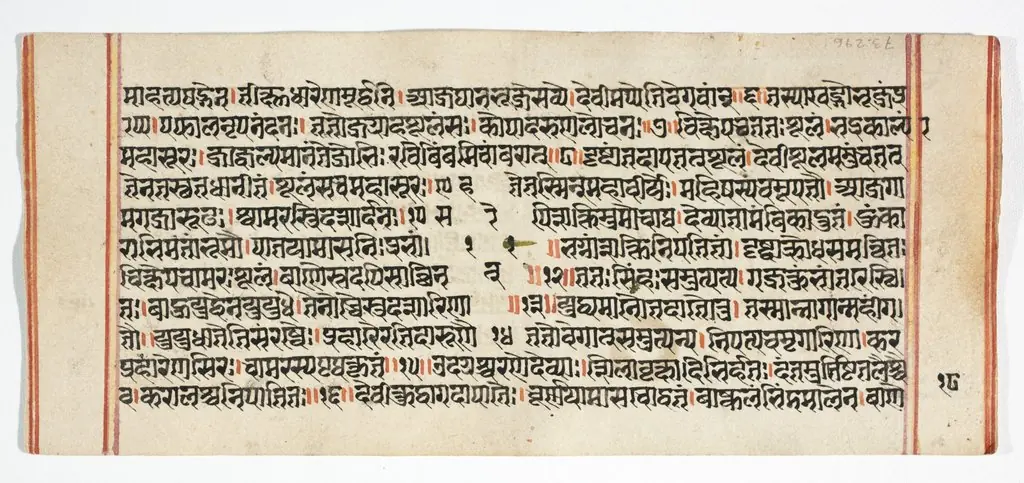
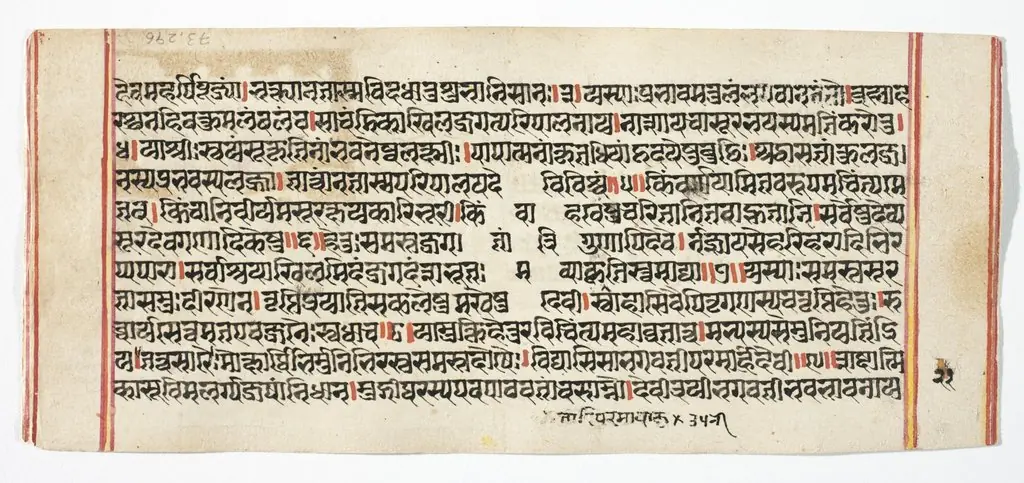
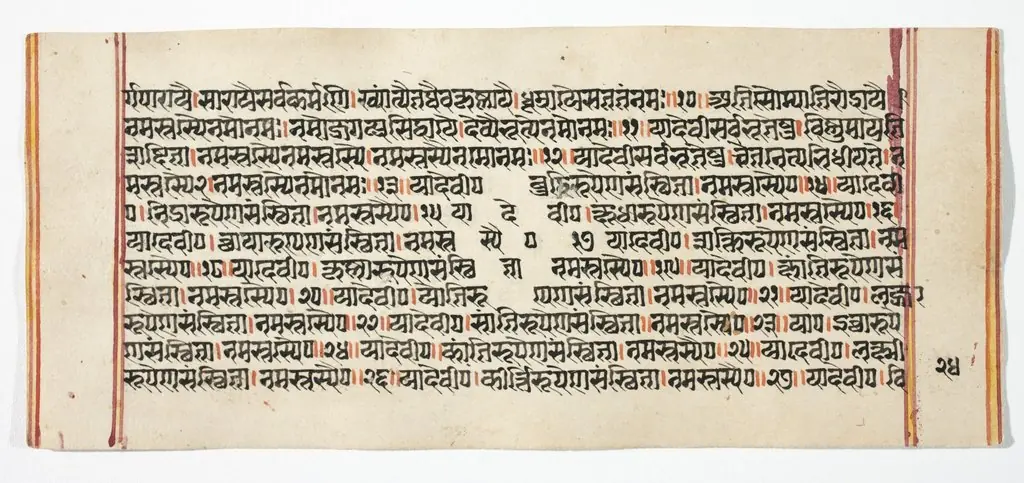
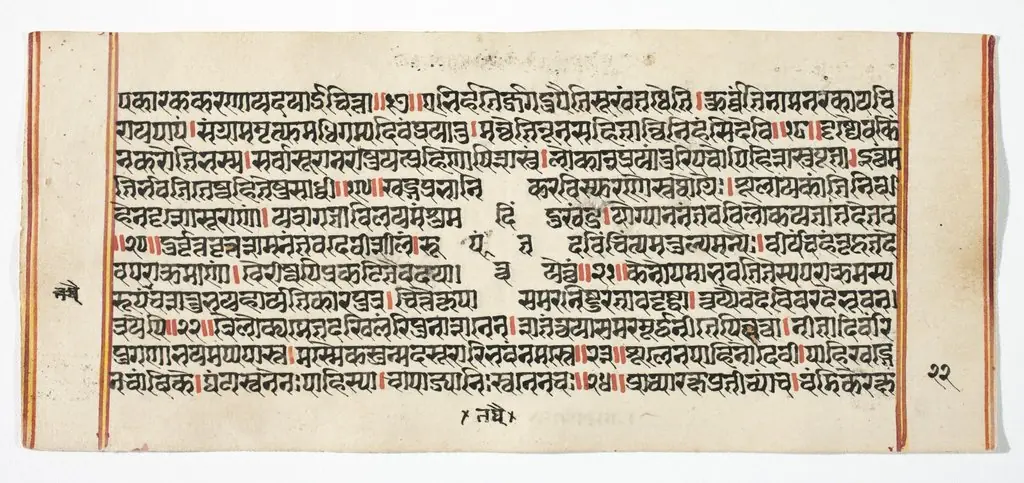
This folio comes from a handwritten manuscript depicting scenes from the Legend of Durga, likely produced in eastern India during the late medieval period. The page exhibits signs of extensive use—yellowing, staining, and minor tears—suggesting it was part of a devotional or ritual object handled over generations. The script, rendered in black ink with occasional red accents, reflects regional calligraphic traditions of the time.
Subject & Meaning
The text recounts episodes from the Hindu narrative of the goddess Durga’s victory over the buffalo demon Mahishasura, symbolizing the triumph of cosmic order over chaos. Though the script is difficult to decipher without scholarly analysis, its presence alongside decorative red markings implies liturgical or ceremonial use, possibly for recitation during festivals honoring the goddess.
Technique & Style
The script is executed in a cursive, fluid hand typical of regional Bengali or Odia manuscript traditions, with elaborate flourishes and consistent ink density. Red ink, used sparingly for emphasis or section dividers, contrasts with the black text without overwhelming it. The paper, likely handmade from bark or cloth, shows wear consistent with repeated handling and exposure to humidity.
History & Provenance
The folio’s condition suggests it was part of a devotional manuscript circulated within a temple or scholarly community, possibly in present-day West Bengal or Odisha. Its survival through centuries indicates careful preservation despite environmental and physical degradation. While its exact origin remains undocumented, similar manuscripts are held in institutional collections across South Asia and North America.
Context
Manuscripts like this were produced in monastic or royal scriptoria between the 15th and 18th centuries, often commissioned by patrons seeking spiritual merit. The Legend of Durga was especially popular during the Navaratri festival season, when recitations and visual depictions reinforced religious identity. Such texts served both as sacred literature and as objects of veneration.
Legacy
Though individual folios like this are rarely displayed in isolation, they contribute to broader understandings of pre-colonial Indian textual culture. Institutions such as the Detroit Institute of Arts hold comparable materials, helping scholars trace the evolution of regional scripts, devotional practices, and the transmission of Hindu narratives through material form.
Artist & collection

 Domestic Scene
 Giacomo and Cardinal Marco, investing Andrea, Abbot of San Zeno, with his Benefice
 The Nymph of Fontainebleau
 Portrait of a Woman
 Madonna and Child with Saints in the Enclosed Garden
 Venus and Minerva
 Family Group of Four on Sofa
 Wall painting from Room H of the Villa of P. Fannius Synistor at Boscoreale