Artwork
Portrait of a Man, perhaps Willem Simon-Maertensz, Lord of Stavenisse and Cromstrijen, repeatedly Burgomaster of Zierikzee
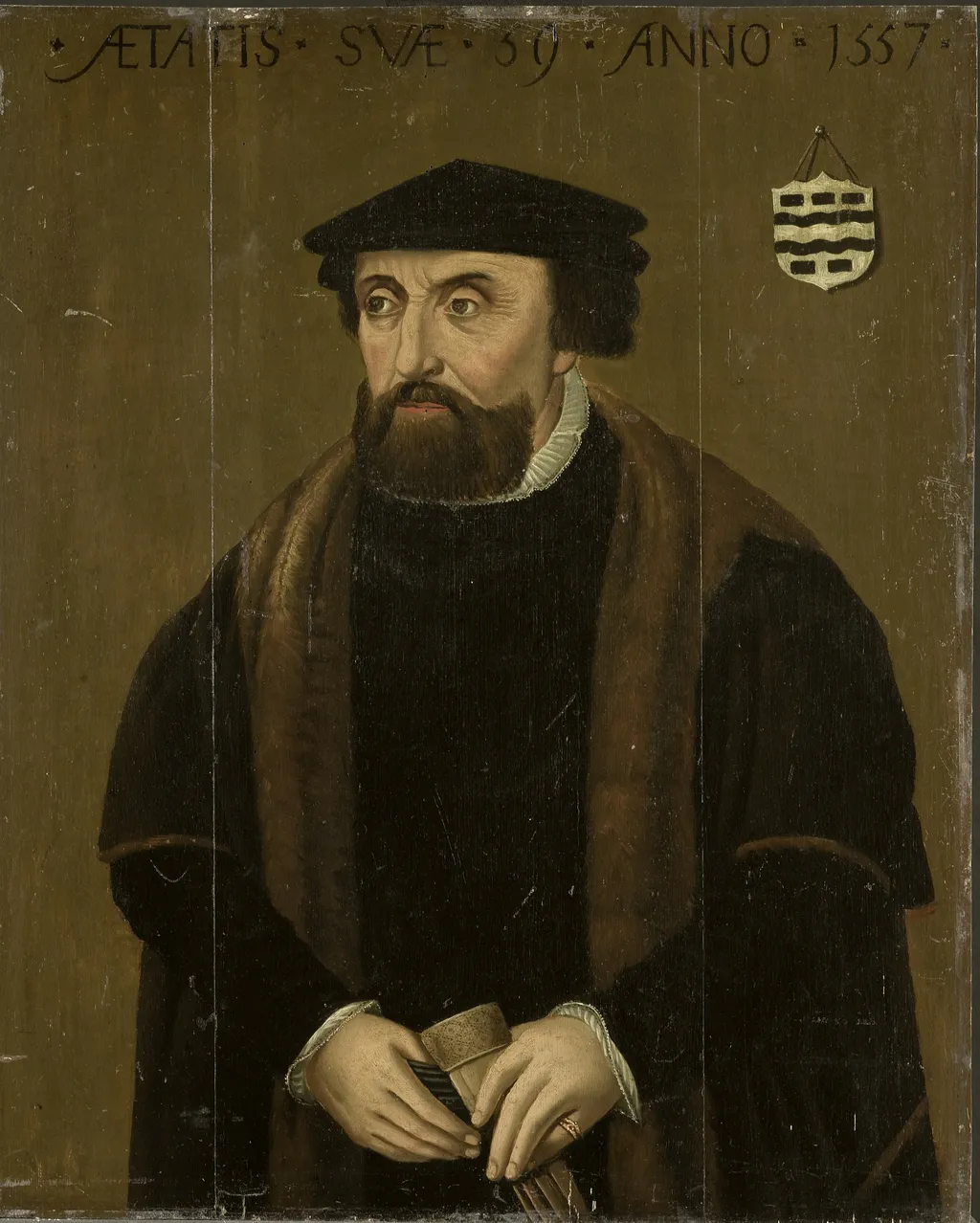
Portrait of a Man, perhaps Willem Simon-Maertensz, Lord of Stavenisse and Cromstrijen, repeatedly Burgomaster of Zierikzee is an oil painting. It dates from 1557 and is held in the collection of the Rijksmuseum. The work is an oil portrait of a middle‑aged man rendered in a restrained palette of dark browns.
About this work
He has a thick beard and mustache, and his hands rest on a small object, maybe a book or a letter.
This painting shows a serious-looking man in a dark brown coat and hat. He has a thick beard and mustache, and his hands rest on a small object, maybe a book or a letter. The background is plain and dark, with a small coat of arms hanging on the right side.
The text at the top reads *"AETATIS SVÆ 39 ANNO 1557"*, which means he was 39 years old in 1557. The coat of arms suggests he held some kind of official or noble position.
If you like portraits like this, check out the Rijksmuseum for more.
Overview
The work is an oil portrait of a middle‑aged man rendered in a restrained palette of dark browns. He is depicted in a solemn pose, his beard and moustache full, his hands resting on a small object that may be a book or a letter. A simple, dark background isolates the figure, while a modest coat of arms hangs at the right edge of the canvas.
Subject & Meaning
The sitter is identified, though not definitively, as Willem Simon‑Maertensz, lord of Stavenisse and Cromstrijen, who served repeatedly as burgomaster of Zierikzee. An inscription records his age as thirty‑nine in the year 1557, situating the portrait within his mid‑career. The presence of the heraldic device underscores his noble status and civic authority, while the unadorned setting emphasizes personal dignity over opulent display.
Technique & Style
Executed in oil on panel, the portrait employs a limited tonal range that accentuates the texture of the man's coat and the sheen of his hat. Fine brushwork delineates the facial hair and the delicate folds of the garment, while the background is rendered with broad, muted strokes to avoid distraction. The composition follows the conventions of mid‑16th‑century Dutch portraiture, balancing realism with a restrained elegance.
History & Provenance
The painting dates to 1557, as indicated by the age inscription. Its provenance traces back to the civic archives of Zierikzee, where it likely functioned as a record of municipal leadership. Over subsequent centuries the work entered private collections before being acquired by a public institution, ensuring its preservation as a visual document of regional governance in the Dutch Golden Age.
Artist & collection
