Artwork
A European Woman Pouring Wine into a Cup
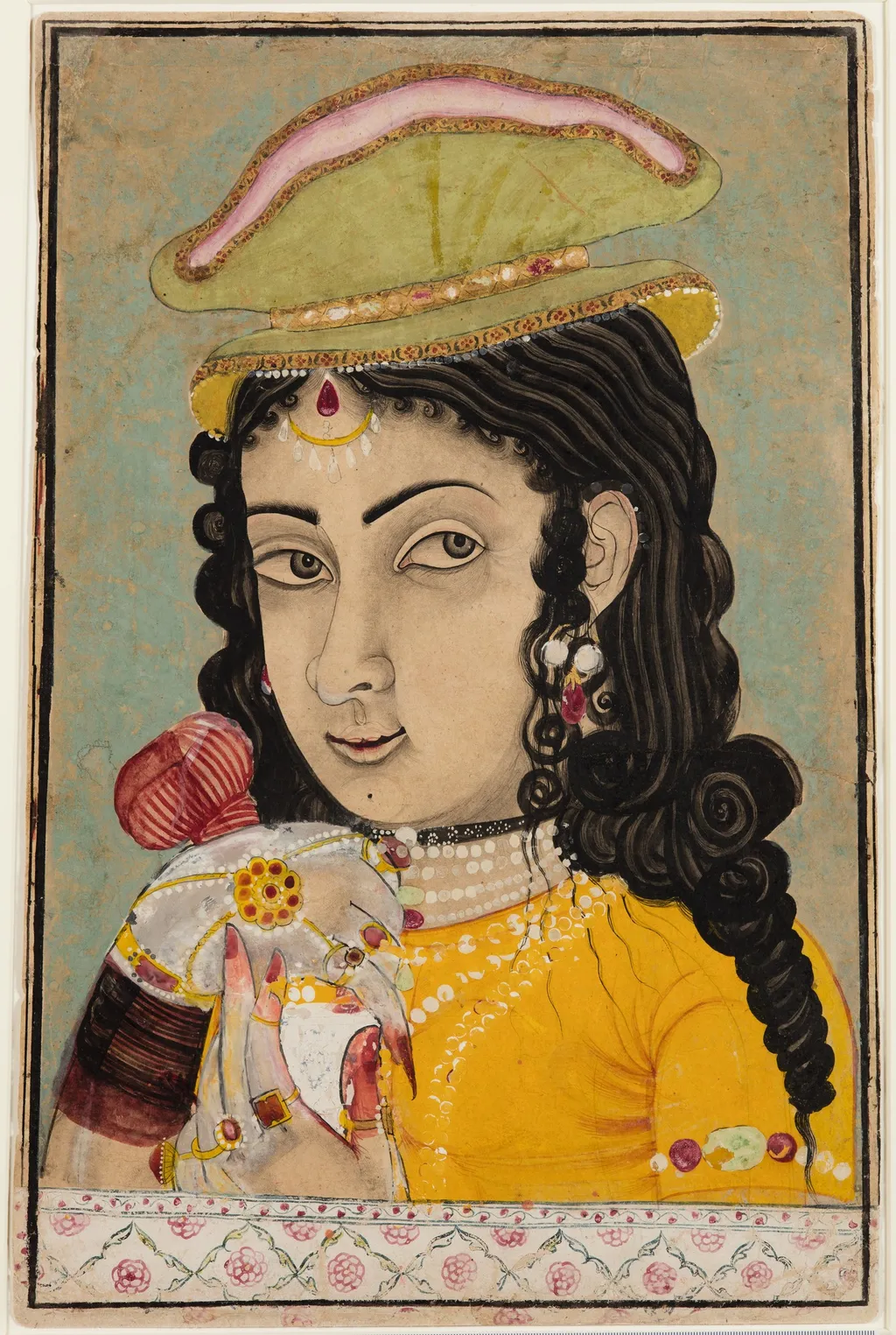
A European Woman Pouring Wine into a Cup is an unspecified painting. It dates from 1715 and is held in the collection of the Cleveland Museum of Art.
About this work
Overview
The canvas presents a seated European woman in a bright yellow dress patterned with white dots, her dark hair framed by an elaborate hat trimmed in pink and gold. She holds a red cloth in one hand and a white pitcher from which she appears to be pouring a liquid. Large earrings and a necklace set with a red stone complete her attire, against a muted greenish backdrop that emphasizes her figure.
Subject & Meaning
The work depicts a domestic scene of a woman engaged in the act of serving wine, a ritual often associated with hospitality and social ceremony in European culture. Her serious expression and the careful handling of the pitcher suggest a moment of concentration, perhaps alluding to the proprieties of genteel behavior and the role of women in managing household hospitality.
Technique & Style
Rendered in oil on canvas, the painting employs a limited palette dominated by saturated yellows, reds, and a subdued green background.
Rendered in oil on canvas, the painting employs a limited palette dominated by saturated yellows, reds, and a subdued green background. The artist uses smooth brushwork to model the fabric and jewelry, while the contrast between the vivid dress and the plain backdrop creates a focal point on the figure’s face and hands. Light is applied evenly, highlighting the texture of the hat and the sheen of the metal ornaments.
History & Provenance
The piece is part of the collection at the Cleveland Museum of Art, where it has been displayed alongside other works of similar period and genre. Documentation traces its acquisition to the early 20th century, though the original artist and precise date remain uncertain, reflecting the common anonymity of many genre paintings from the era.
Context
Genre paintings of women serving drinks were popular in the 17th and 18th centuries, reflecting both everyday life and moralizing themes. The inclusion of luxurious accessories such as the ornate hat and gemstone necklace aligns the subject with a higher social standing, indicating the painting may have been intended for a patron who valued depictions of refined domesticity.
Artist & collection