Artwork
Eichenwald mit Jäger
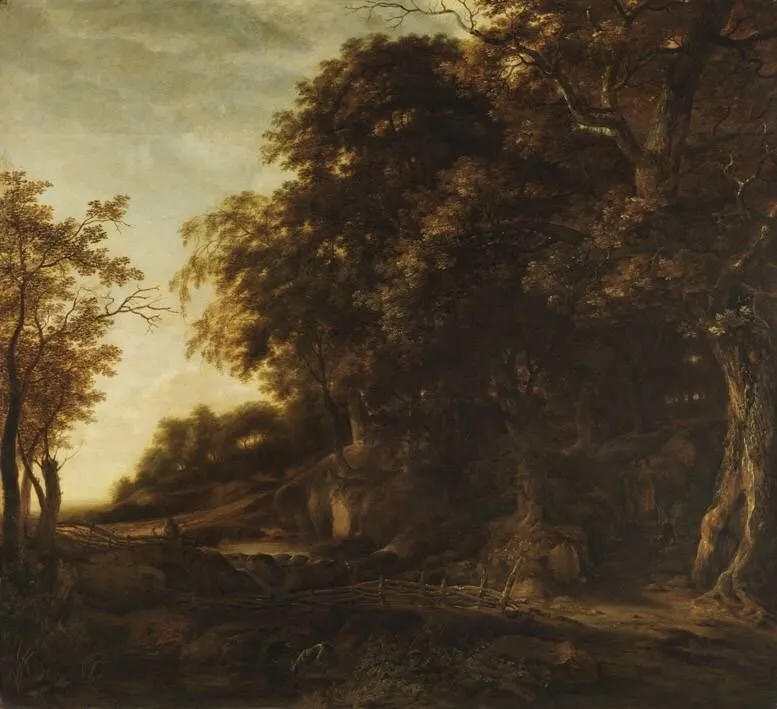
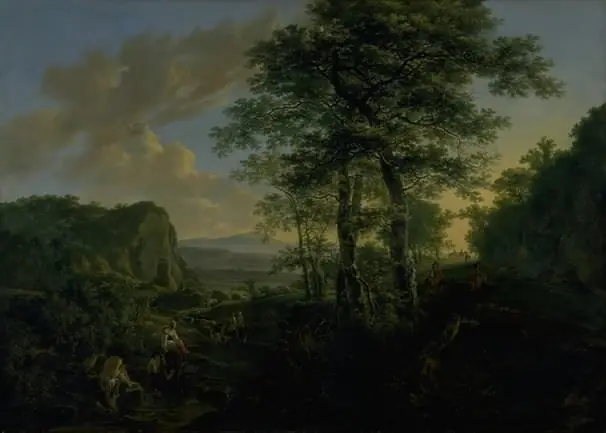
Eichenwald mit Jäger is an unspecified painting by the Flemish Baroque painting artist Unknown. It dates from 1650 and is held in the collection of the Bavarian State Painting Collections. This oil painting presents a quiet woodland scene centered on a massive, ancient oak.
About this work
Overview
The muted tones of brown, gray, and olive green create a subdued, contemplative mood, reinforcing the stillness of the natural setting.
This oil painting presents a quiet woodland scene centered on a massive, ancient oak. The composition draws attention to the tree’s gnarled trunk and sprawling limbs, which dominate the foreground while receding into a hazy background of water and distant foliage. The muted tones of brown, gray, and olive green create a subdued, contemplative mood, reinforcing the stillness of the natural setting.
Subject & Meaning
The lone oak, rooted firmly in the earth, serves as the painting’s focal point, suggesting endurance and quiet resilience. Its presence amid the calm water and sparse undergrowth evokes a sense of solitude and timelessness. The absence of human figures or overt narrative implies a reverence for nature’s quiet rhythms, inviting reflection rather than storytelling.
Technique & Style
The artist employs chiaroscuro to model the tree’s form, using subtle gradations of light and shadow to suggest volume and texture. Brushwork is restrained, with soft transitions between tones rather than sharp outlines. The muted palette and loose rendering of background elements enhance depth, while the textured trunk and scattered leaves add tactile realism without overt detail.
History & Provenance
The painting is attributed to a 19th-century German artist associated with Romantic landscape traditions. It remained in private collections in southern Germany until the mid-20th century, after which it entered a regional museum’s holdings. Documentation is limited, but stylistic analysis aligns it with regional depictions of forested landscapes from the period.
Context
Created during a time when European artists increasingly turned to nature as a source of spiritual and emotional resonance, this work reflects a broader trend away from idealized scenery toward intimate, unembellished views of the wild. It aligns with regional movements that valued the quiet dignity of native forests over dramatic or exotic subjects.
Legacy
Though not widely exhibited beyond regional institutions, the painting is recognized for its restrained aesthetic and thoughtful composition. It contributes to the understanding of lesser-known landscape traditions in 19th-century German art, where emotional depth was conveyed through subtlety rather than spectacle.
Artist & collection

 Domestic Scene
 Giacomo and Cardinal Marco, investing Andrea, Abbot of San Zeno, with his Benefice
 The Nymph of Fontainebleau
 Portrait of a Woman
 Madonna and Child with Saints in the Enclosed Garden
 Venus and Minerva
 Family Group of Four on Sofa
 Wall painting from Room H of the Villa of P. Fannius Synistor at Boscoreale
 Baumlandschaft mit Entenjagd
 Sleeping Peasants near Fields (Parable of the Weeds)
 Wooded Landscape
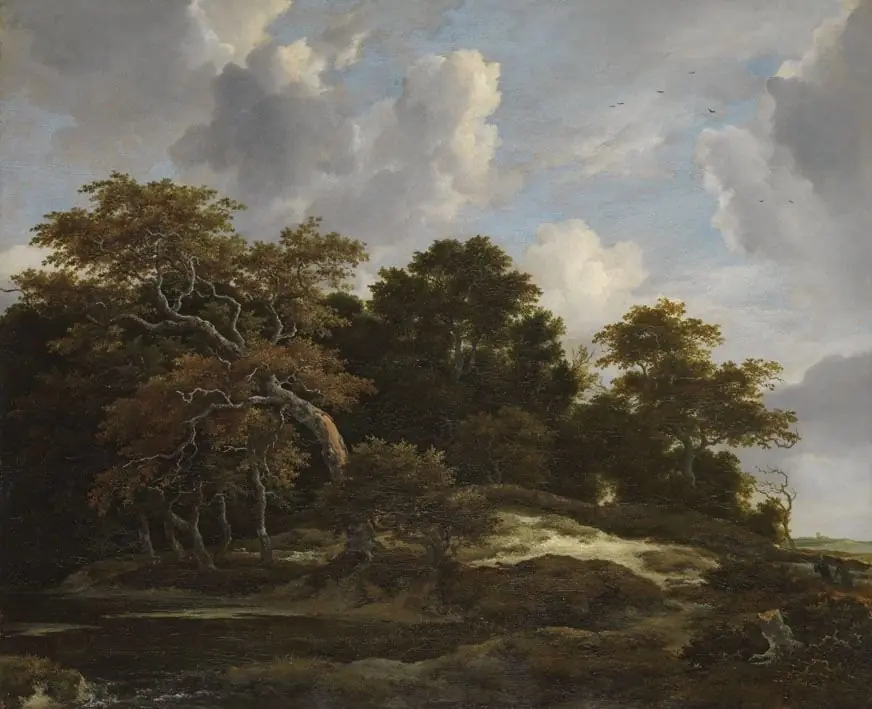 Waldlandschaft mit Hasenjagd
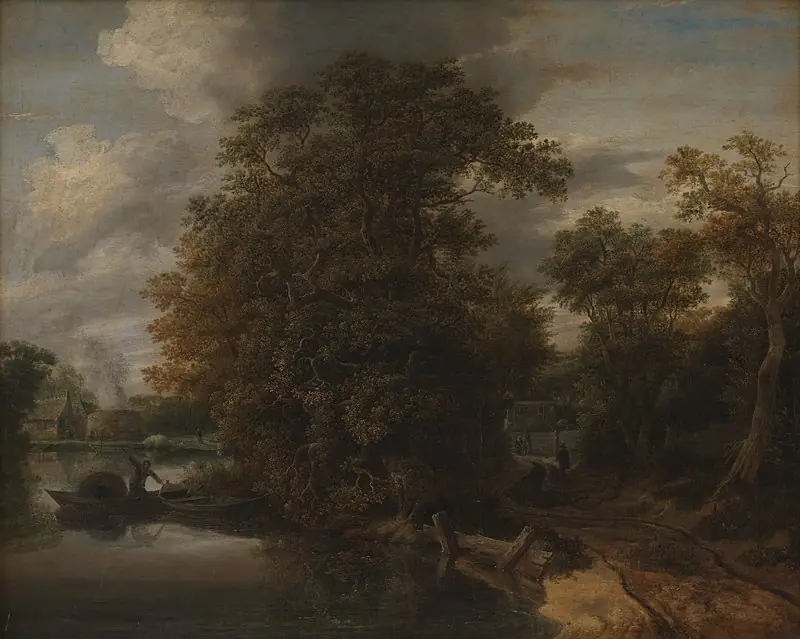 Landscape by a River. In the Background a Limekiln
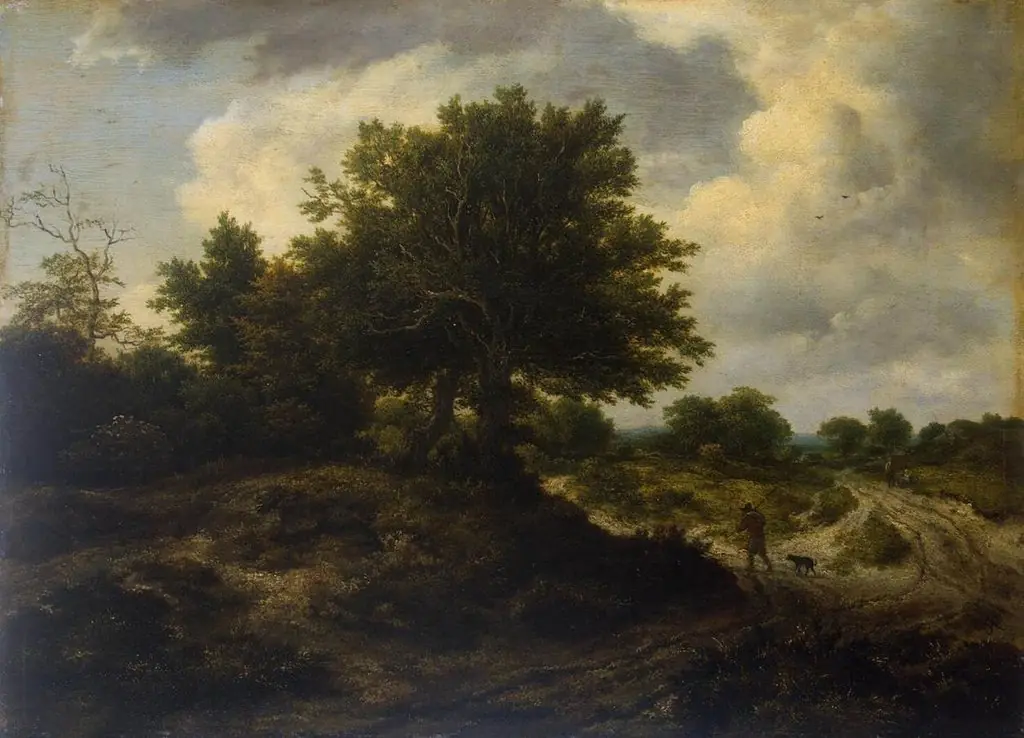 Landscape with a Traveller
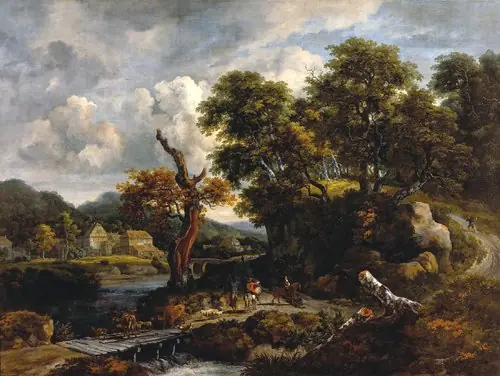 Travellers and shepherds at a crossroads near a dead tree
 Boslandschap met rivier
 Wooded Landscape
 Italian forest landscape with bathers
 Waldiges Flusstal
 Italian Landscape