Artwork
Three Views of the Pearl River: Canton, Macao, Whampoa
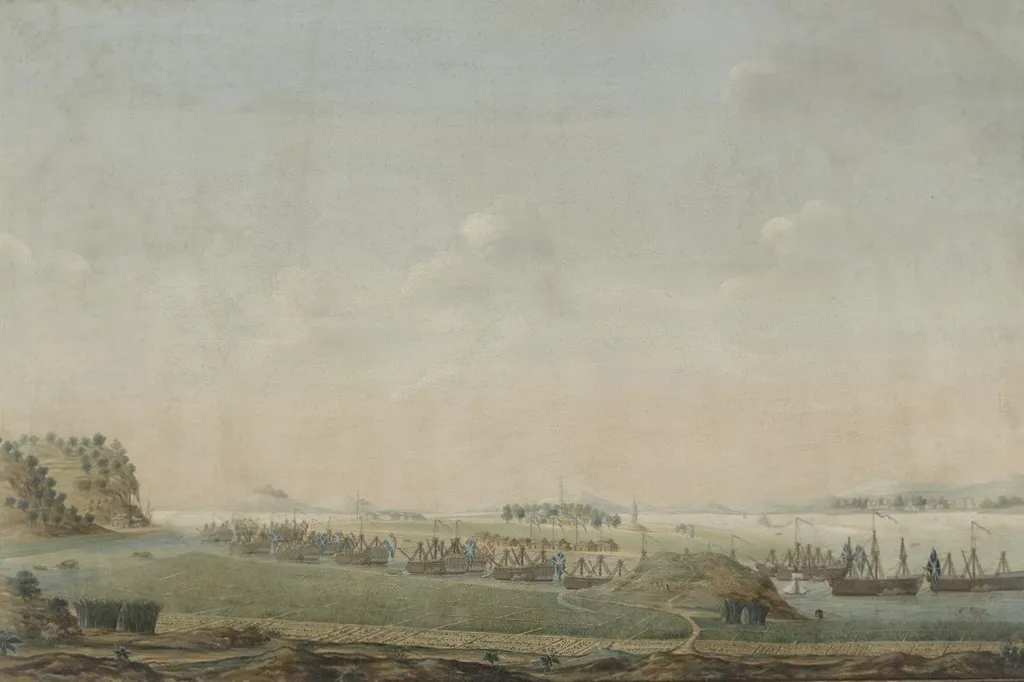
Three Views of the Pearl River: Canton, Macao, Whampoa is an unspecified painting. It dates from 1773 and is held in the collection of the Rijksmuseum.
About this work
Overview
Three Views of the Pearl River: Canton, Macao, Whampoa is a painted panorama that captures a broad stretch of the Pearl River. The composition presents a tranquil sky, a low hill with sparse trees, and a bustling waterway populated by a diverse fleet of vessels. Human figures populate the boats, illustrating everyday activity along the river’s banks.
Subject & Meaning
The work emphasizes the river as a conduit of commerce and daily life rather than a purely scenic backdrop. By depicting passengers standing and seated, as well as cargo-laden boats, the artist conveys the rhythm of transport and the interdependence of the three port cities—Canton, Macao, and Whampoa—along this vital waterway.
Technique & Style
Executed with a light palette, the painting balances soft, diffused clouds against the reflective surface of the water. Varied boat forms are rendered with careful attention to scale, suggesting depth and movement. The brushwork combines delicate washes for sky and water with more defined strokes for architectural elements and foliage, creating a harmonious yet detailed tableau.
Context
The Pearl River region has long served as a commercial artery linking southern Chinese ports. By the period when the painting was created, Canton, Macao, and Whampoa functioned as key nodes for domestic and foreign trade, making the river a focal point of economic and cultural exchange that the artist chose to document.
Legacy
The piece offers a valuable visual record of 19th‑century riverine traffic and urban layout in the Pearl River Delta. Scholars and curators reference it to understand patterns of movement, vessel design, and the spatial relationship between the three ports during a time of expanding maritime activity.
Artist & collection
