Artwork
Portrait of Rembrandt with Gorget
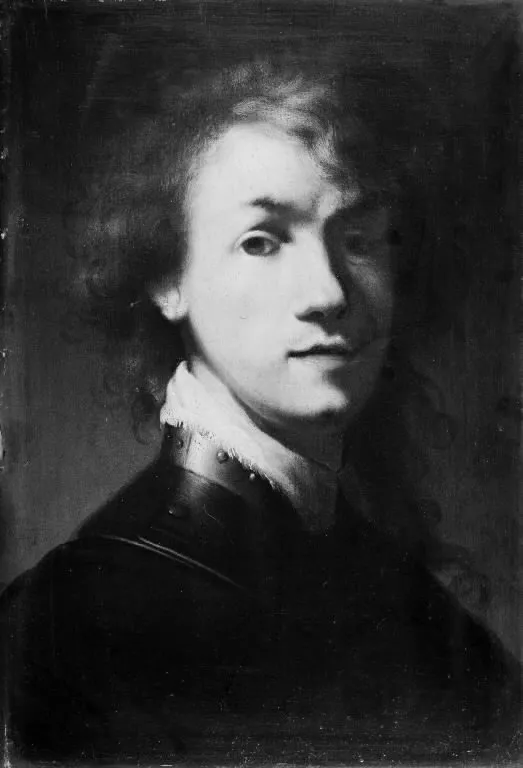
Portrait of Rembrandt with Gorget is an oil painting. It dates from 1630 and is held in the collection of the Statens Museum for Kunst. The work is an oil painting depicting a solitary male figure rendered in monochrome tones.
About this work
Overview
The work is an oil painting depicting a solitary male figure rendered in monochrome tones. He is shown with tightly curled hair, a solemn expression, and a dark coat that frames a crisp white collar. Light falls from the left, illuminating his face while the surrounding hair and garment recede into shadow, creating a subdued, atmospheric presence against a dark ground.
Subject & Meaning
The sitter is presented as a dignified individual, his attire suggesting a certain social rank. A small metallic gorget encircles his neck—a decorative armor piece that was uncommon in portraiture of the period, perhaps indicating a military affiliation or a personal emblem of status. The restrained expression and minimal background focus attention on the sitter’s identity and bearing.
Technique & Style
The artist employs chiaroscuro, using a single, strong light source to model the face and collar while allowing the surrounding areas to dissolve into deep shadow. Brushwork is smooth and blended, giving the flesh tones a soft, almost velvety quality. The limited palette of blacks, whites, and muted browns enhances the tonal contrast and reinforces the intimate, contemplative mood.
Context
Portraits of this era typically featured elaborate settings or vibrant colors; this piece diverges by emphasizing stark lighting and a restrained composition.
Portraits of this era typically featured elaborate settings or vibrant colors; this piece diverges by emphasizing stark lighting and a restrained composition. The inclusion of a gorget aligns with occasional early‑modern European practices of highlighting martial symbols within civilian portraiture, reflecting a period when personal armor could serve as a marker of honor rather than functional equipment.
Artist & collection
