Artwork
Portrait of a Man
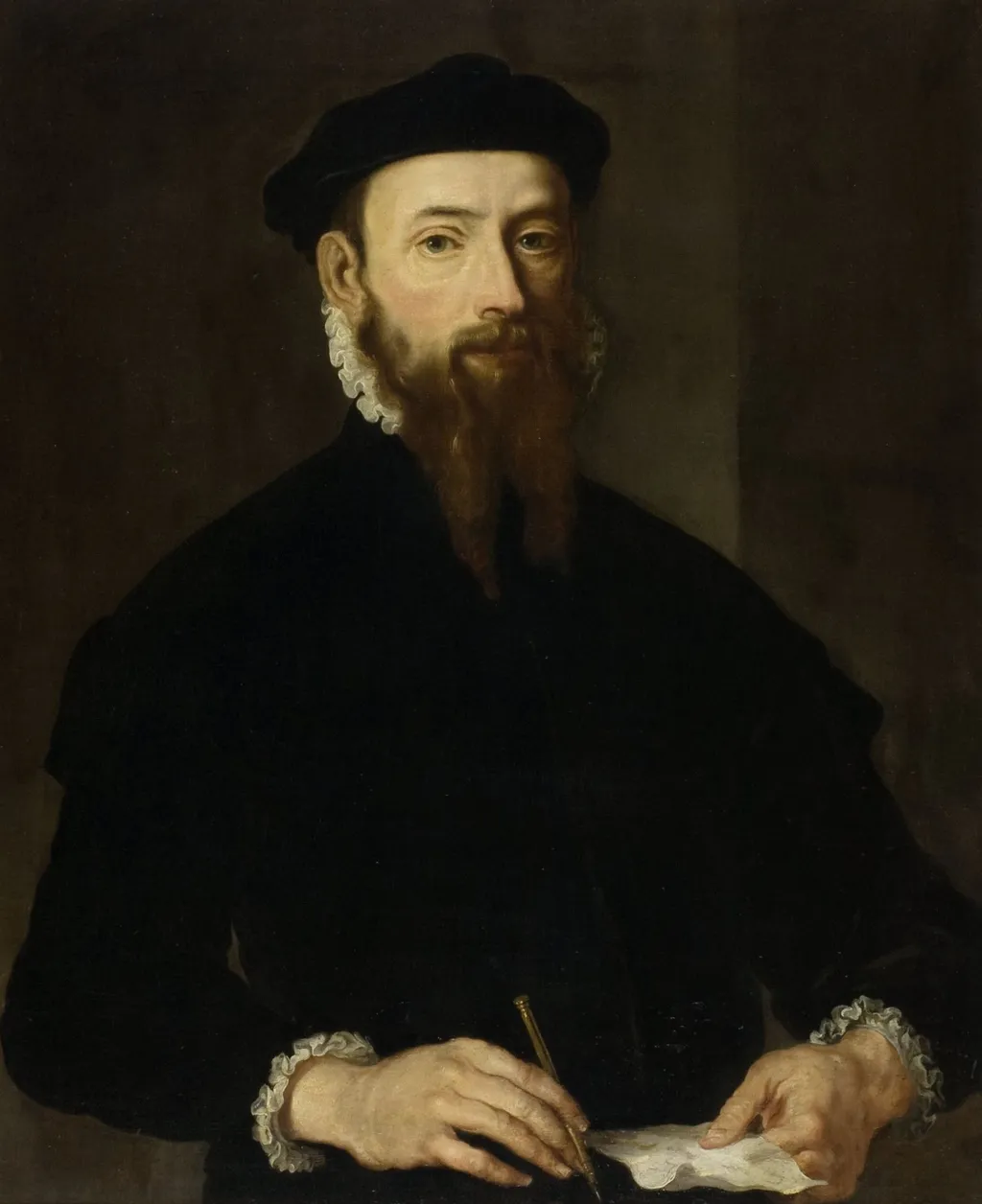
Portrait of a Man is an oil painting. It dates from 1550 and is held in the collection of the Rijksmuseum. The work is an oil painting portraying a bearded gentleman seated against a dark backdrop.
About this work
This portrait depicts a man with a long, dark beard and mustache, wearing a black hat and a black shirt with white ruffles on the cuffs and collar.
This portrait depicts a man with a long, dark beard and mustache, wearing a black hat and a black shirt with white ruffles on the cuffs and collar. He holds a piece of paper in his left hand and a golden pen in his right.
The background of the painting is dark, which contrasts with the man's face and hands, making them stand out. The man's attire and the style of the painting suggest that it was created in the 16th century.
The use of chiaroscuro, a technique that uses strong contrasts between light and dark, adds depth to the painting. If you're interested in learning more about this technique, look up chiaroscuro.
Overview
The work is an oil painting portraying a bearded gentleman seated against a dark backdrop. He wears a black hat and a black shirt trimmed with white ruffles at the cuffs and collar, and he holds a sheet of paper in his left hand while a golden pen rests in his right. The composition emphasizes the sitter’s face and hands through careful lighting.
Subject & Meaning
The figure appears to be a literate individual, suggested by the paper and pen, perhaps indicating a scholarly or bureaucratic role. The solemn expression and the formal attire reflect the conventions of portraiture intended to convey status and intellect during the period.
Technique & Style
The artist employs chiaroscuro, creating a stark contrast between illuminated flesh tones and the surrounding darkness. This manipulation of light gives the portrait a three‑dimensional presence and draws attention to the sitter’s features. The rendering of fabrics and the fine detailing of the ruffled cuffs are characteristic of 16th‑century Northern European portraiture.
Context
The painting’s stylistic elements—dark background, meticulous costume, and use of chiaroscuro—situate it within the Renaissance tradition of portraiture that sought to combine realistic likeness with symbolic indication of the subject’s profession or rank. Such works were commonly commissioned by members of the emerging middle class or minor nobility.
Artist & collection