Artwork
Portrait of a disabled man
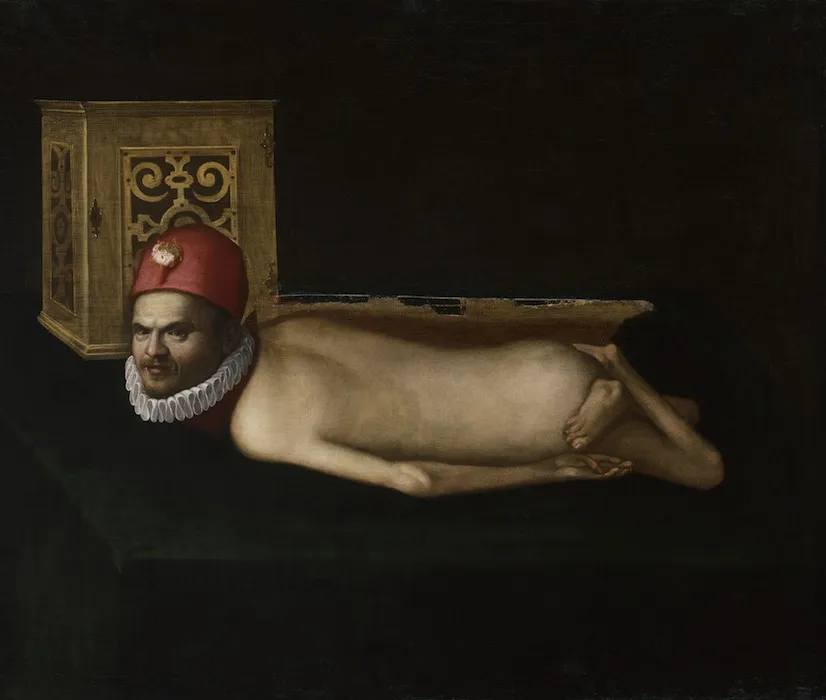
Portrait of a disabled man is an oil painting. It dates from 1600 and is held in the collection of the Kunsthistorisches Museum. The work is an oil painting that presents a nude male figure reclining on his side, directly engaging the viewer's gaze.
About this work
Overview
Behind him a wooden piece of furniture, likely a cabinet or table, is visible, its front adorned with decorative carving.
The work is an oil painting that presents a nude male figure reclining on his side, directly engaging the viewer's gaze. He is topped with a bright red hat bearing a white blossom and a frilled collar encircles his neck. Behind him a wooden piece of furniture, likely a cabinet or table, is visible, its front adorned with decorative carving. The overall composition is set against a deep, shadowed backdrop.
Subject & Meaning
The central figure appears to be a man whose posture suggests vulnerability or contemplation, emphasized by his nudity and relaxed pose. The inclusion of the hat and collar adds a touch of attire that contrasts with his exposed body, perhaps indicating a blend of public and private identity. The ornate furniture in the background may serve as a symbolic setting, hinting at domestic or interior space that frames the figure's presence.
Technique & Style
Rendered with a realistic approach, the painting showcases meticulous attention to the anatomy of the body, the subtle play of light across skin, and the nuanced expression on the face. Strong contrasts between illuminated areas and deep shadows create a chiaroscuro effect, giving the figure a three‑dimensional quality and drawing the eye to the contours of the form. The dark background further isolates the subject, enhancing visual impact.
Context
While specific details about the artist, date, or provenance are not provided, the use of chiaroscuro and the careful modeling of flesh align the piece with traditions of European academic painting that valued anatomical precision and dramatic lighting. The presence of decorative furniture suggests a setting typical of interior genre scenes, indicating the work may have been intended for a private collection or a salon environment.
Artist & collection
