Artwork
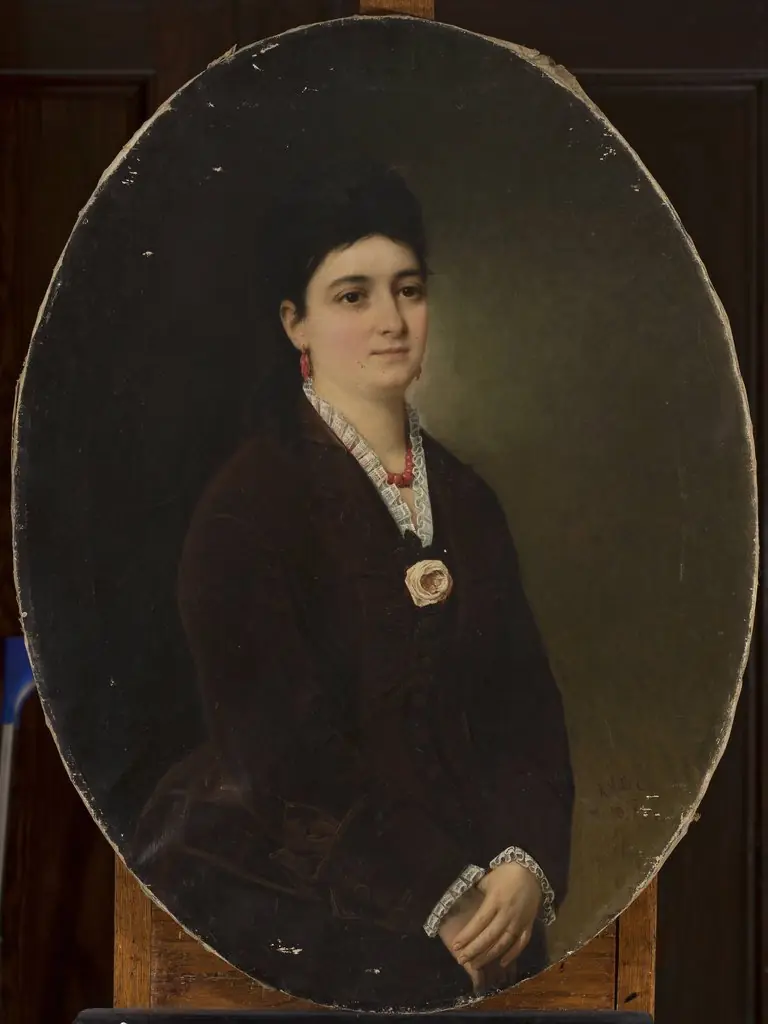
Bildnis Hermine Krebs
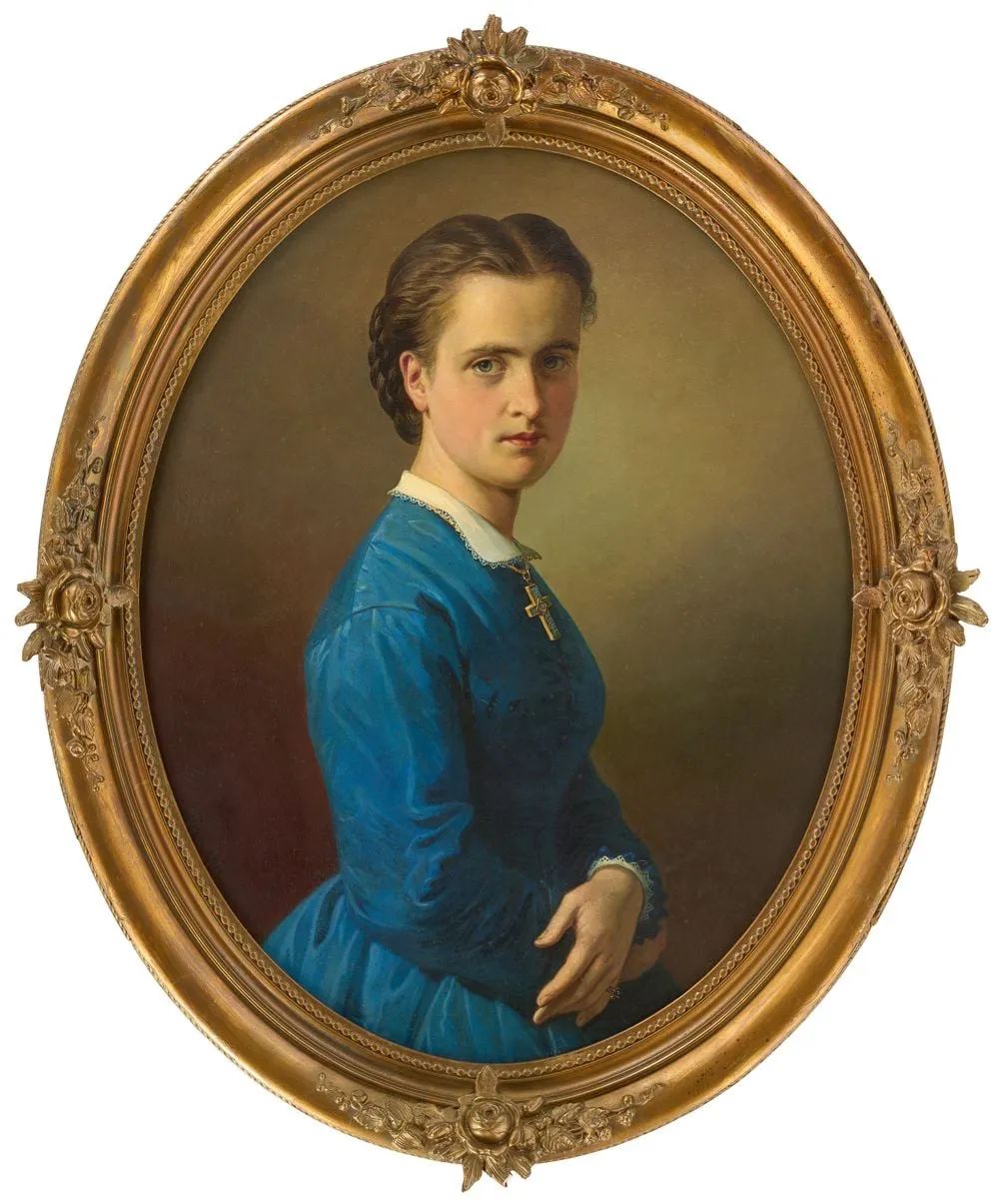
Bildnis Hermine Krebs is a drawing by Dürr, Wilhelm. It dates from 1871 and is held in the collection of the City Museums Freiburg.
About this work
Overview
Painted in 1871 by Wilhelm Dürr, this portrait depicts Hermine Krebs, a woman whose identity is tied to the cultural context of late 19th-century Germany.
Painted in 1871 by Wilhelm Dürr, this portrait depicts Hermine Krebs, a woman whose identity is tied to the cultural context of late 19th-century Germany. The work resides in the Museum of Ethnography, where it is preserved not as a celebrity likeness but as a representation of everyday bourgeois life. Its restrained composition and deliberate focus on the subject reflect a quiet dignity typical of domestic portraiture of the era.
Subject & Meaning
Hermine Krebs is portrayed with composure, her gaze steady and unadorned, suggesting an emphasis on inner steadiness rather than social display. Her neatly arranged hair and modest attire indicate adherence to contemporary norms of propriety. The absence of symbolic objects or elaborate settings shifts attention to her presence alone, implying a value placed on personal character over status markers.
Technique & Style
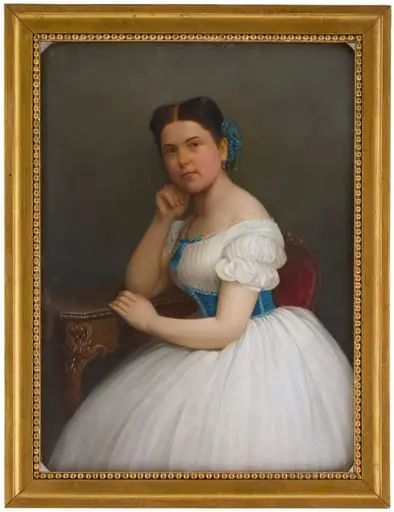
Dürr employs subtle tonal gradations to model the contours of the face and fabric, creating a soft, lifelike texture without overt brushwork. The blue dress, the sole area of vivid color, is rendered with muted intensity, contrasting deliberately against the deep, neutral background. The ornate gold frame, though not part of the painted surface, functions as a decorative boundary that elevates the portrait’s formality without distracting from its simplicity.
History & Provenance
The painting entered the collection of the Museum of Ethnography shortly after its creation, likely through private donation or institutional acquisition. Its placement in an ethnographic context, rather than a fine arts gallery, suggests an interest in documenting regional dress and social types. The work’s survival intact, with its original frame, indicates careful stewardship since the 19th century.
Context
In 1871, Germany was newly unified, and portraiture often served as a means of affirming middle-class identity. Dürr’s approach aligns with regional traditions that favored realism over romanticism. The portrait’s quietness reflects a broader cultural shift toward introspection and domestic values, distinguishing it from the more theatrical portraits of aristocratic subjects common in earlier decades.
Legacy
Though Wilhelm Dürr is not widely known outside regional art histories, this portrait endures as a quiet example of bourgeois representation in post-unification Germany. Its preservation in an ethnographic museum underscores its value as a record of material culture and social demeanor. It continues to offer insight into how ordinary individuals were visually framed during a period of national transformation.
Artist & collection
Artist
 Portrait of a young girl
 Portrait of Julia née Bergson, artist’s wife
 Portrait of Maria Healy, the Artist's Daughter
 Portretul Alexandrinei Assan
 Self-portrait
 Maria Agnes Claesson (1843- efter 1903), gift med konstnären Edvard Perséus
 Elise Ljungman, m. Paint Manufacturer and the Director of an Orphanage Signeul in Uddevalla
 Berta Gorgon
 Portret de femeie
 Hermine Kopp, geb. Mayer
 Portrait of Maria Sawiczewska, artist’s sister
 Portrait of Maria Sędziak née Żyżniewska