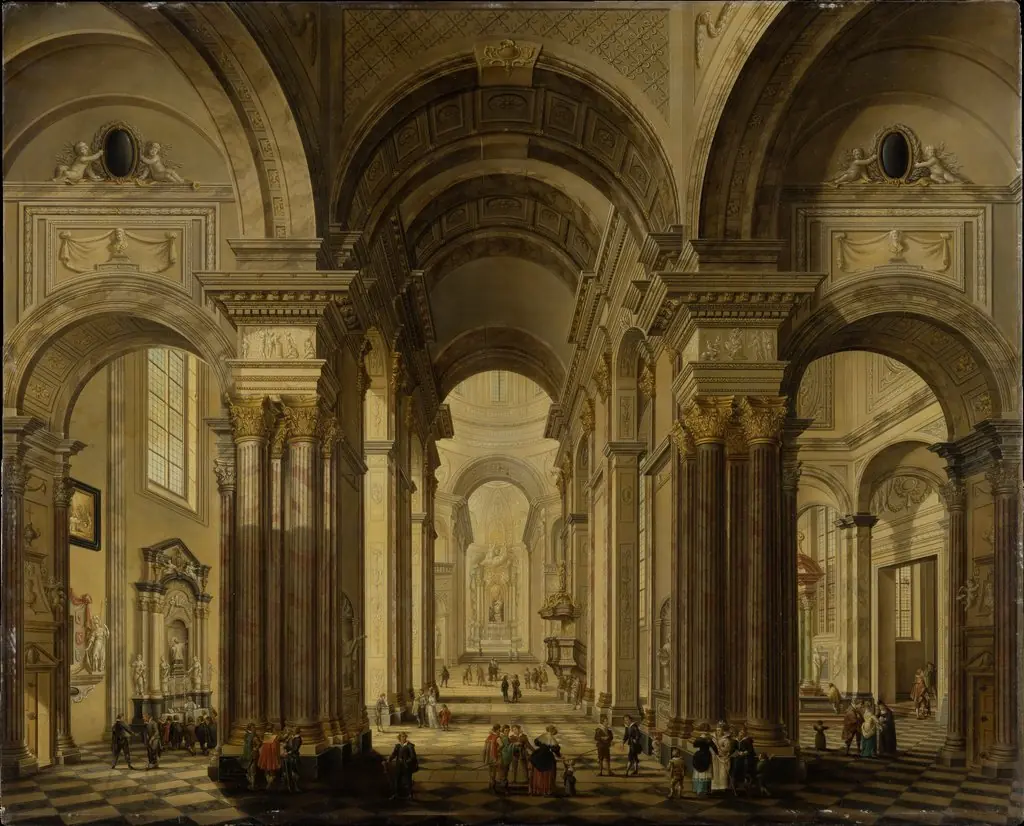
Artwork
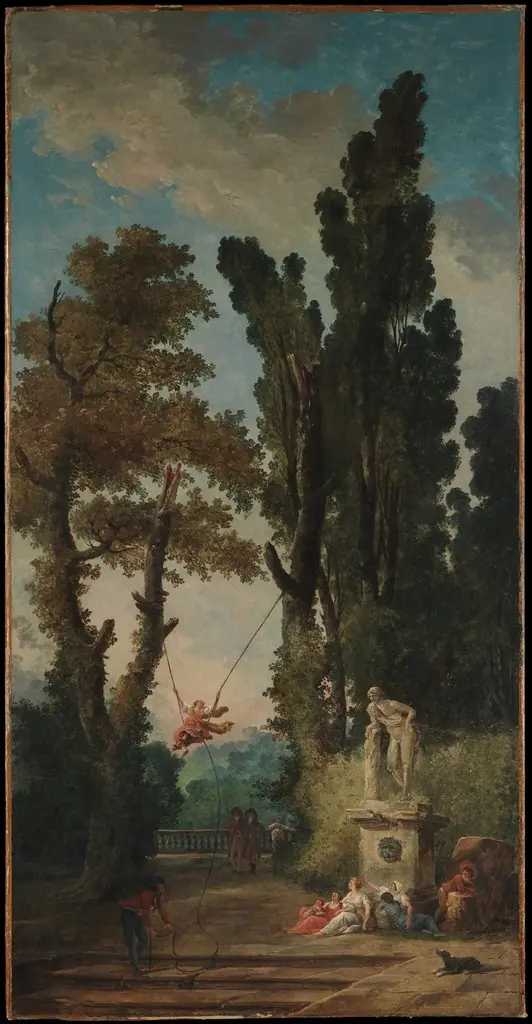
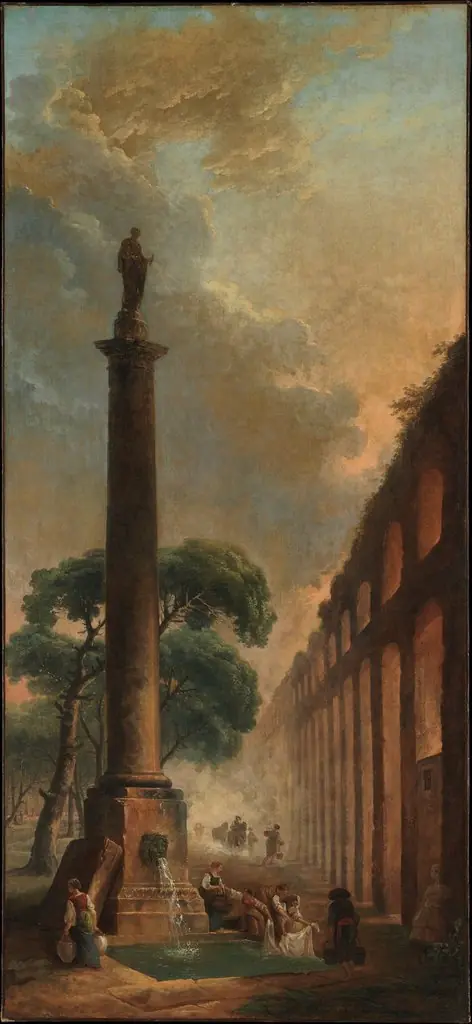
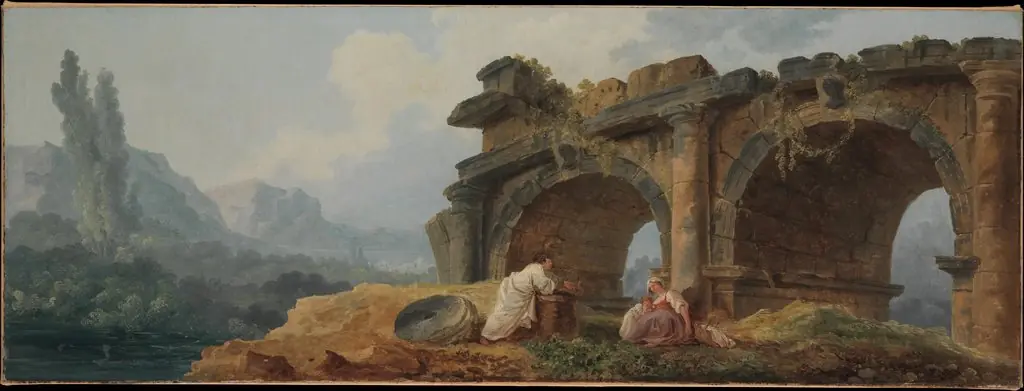
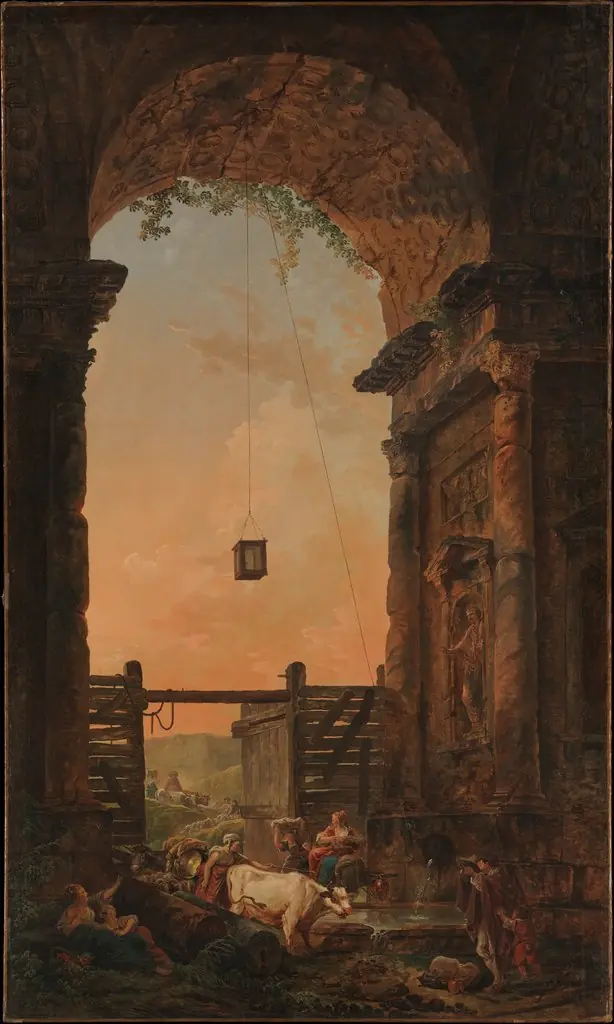
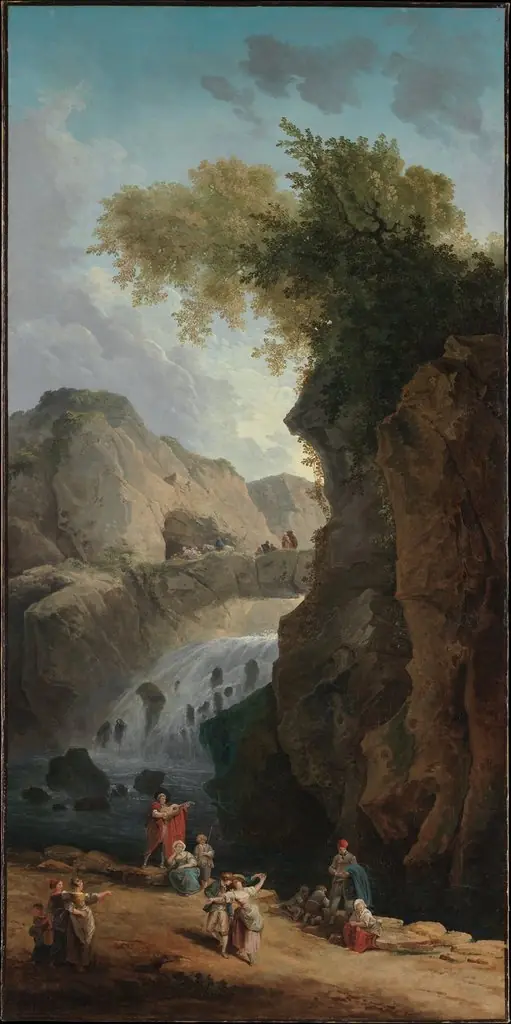
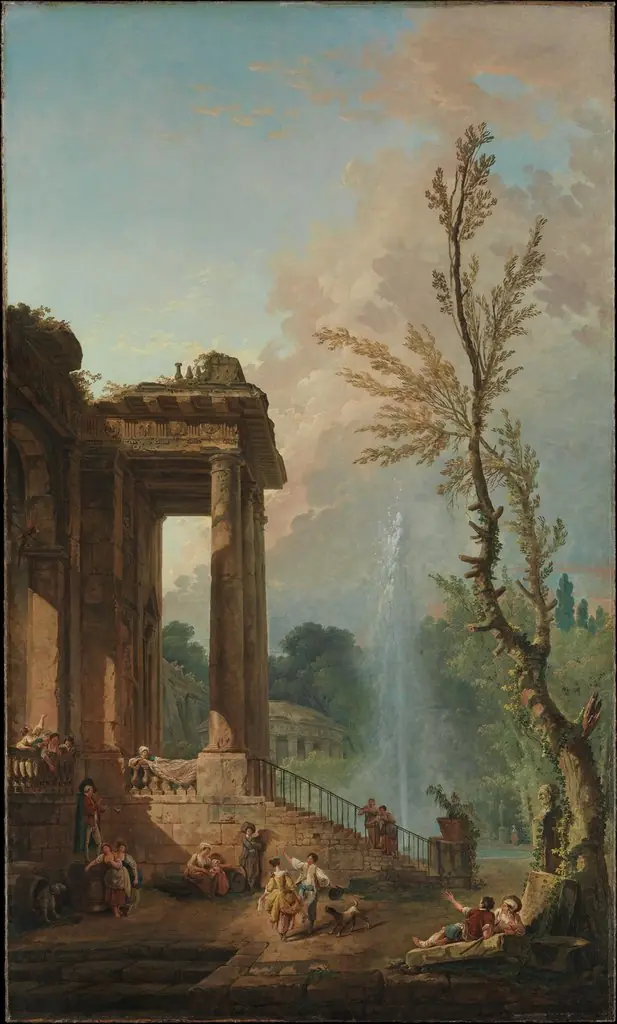
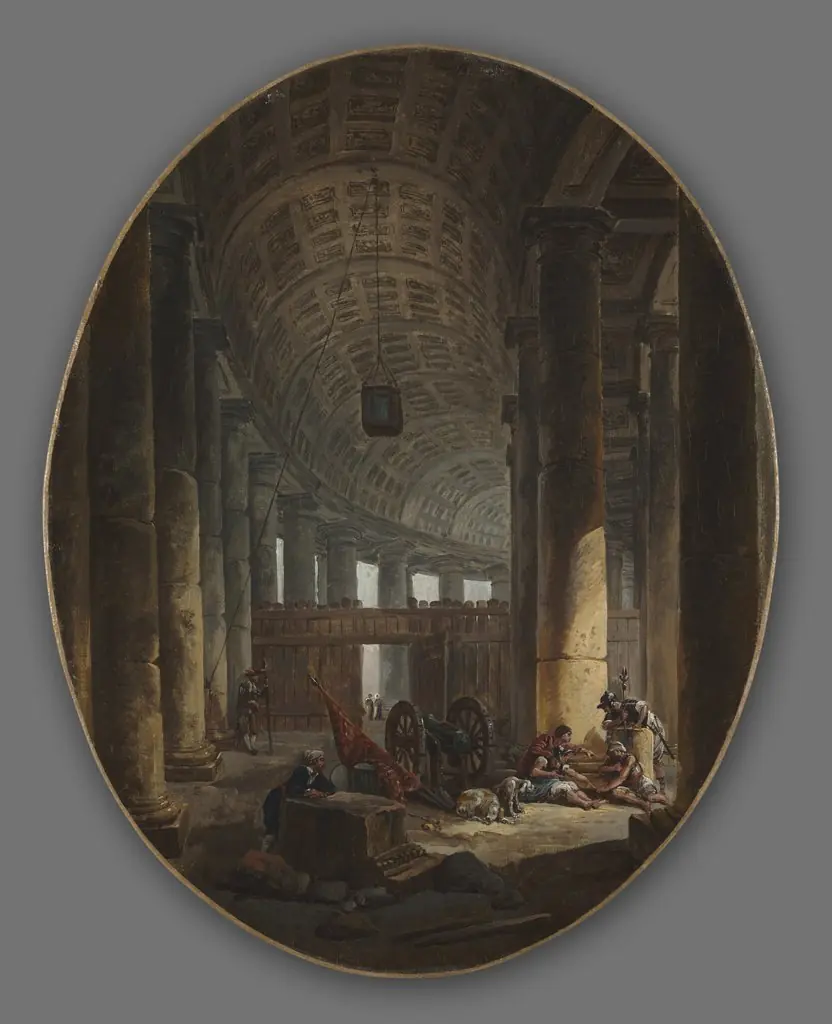
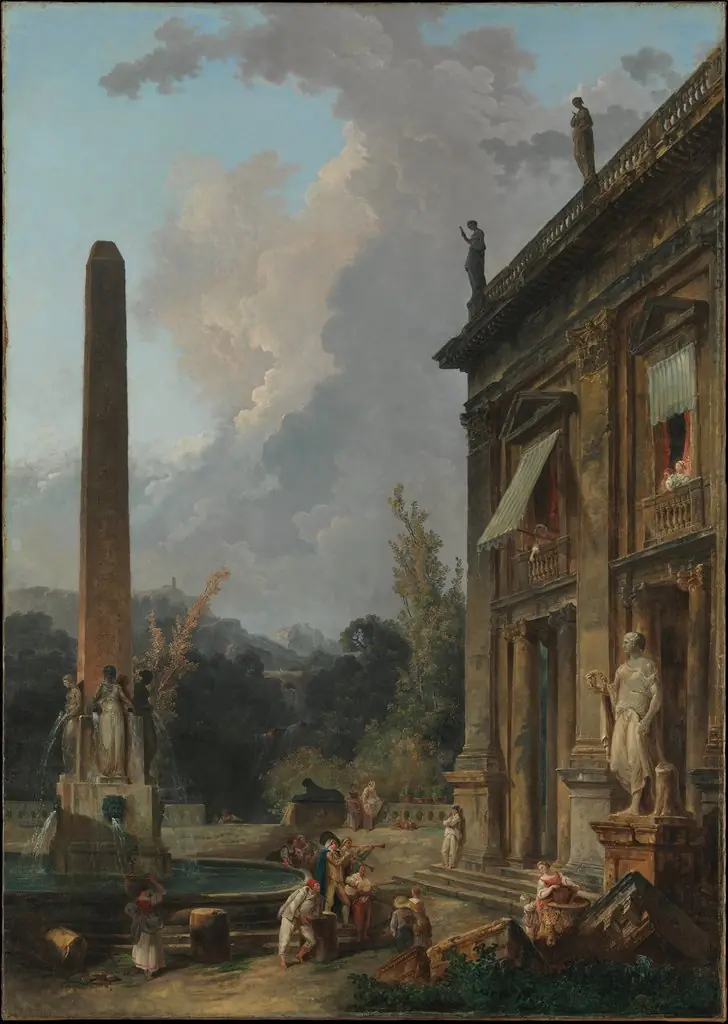
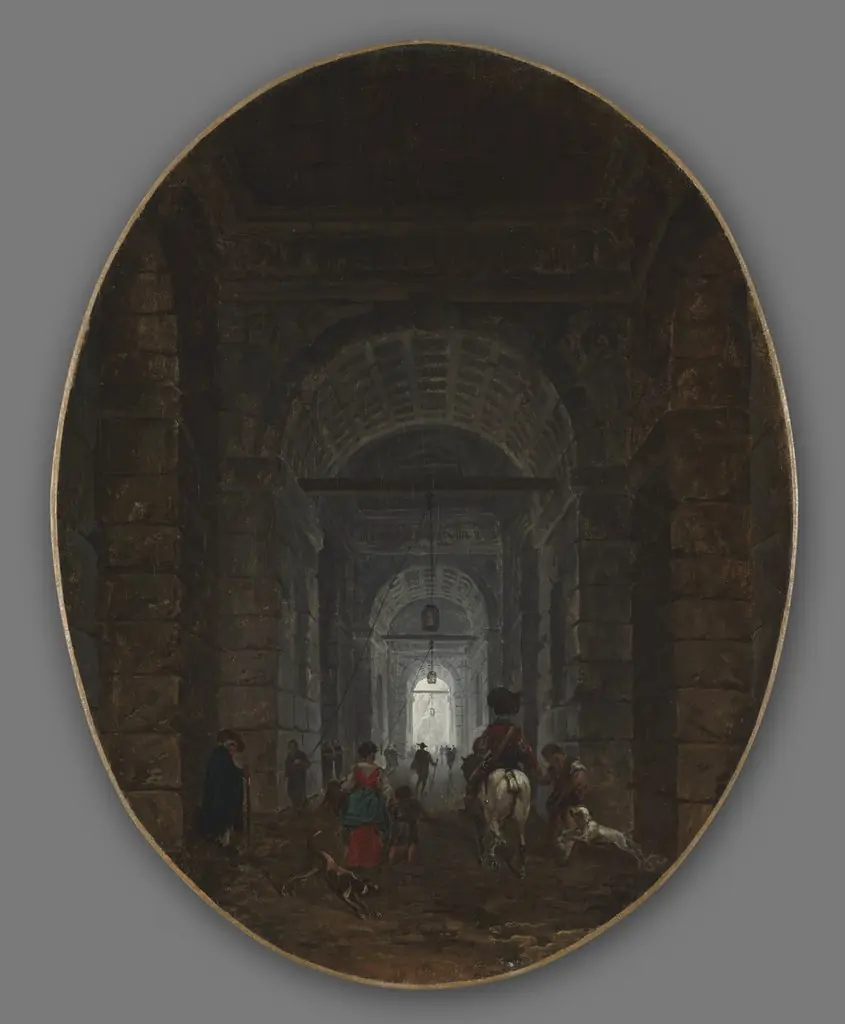
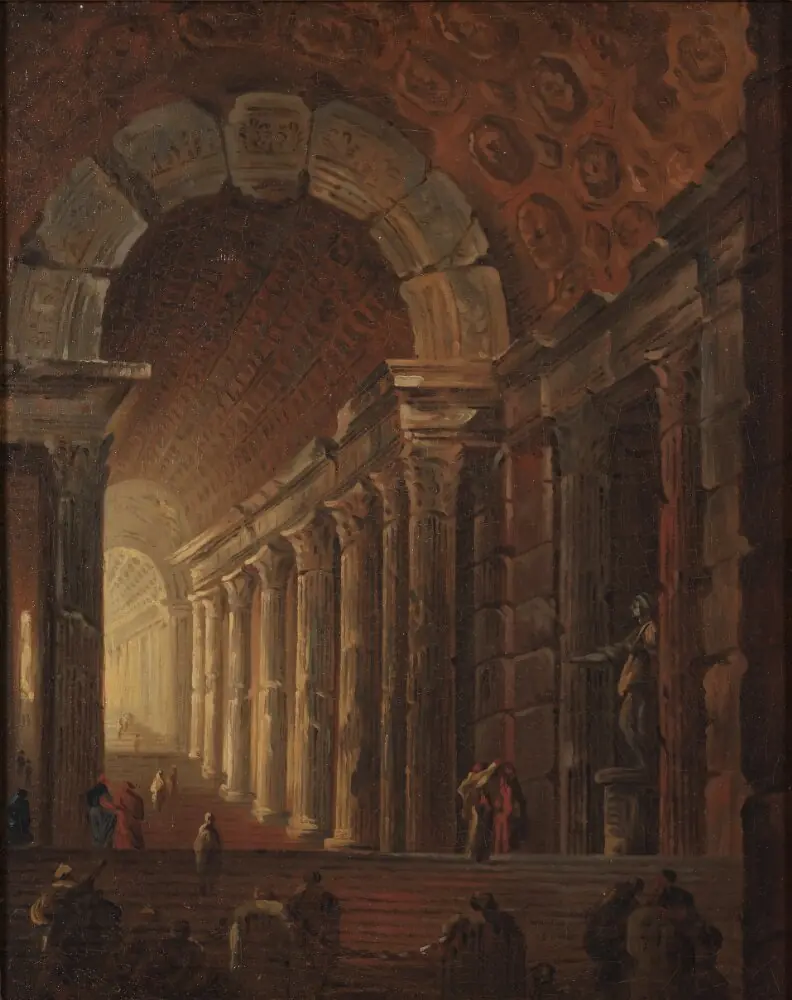
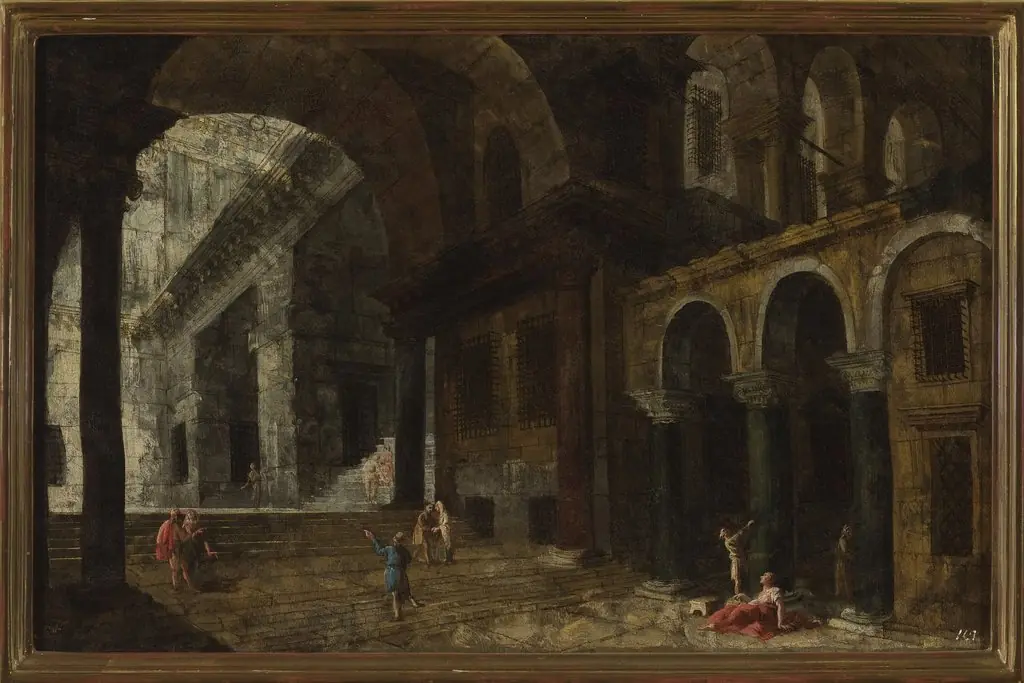
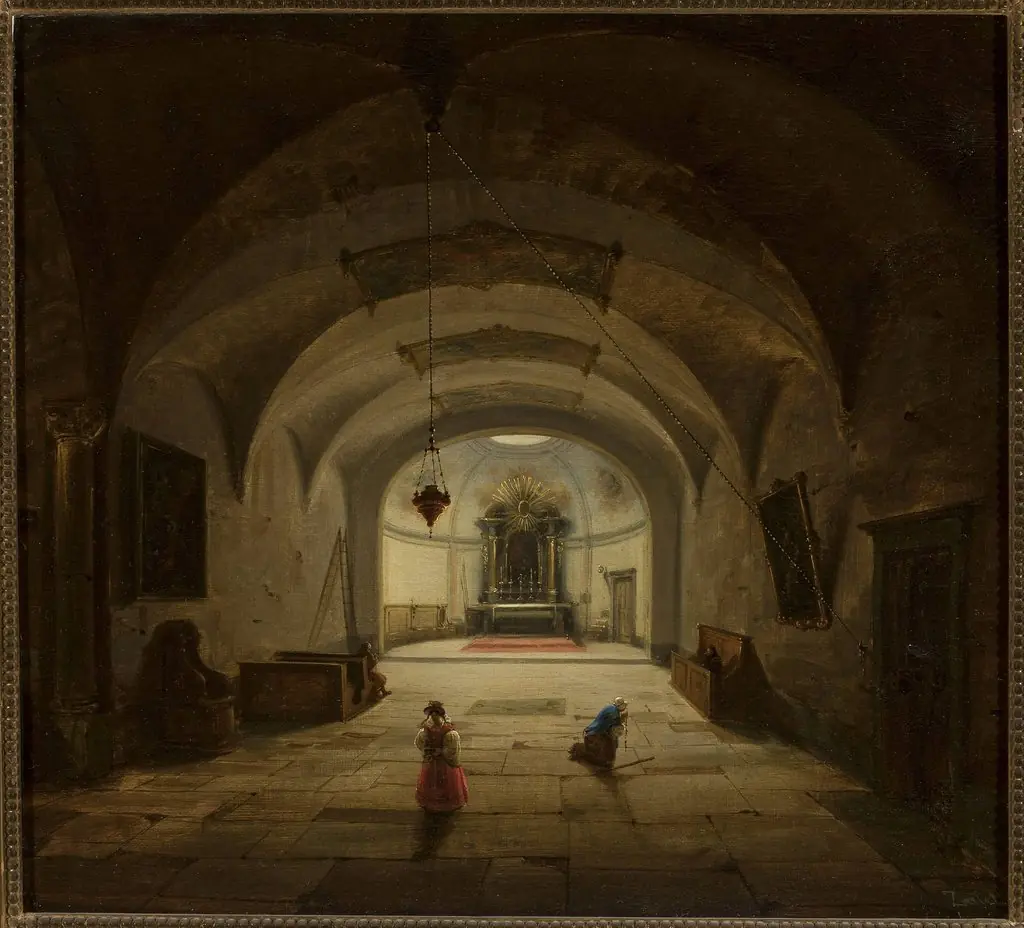
Pair of Paintings: The Colonnade of St. Peter's, Rome, during the Conclave and The Grotto of Posillipo
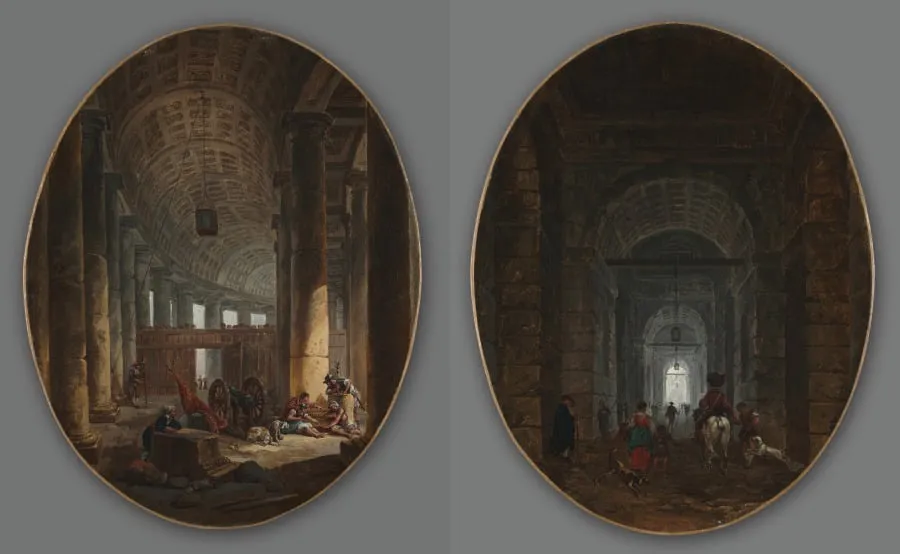
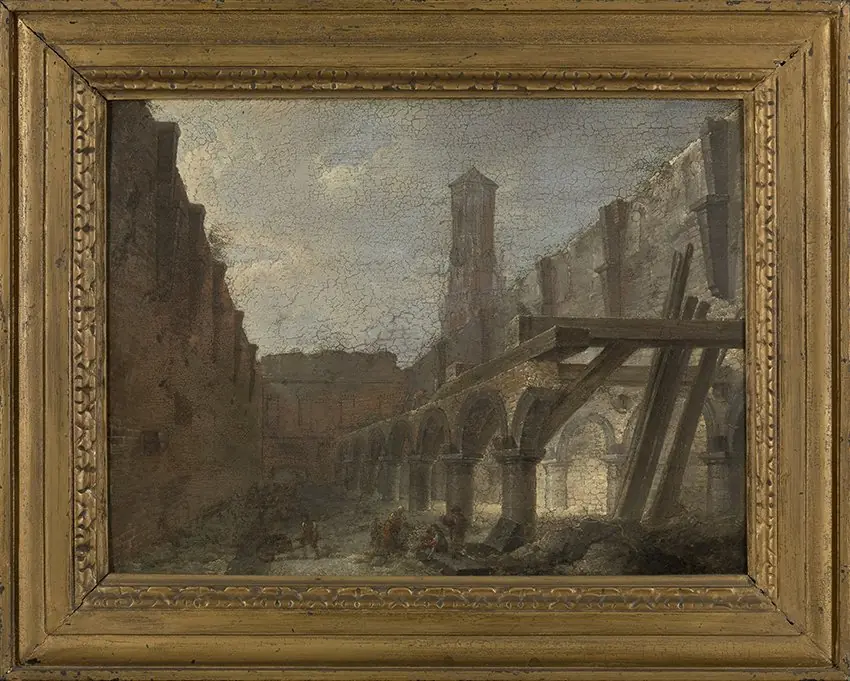
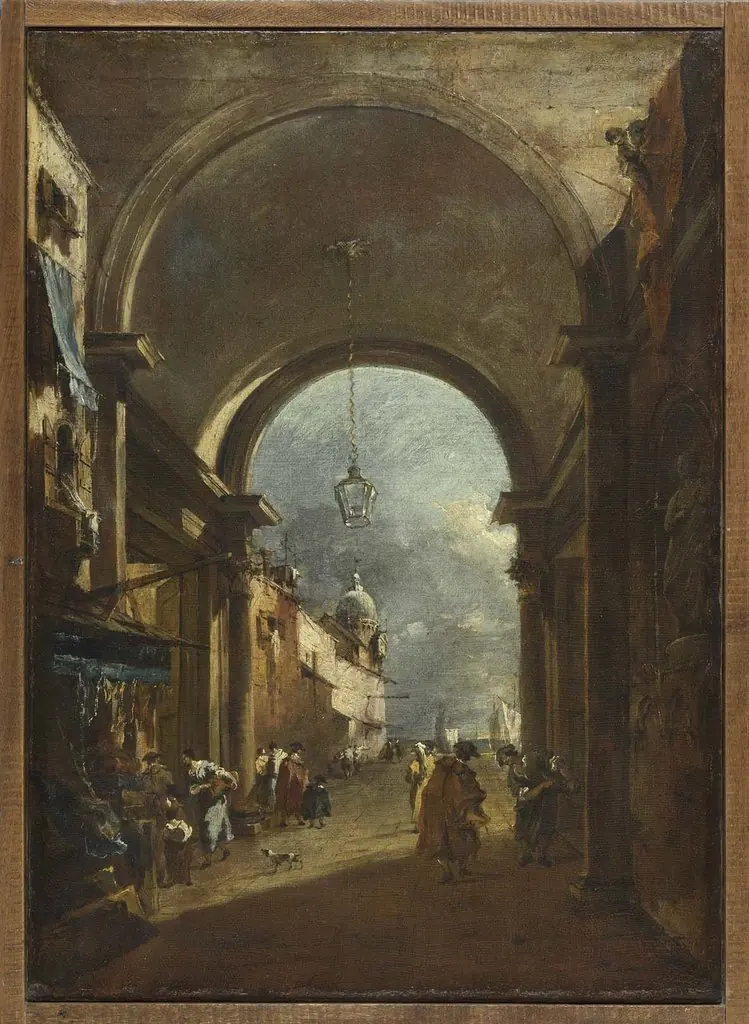
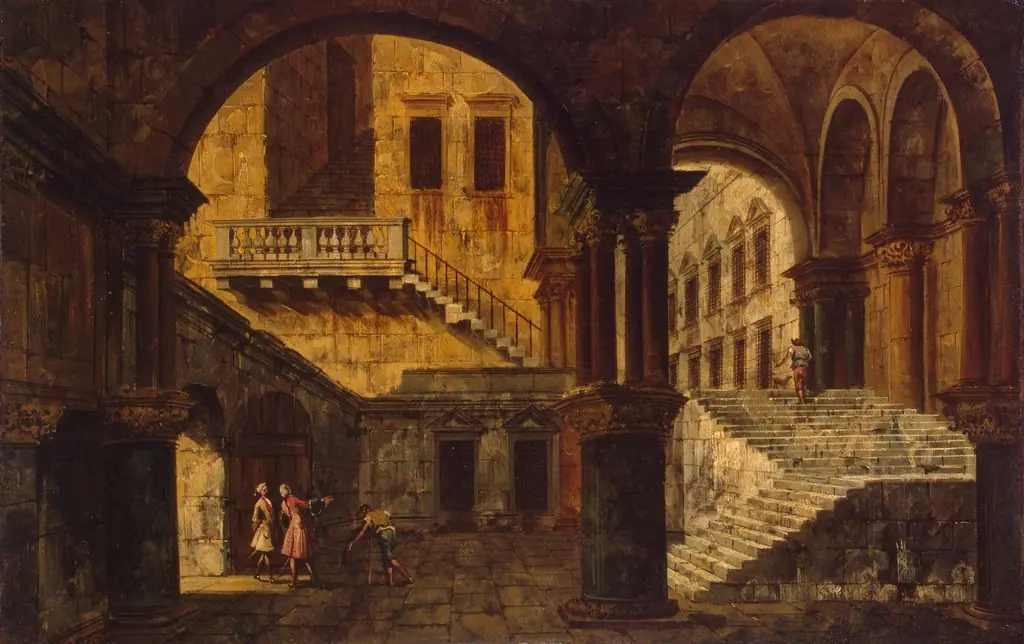
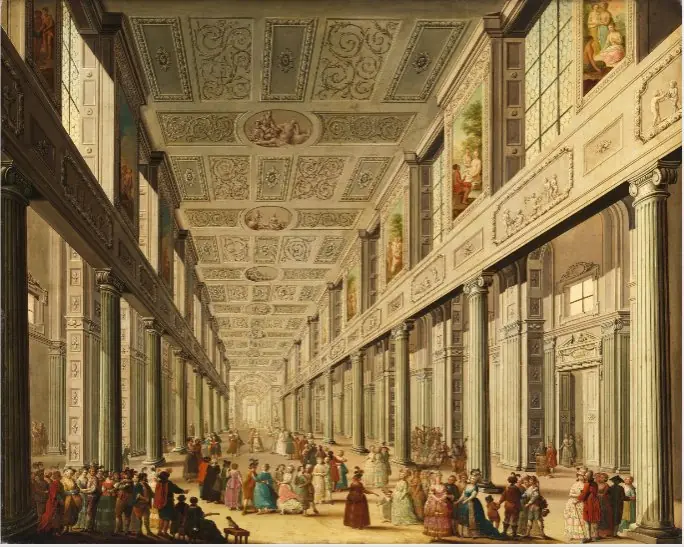
Pair of Paintings: The Colonnade of St. Peter's, Rome, during the Conclave and The Grotto of Posillipo is an unspecified painting by the Rococo painting artist Hubert Robert. It dates from 1769 and is held in the collection of the Cleveland Museum of Art. The pair of canvases presents two distinct architectural vistas: the exterior colonnade of St.
About this work
This painting shows two scenes: a colonnade in Rome and a grotto in Posillipo.
The artist spent time in Italy, which influenced his work. He drew the colonnade in 1758, and it shows in the details.
He liked classical subjects, and this painting reflects that.
You can learn more about this style by looking at the work of artist: Hubert Robert (French, 1733–1808)
Overview
The pair of canvases presents two distinct architectural vistas: the exterior colonnade of St. Peter’s Basilica in Rome, rendered during the papal conclave of 1758, and an imagined view of the ancient Roman tunnel at Posillipo near Naples. Both works were executed by French painter Hubert Robert, whose long Italian sojourn (1754–1765) left a lasting imprint on his subject matter.
Subject & Meaning
In the Roman scene, Robert emphasizes the timelessness of classical architecture by depicting weathered columns and inserting a figure clad in Roman armor, suggesting a dialogue between past and present. The Posillipo canvas, meanwhile, transforms a functional Roman passageway into a monumental, almost theatrical space, highlighting the artist’s fascination with antiquity’s engineering feats.
Technique & Style
Robert employs a clear, luminous palette and precise linear perspective to convey depth in both settings. Architectural elements are rendered with meticulous draftsmanship, reflecting his training as an architectural painter. The imagined embellishments—coffered vaults and engaged columns in the grotto—demonstrate his capacity to blend accurate observation with inventive idealization.
History & Provenance
After his return to Paris, Robert was admitted to the Royal Academy as a full member in 1766, cementing his reputation for grand architectural subjects.
The drawing for the St. Peter’s colonnade dates to 1758, the year Pope Clement XIII was elected, and likely served as the compositional basis for the painting. After his return to Paris, Robert was admitted to the Royal Academy as a full member in 1766, cementing his reputation for grand architectural subjects. The works have remained in public collections, illustrating his enduring association with the French academic tradition.
Context
Robert’s Italian period coincided with a broader 18th‑century European enthusiasm for classical ruins and archaeological study. His depictions align with the era’s neoclassical taste, while also reflecting contemporary interest in the engineering achievements of ancient Rome, a theme popular among travelers on the Grand Tour.
Artist & collection
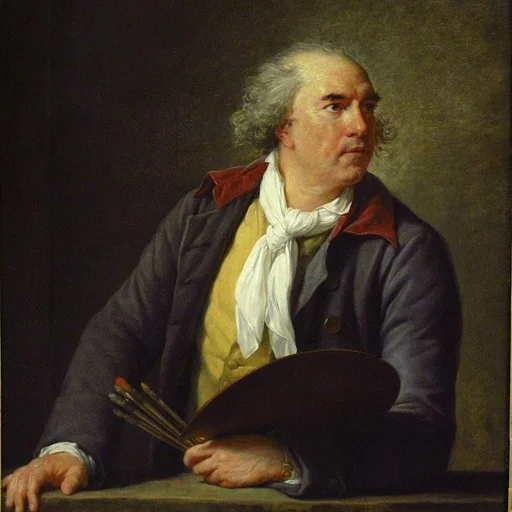
Artist
Hubert Robert (French pronunciation: ; 22 May 1733 – 15 April 1808) was a French painter in the school of Romanticism, noted especially for his landscape paintings and capricci, or semi-fictitious picturesque depictions of ruins in Italy…