Artwork
Woodland Stream
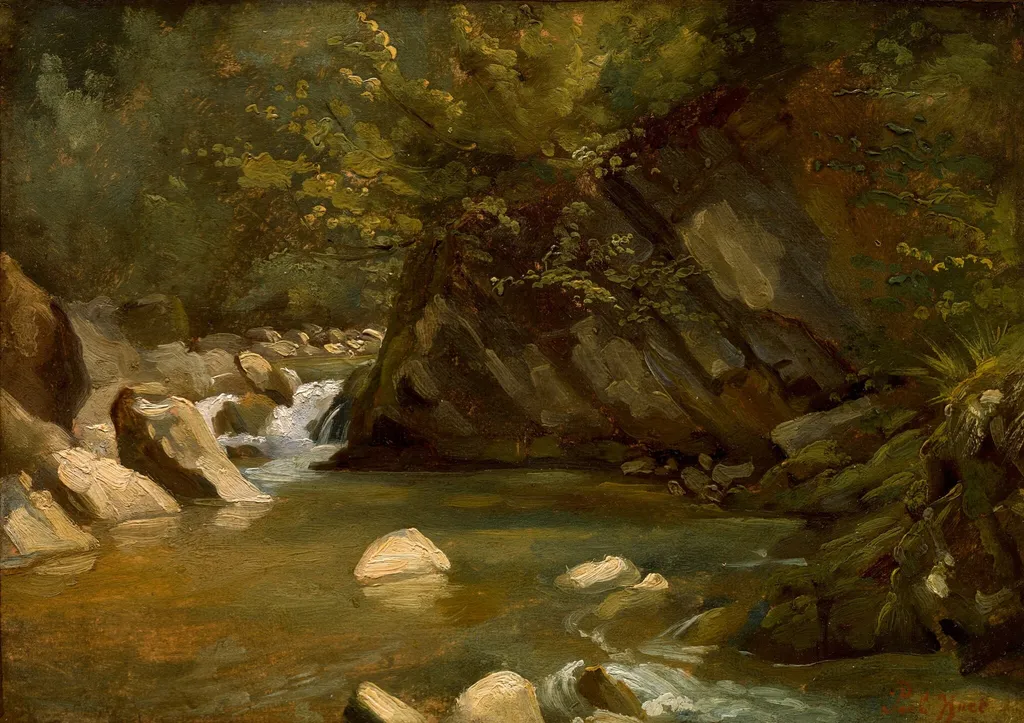
Woodland Stream is an oil painting by the Romanticist artist Paul Huet. It dates from 1840 and is held in the collection of the National Gallery of Art.
About this work
Overview
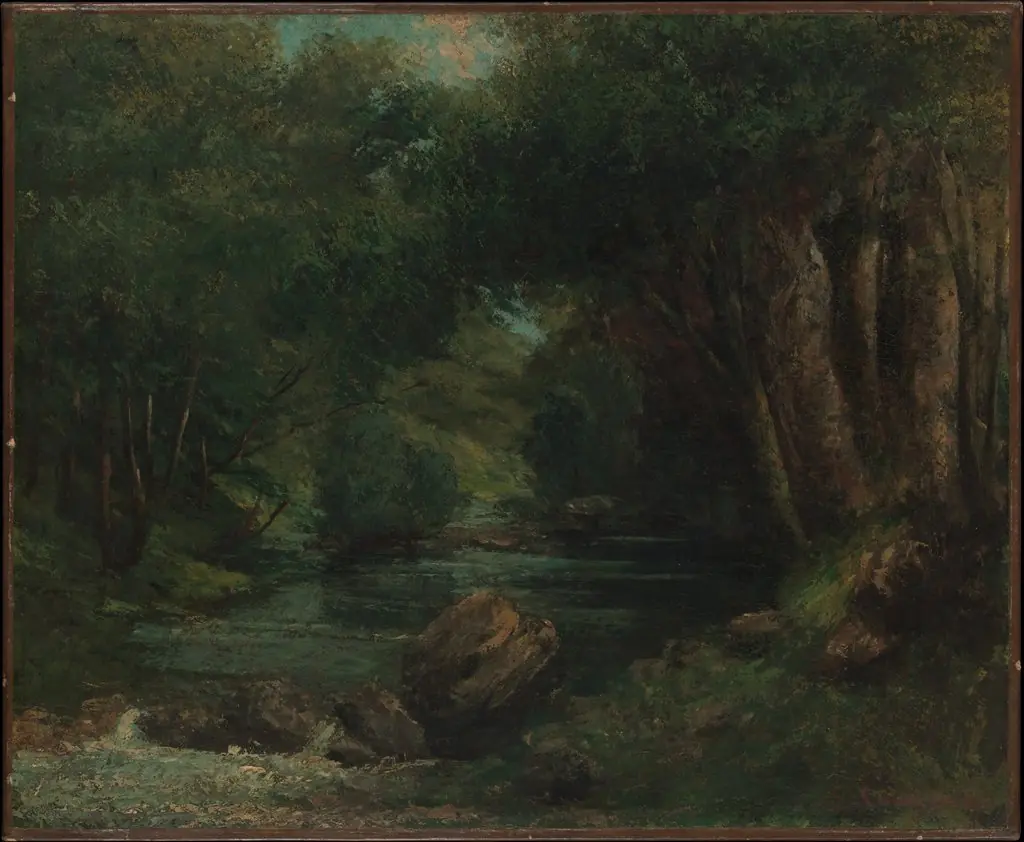
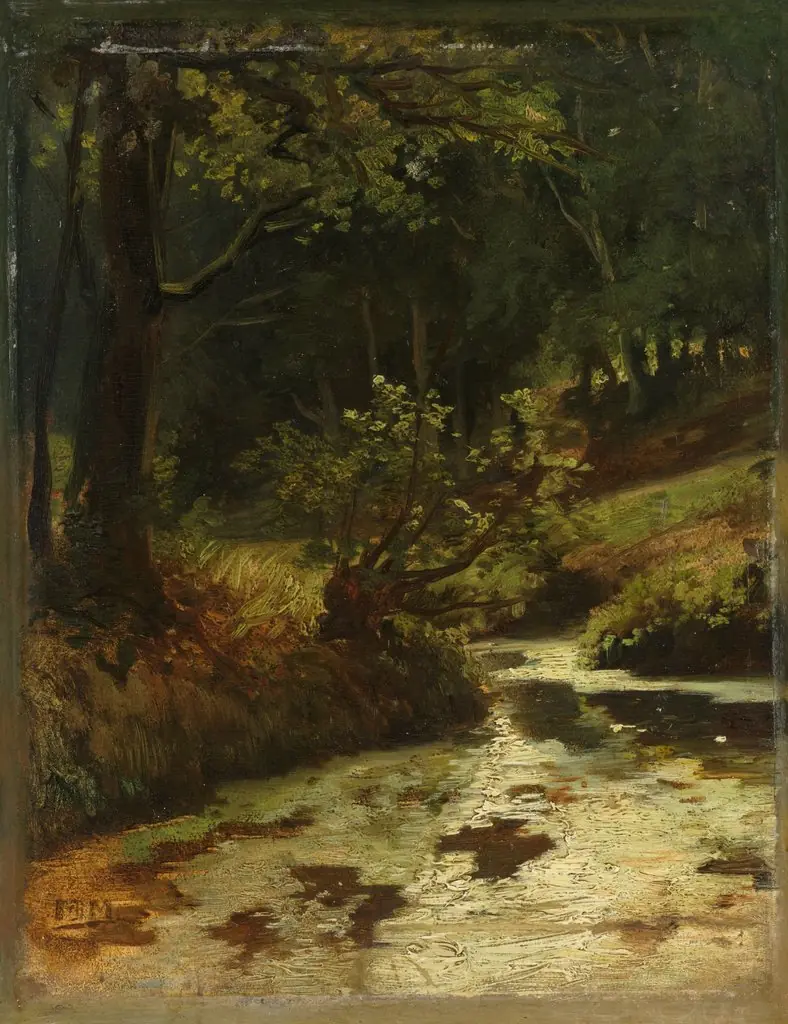
Paul Huet’s oil on canvas, dated around 1840, presents a tranquil woodland scene where a gentle stream winds between a cluster of trees. The composition is anchored by the interplay of light and muted hues, which together evoke a quiet, contemplative atmosphere. The work is part of the National Gallery of Art’s collection in Washington, D.C.
Subject & Meaning
The painting captures a secluded natural setting, focusing on the flowing water and surrounding foliage. By emphasizing the soft illumination of the canopy and the reflective surface of the stream, Huet invites viewers to experience a moment of repose within the forest, suggesting an idealized vision of rural serenity.
Technique & Style
Huet employs a glazing method, building up thin, translucent layers of pigment to achieve depth and richness of color. This approach allows subtle variations in tone and a luminous quality that enhances the atmospheric effect. The delicate handling of light across the foliage and water reflects the artist’s interest in Romantic landscape traditions.
History & Provenance
Created circa 1840, the canvas entered the National Gallery of Art’s holdings in the United States, where it remains on display. Its acquisition history traces back to early 20th‑century collectors who recognized Huet’s contribution to French landscape painting, ensuring the work’s preservation within a public institution.
Context
Huet worked during a period when French artists were turning toward naturalistic depictions of the countryside, moving away from idealized classical motifs. His focus on atmospheric effects and intimate forest scenes aligns with contemporary Romantic sensibilities, positioning the painting within broader trends of mid‑19th‑century landscape art.
Own this work as a print
Artist & collection