Artwork
Evening
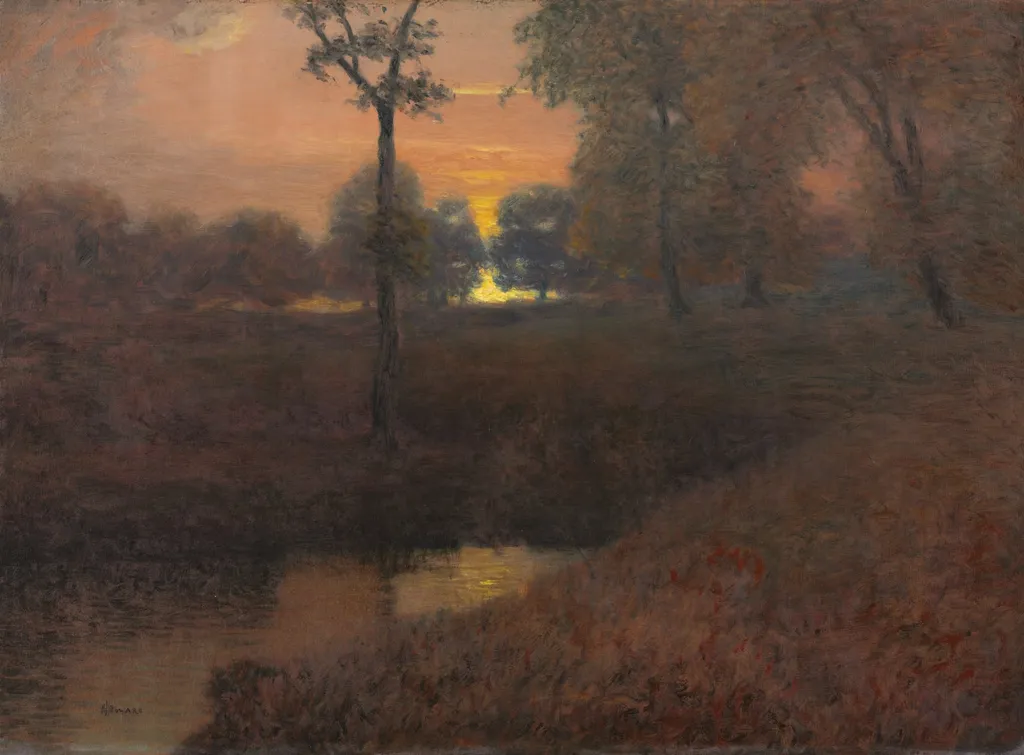
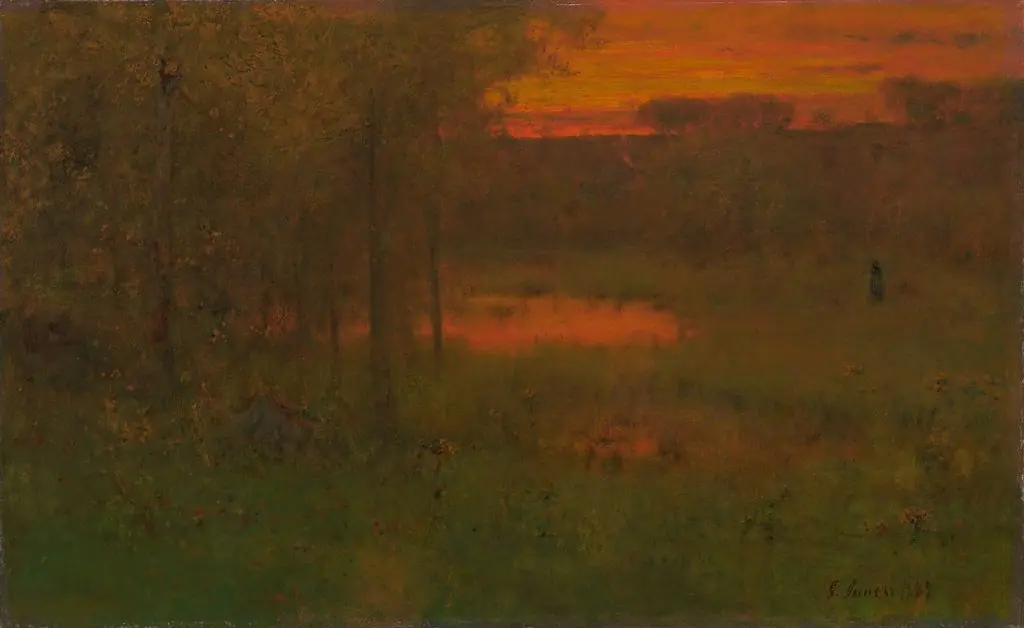
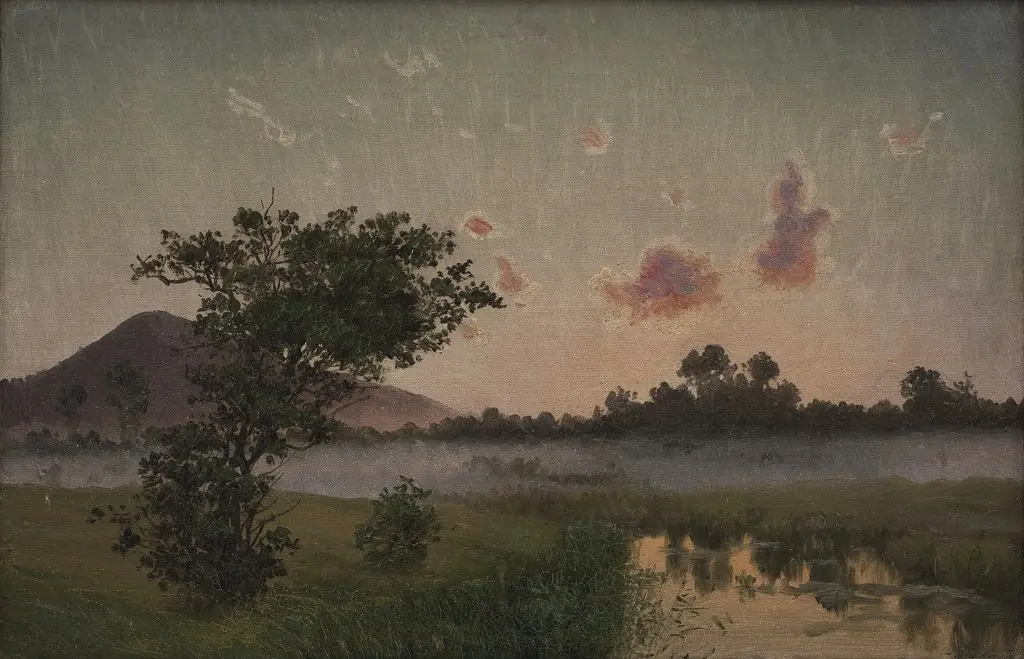
Evening is an unspecified painting by the American Impressionist artist Hugh Huntington Howard. It dates from 1919 and is held in the collection of the Cleveland Museum of Art.
About this work
Overview
Evening, painted in 1919 by Hugh Huntington Howard, is a quiet cityscape that captures the transition from day to night. The work is part of the collection at The Cleveland Museum of Art. It presents a subdued urban landscape at twilight, emphasizing stillness and the subtle interplay of natural light. The composition avoids dramatic action, instead focusing on the quietude of a fading day.
Subject & Meaning
The painting centers on a solitary tree in the foreground, its bare branches reaching into a sky washed with hues of orange and pink.
The painting centers on a solitary tree in the foreground, its bare branches reaching into a sky washed with hues of orange and pink. Behind it, distant trees form a soft silhouette, suggesting a suburban or semi-rural edge. The scene conveys no human presence, inviting contemplation rather than narrative. The stillness and fading light suggest a moment of pause, perhaps reflecting on the passage of time or the calm after daily activity.
Technique & Style
Howard employs a restrained palette and soft brushwork to blend the sky’s gradients seamlessly. The tree’s form is rendered with loose, suggestive strokes, avoiding sharp definition. Light is diffused rather than sharply defined, creating a hazy, atmospheric effect. The technique prioritizes mood over detail, aligning with tendencies found in late 19th- and early 20th-century American tonalism rather than strict Impressionism.
History & Provenance
Created in 1919, Evening entered the Cleveland Museum of Art’s collection through documented acquisition, though specific provenance details prior to museum ownership are not widely published. Howard, active in the early 20th century, was known for landscape works that reflected regional sensibilities. The painting’s preservation and public display suggest it was regarded as a representative example of his quieter, contemplative style.
Context
In the post-World War I era, many American artists turned to serene natural scenes as a counterpoint to societal upheaval. Howard’s work fits within a broader trend of tonalist landscapes that emphasized mood, subdued color, and introspective atmosphere. While not part of a formal movement, his approach resonated with contemporaries seeking calm through nature, distinct from the vibrancy of European Impressionism.
Legacy
Evening remains a modest but enduring example of early 20th-century American landscape painting. It is not widely reproduced or studied outside institutional contexts, yet it continues to serve as a quiet reference for artists and viewers interested in the emotional potential of twilight and solitude. Its presence in a major museum underscores its role as a representative work of its time and sensibility.
Own this work as a print
Artist & collection