Artwork
The Trotter
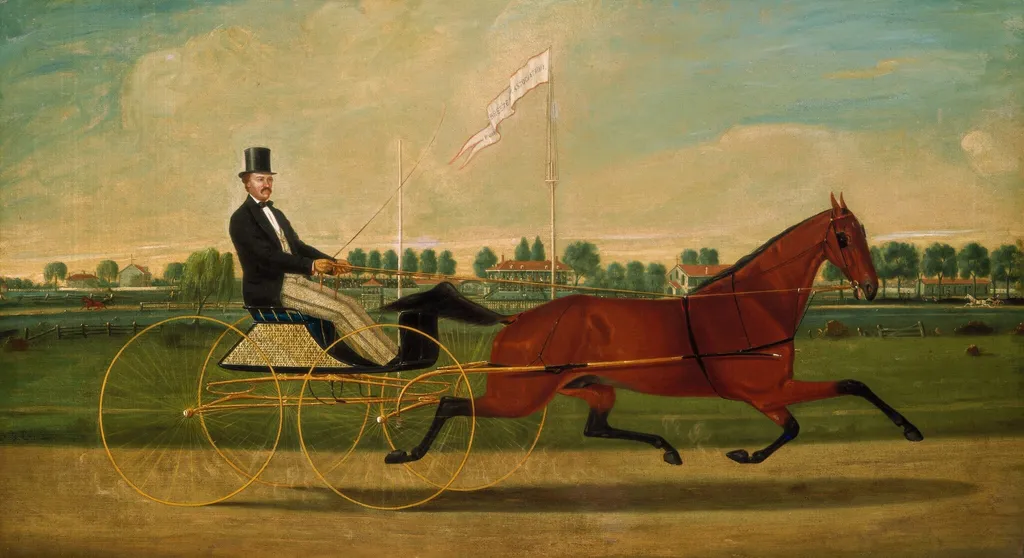
The Trotter is an oil painting by the Impressionist artist Charles S. Humphreys. It dates from 1860 and is held in the collection of the National Gallery of Art.
About this work
Overview
The Trotter, executed in oil on canvas around 1860, presents a solitary figure guiding a horse along a tranquil rural lane. The composition isolates the man and animal against a softened, indistinct backdrop, drawing attention to their quiet interaction and the subtle play of light across the scene.
Subject & Meaning
At the center of the work, a man gently leads a horse by its halter, the animal appearing calm and compliant. The relaxed grip of the rope and the unhurried pace suggest a moment of everyday rural routine, emphasizing a harmonious relationship between human and beast within a peaceful countryside setting.
Technique & Style
Humphreys employs a loose brushstroke to render the textures of the man's coat and the horse's hide, allowing the forms to suggest rather than delineate detail. Light is captured on the horse’s flank, while the face remains in shadow, and the background recedes into a blurred haze, creating depth and a sense of motion through atmospheric perspective.
History & Provenance
Created circa 1860 by American painter Charles S. Humphreys, The Trotter reflects the artist’s mid‑nineteenth‑century interest in rural genre scenes. While specific ownership records are limited, the painting remains a representative example of Humphreys’s oeuvre, illustrating his approach to everyday subjects and his handling of oil medium during this period.
Artist & collection