Artwork
Daruma in a Red Robe
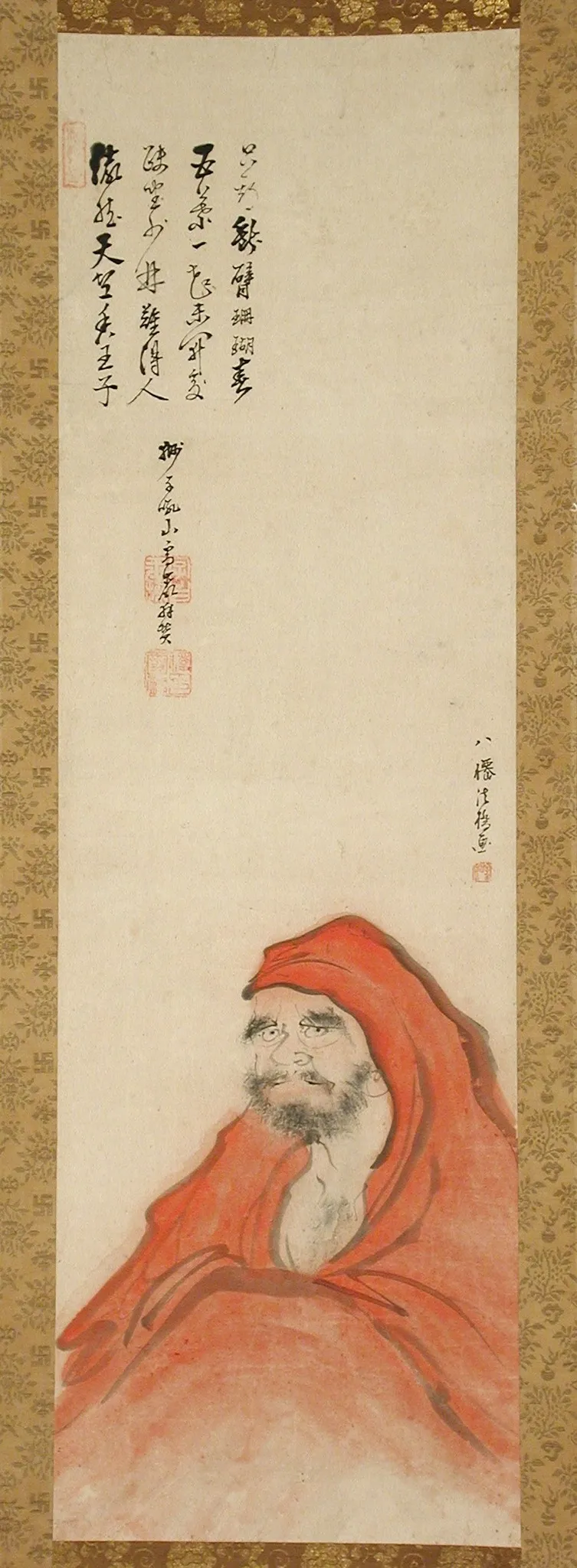
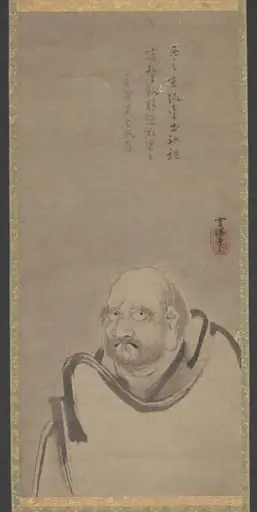
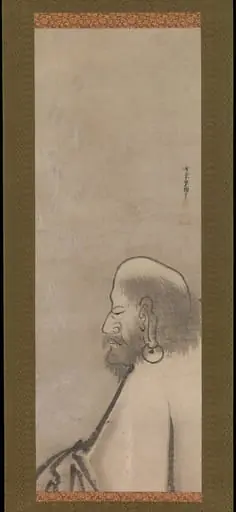
Daruma in a Red Robe is an unspecified painting by the Rococo painting artist Sakaki Hyakusen. It dates from 1750 and is held in the collection of the Los Angeles County Museum of Art. Painted around 1750 by Hyakusen, this work is a nanga-style portrait of Bodhidharma, known in Japan as Daruma.
About this work
Overview
The piece reflects a quiet, introspective aesthetic, aligned with Zen Buddhist ideals rather than courtly or commercial art forms of the time.
Painted around 1750 by Hyakusen, this work is a nanga-style portrait of Bodhidharma, known in Japan as Daruma. Nanga, or literati painting, drew from Chinese scholarly traditions but was adapted in Edo-period Japan with local sensibilities. The piece reflects a quiet, introspective aesthetic, aligned with Zen Buddhist ideals rather than courtly or commercial art forms of the time. It is held in the collection of the Los Angeles County Museum of Art.
Subject & Meaning
The figure is Daruma, the semi-legendary founder of Chan Buddhism who brought meditation practices to China and later Japan. Seated in stillness, his gaze to the left suggests contemplation beyond the frame. His red robe and hat symbolize monastic authority and spiritual intensity, while his gray beard and solemn expression convey age, discipline, and inner resolve. The painting is not a literal portrait but a visual invocation of enlightenment through austerity.
Technique & Style
Hyakusen employed ink and light color on paper, using restrained brushwork to define form without detail. The deep red of the robe is applied with subtle tonal variation, suggesting volume through wash rather than shading. Faint Chinese characters along the left edge serve as poetic inscriptions, common in literati painting. The beige background remains largely empty, emphasizing solitude and the meditative focus of the subject.
History & Provenance
Created during Japan’s Edo period, the painting emerged from a cultural milieu where Chinese literati ideals were studied and reinterpreted by Japanese scholars and artists. Hyakusen, active in the mid-18th century, was part of a network of painters who valued personal expression over formal training. The work entered the Los Angeles County Museum of Art’s collection through documented acquisition, though its earlier ownership history remains largely unrecorded.
Context
While European rococo flourished in ornate decoration, Japanese nanga painters like Hyakusen pursued understated elegance and intellectual depth. This work exists outside the dominant ukiyo-e tradition, instead aligning with scholarly circles that valued poetry, calligraphy, and spiritual themes. The choice of Daruma reflects a broader interest in Zen Buddhism among educated Japanese elites during the Edo period.
Legacy
Hyakusen’s portrayal of Daruma exemplifies how Japanese artists adapted Chinese models to express indigenous spiritual values. Though not widely known outside specialist circles, his work contributes to the understanding of Edo-period intellectual art. The painting remains a quiet testament to the enduring influence of Zen aesthetics in Japanese visual culture, valued for its restraint and symbolic depth.
Artist & collection