Artwork
Nud de femeie
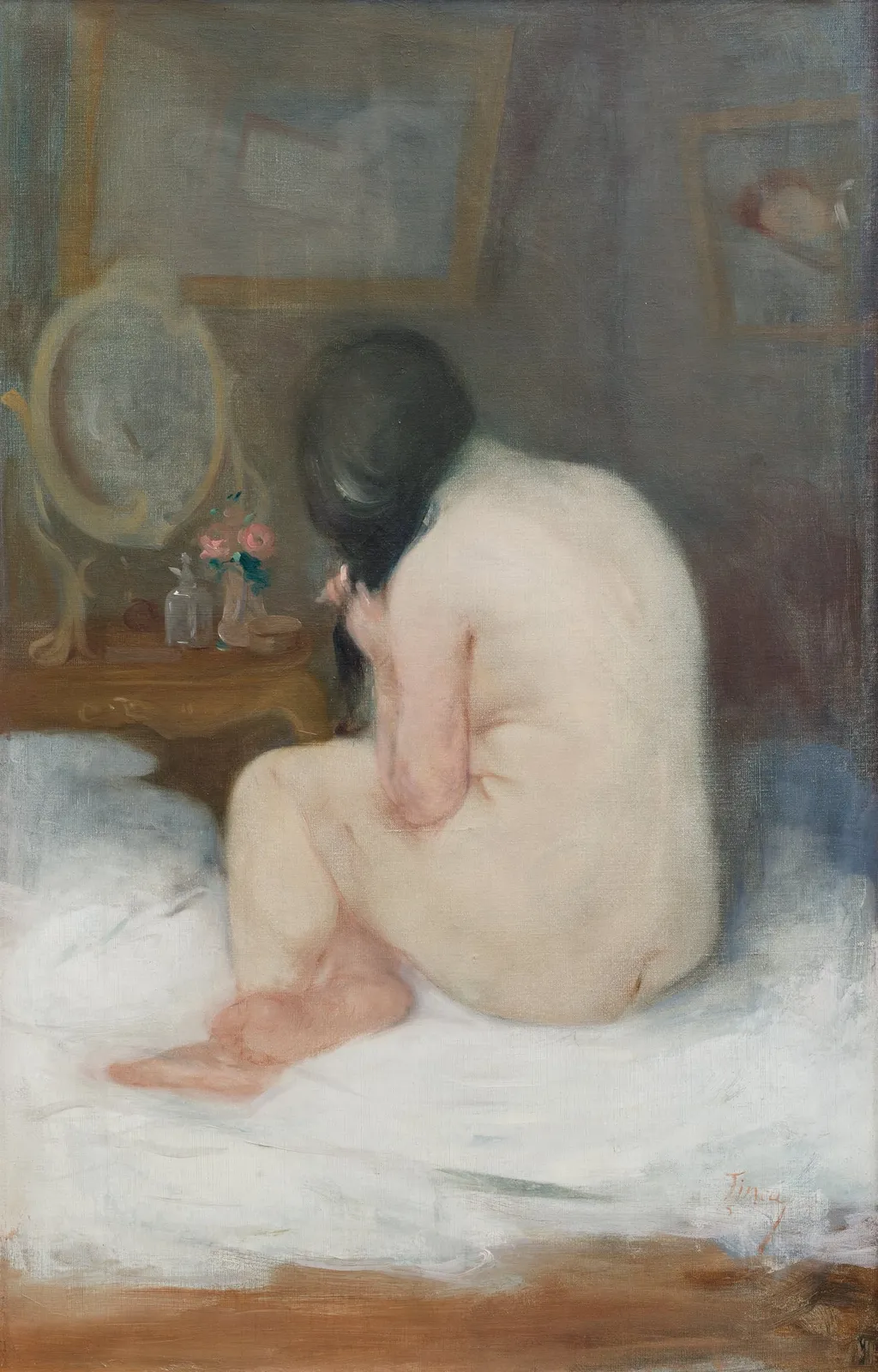
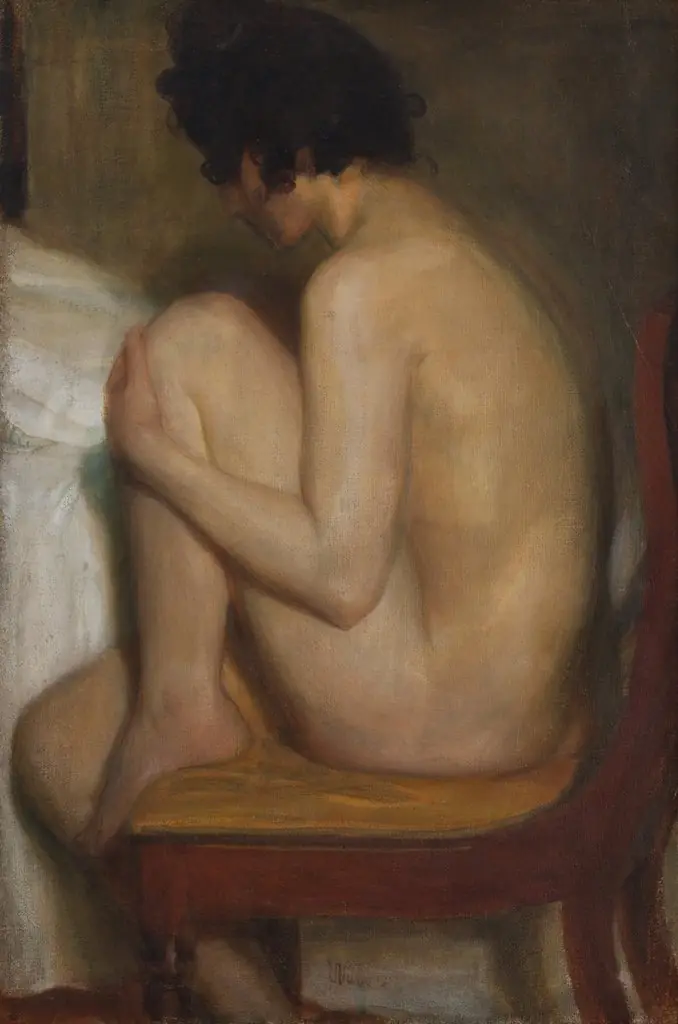
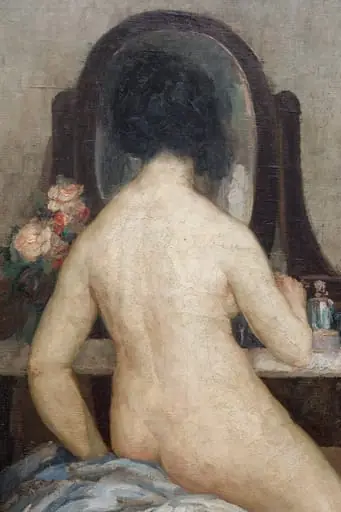
Nud de femeie is a print by Ion Țincu. It dates from 1902 and is held in the collection of the National Museum of Art of Romania.
About this work
Overview
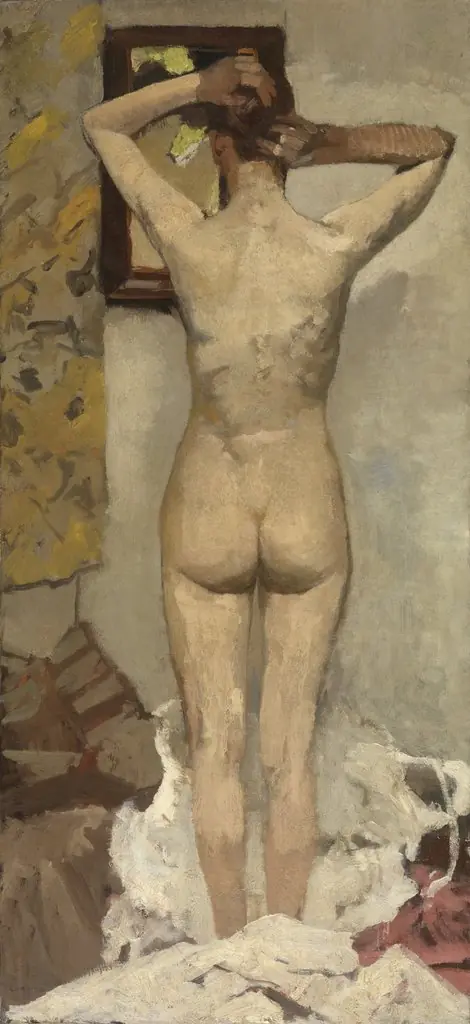
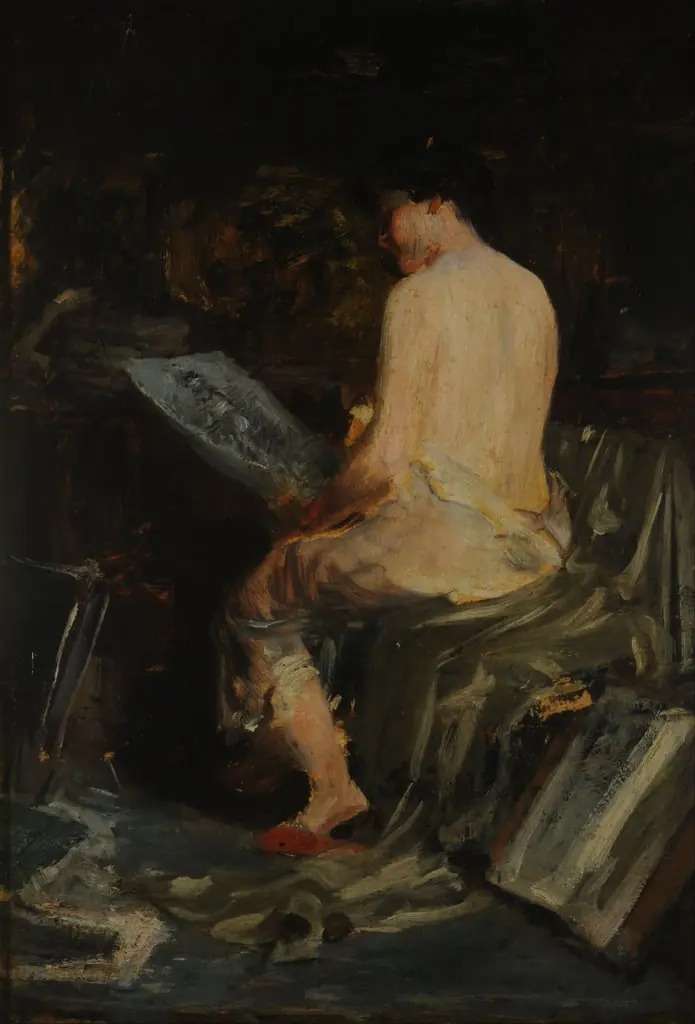
Nud de femeie, painted around 1902 by Ion Țincu, presents a solitary female figure seated on a bed, turned away from the viewer. The composition emphasizes quiet intimacy, with minimal props and a subdued palette. Soft modeling of form and restrained detail direct focus to the figure’s posture and skin tone, creating a contemplative mood without narrative distraction.
Subject & Meaning
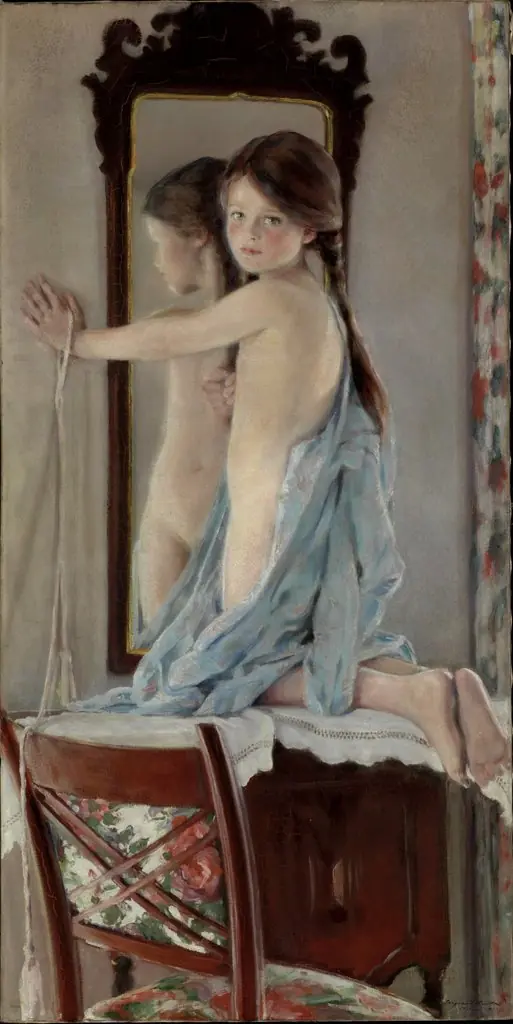
The subject is a nude woman in a private, domestic setting, her back turned to suggest introspection rather than display. The mirror behind her reflects a dark-haired figure, possibly another person or a fragmented self, introducing subtle ambiguity. Flowers and a bottle on the table hint at quiet rituals, grounding the scene in everyday life while preserving its emotional reserve.
Technique & Style
Țincu employs gentle chiaroscuro to model the figure’s form, using diffused light to highlight the smoothness of skin against pale bedding. Background elements are blurred, reducing spatial complexity and isolating the body as the visual anchor. Lines are simplified, forms rounded, and color muted, prioritizing tonal harmony over detail or ornamentation.
History & Provenance
Created circa 1902, the work emerged during a period when Romanian artists were engaging with European academic traditions while seeking personal expression. Though little is documented about its early ownership, it remains among the few surviving intimate studies by Țincu, reflecting his interest in quiet, domestic subjects during his formative years.
Context
In early 20th-century Romania, the female nude was often treated with moral caution. Țincu’s approach, avoiding overt sensuality, aligns with a quieter, more psychological strand of realism emerging among local painters. His focus on light and form, rather than narrative or idealization, reflects broader trends in post-impressionist-leaning studio practice of the time.
Legacy
Nud de femeie stands as a quiet example of early modern Romanian figure painting, notable for its restraint and sensitivity to light. While not widely exhibited, it influenced later artists interested in psychological depth over theatricality. Its understated composition continues to be studied for its balance between realism and poetic suggestion.
Artist & collection
Artist