Artwork
Spring. High water
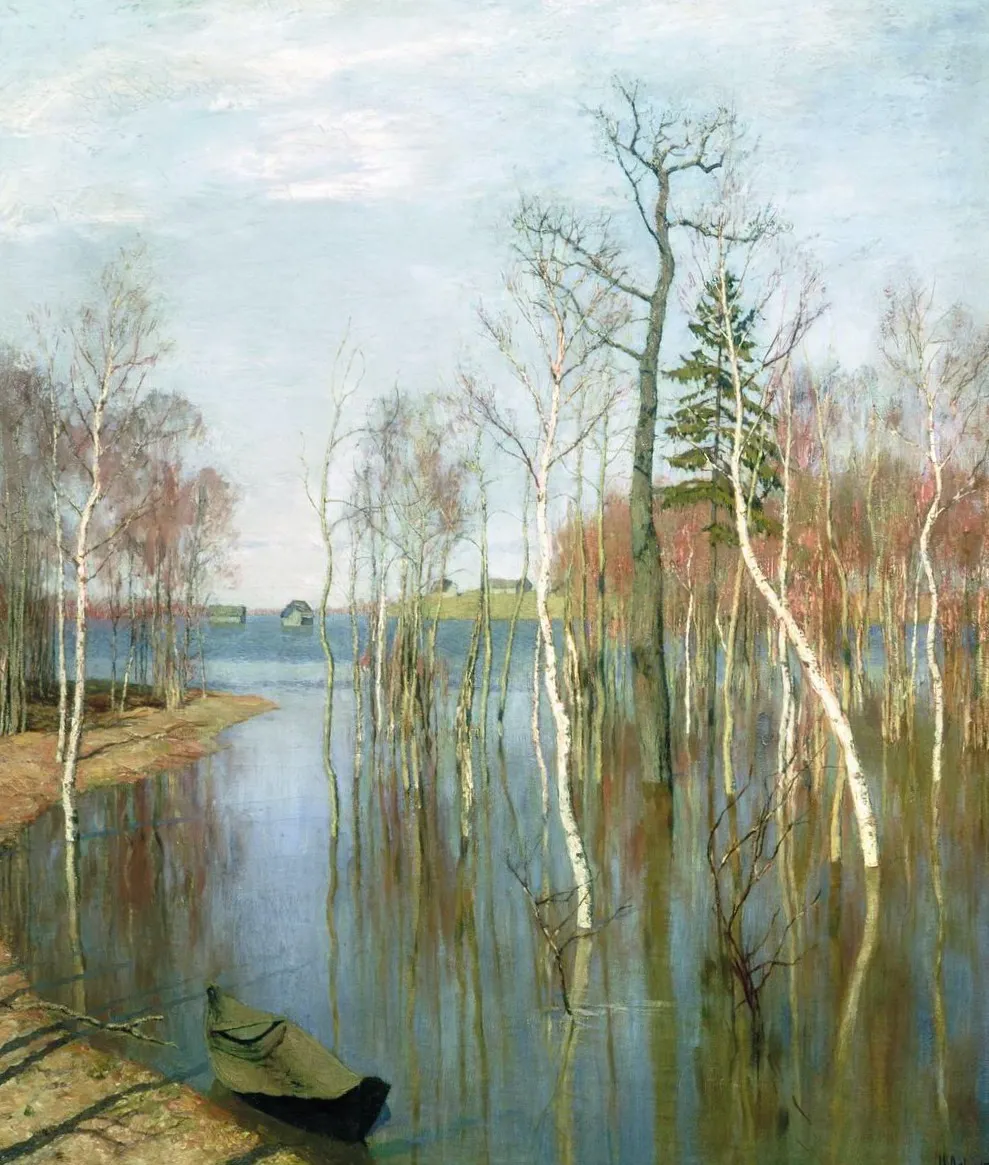
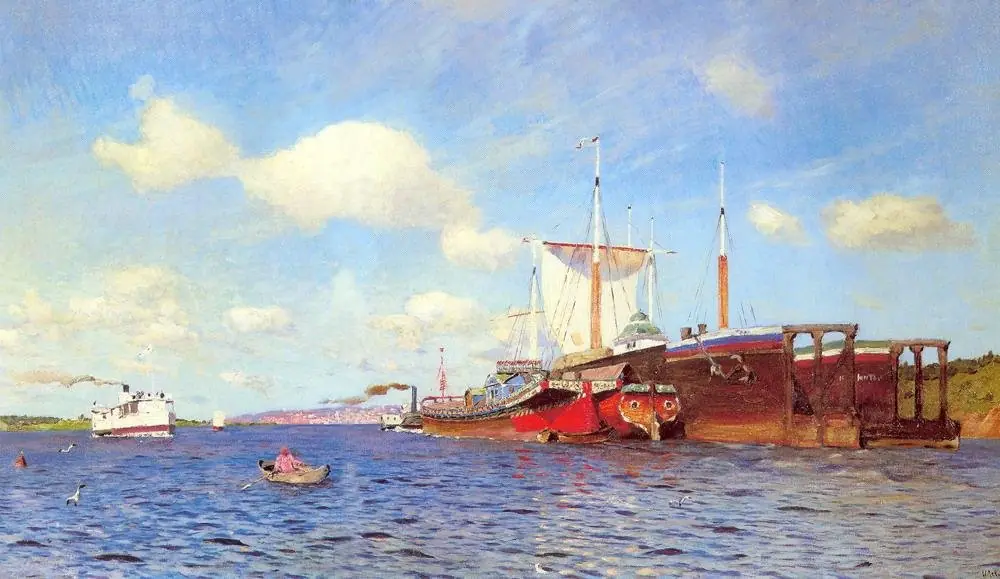
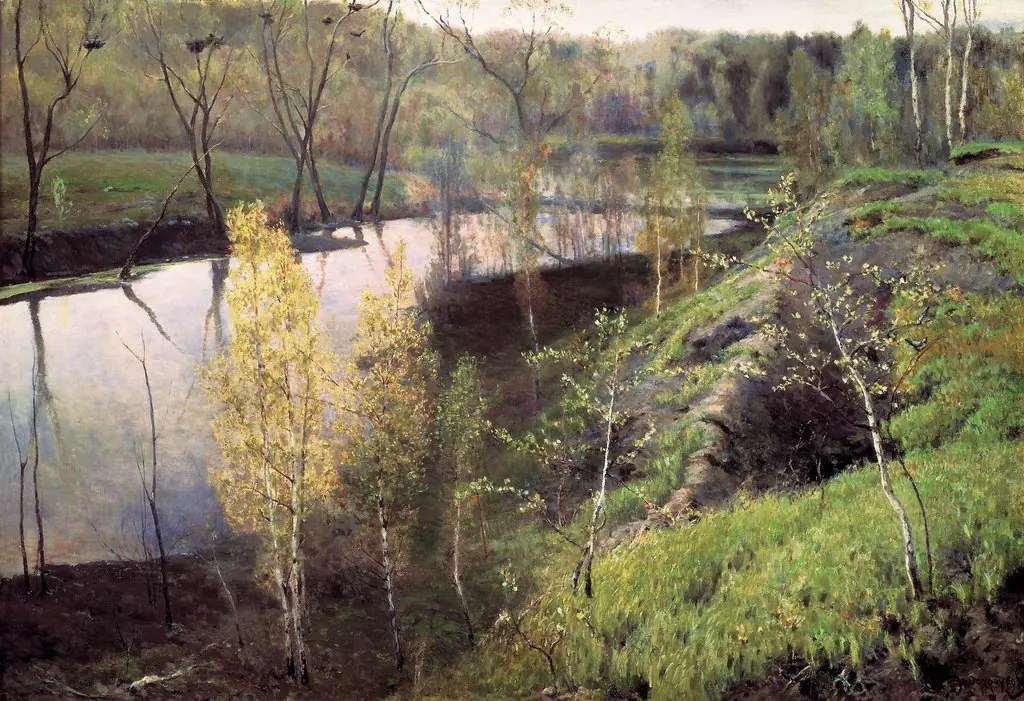
Spring. High water is an unspecified painting by the Impressionist artist Isaac Levitan. It dates from 1899 and is held in the collection of the Tretyakov Gallery.
About this work
Overview
The work captures the moment when melting snow swells rivers, submerging banks and altering the familiar terrain.
Painted in 1899 by Isaac Levitan, *Spring. High water* is a quiet depiction of a Russian landscape transformed by seasonal thaw. The work captures the moment when melting snow swells rivers, submerging banks and altering the familiar terrain. Levitan’s focus on atmospheric conditions and subtle shifts in light aligns with broader trends in late 19th-century Russian painting, though his approach remains distinct from Western Impressionism.
Subject & Meaning
The painting portrays a flooded riverine environment, where water mirrors the skeletal branches of winter-bare trees and the pale sky. A small, half-submerged boat suggests human presence without narrative intrusion. The scene evokes renewal not through vibrancy, but through stillness — the flood as a quiet reset, washing away the remnants of winter without drama, inviting contemplation rather than celebration.
Technique & Style
Levitan employed thin, layered washes of pigment to render the water’s reflective surface and the delicate transition between sky and land. Brushwork is restrained, avoiding bold strokes in favor of soft edges and muted tones. The composition emphasizes horizontal planes, reinforcing the calm, expansive mood. Color is subdued — grays, pale greens, and washed blues — reinforcing the sense of early spring’s tentative awakening.
History & Provenance
Completed in the final year of Levitan’s life, the painting entered the collection of the Tretyakov Gallery shortly after its creation. It was acquired during a period when the gallery actively sought works by Russian realist and lyrical landscape artists. The painting has remained in the institution’s permanent holdings, consistently displayed as an exemplar of Levitan’s mature style and emotional depth in landscape representation.
Context
In late 19th-century Russia, landscape painting became a vehicle for expressing national identity and inner emotion. Levitan, alongside contemporaries like Shishkin, moved beyond topographical accuracy to convey psychological states through nature. *Spring. High water* reflects this shift — not as a record of place, but as an intimate meditation on transience, renewal, and the quiet rhythms of the natural world.
Legacy
The painting endures as a key example of Levitan’s ability to infuse ordinary scenes with emotional resonance. It influenced later Russian artists who sought to capture the spiritual dimension of nature without overt symbolism. While not widely known outside Russia, it remains a touchstone in discussions of national landscape traditions and the quiet power of understated observation.
Artist & collection
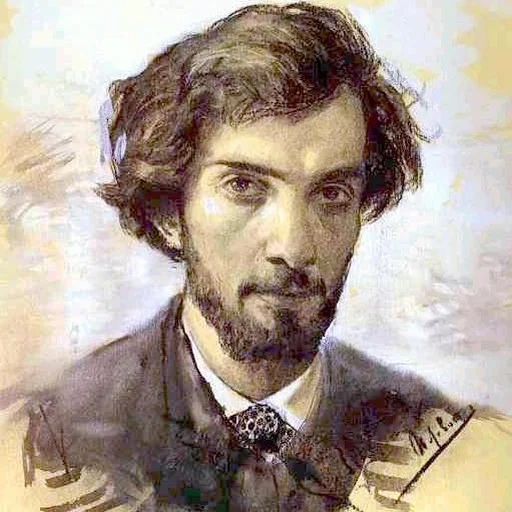
Artist
Isaac Ilyich Levitan (Russian: Исаа́к Ильи́ч Левита́н; 30 August 1860 – 4 August 1900) was a Russian landscape painter who advanced the genre of the "mood landscape".