Artwork
Two Cottages
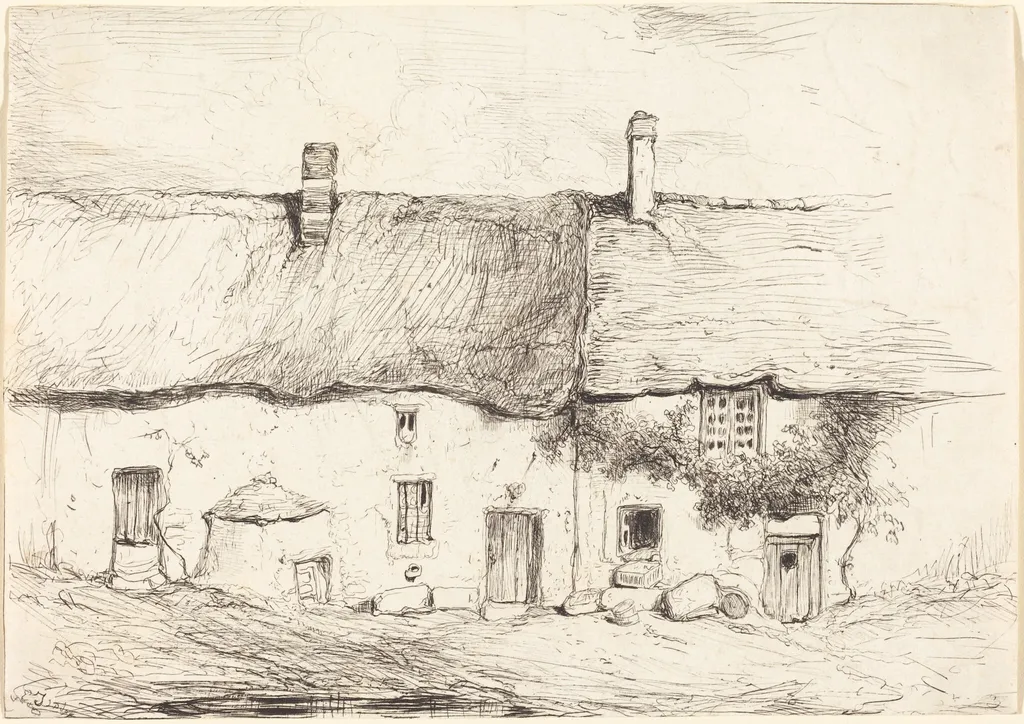
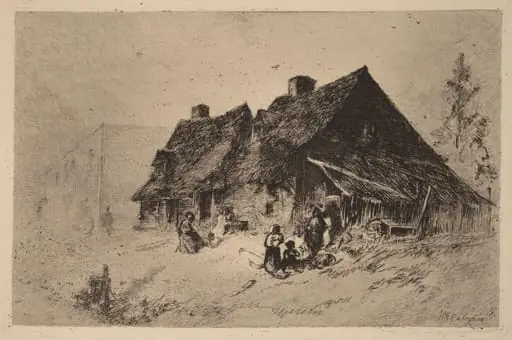
Two Cottages is an ink print by the Romanticist artist Eugène Isabey. It dates from 1844 and is held in the collection of the National Gallery of Art.
About this work
Overview
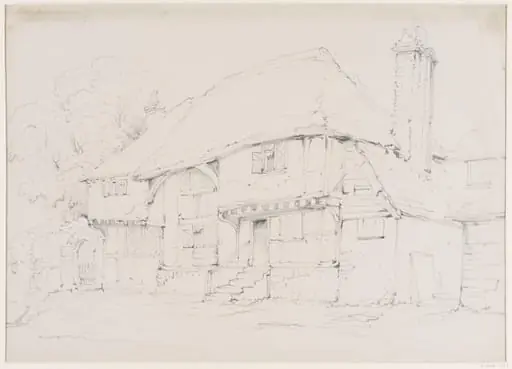
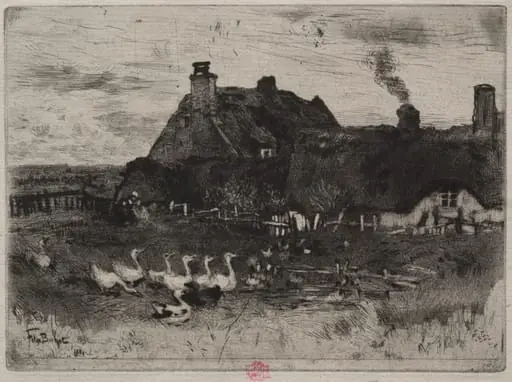
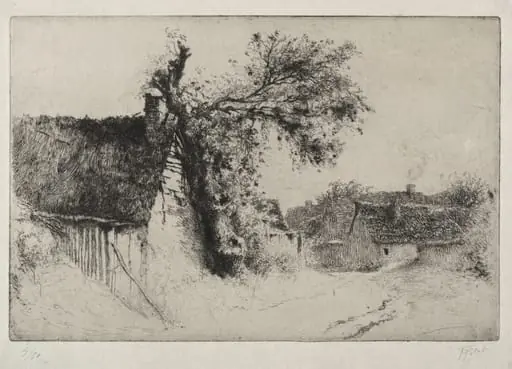
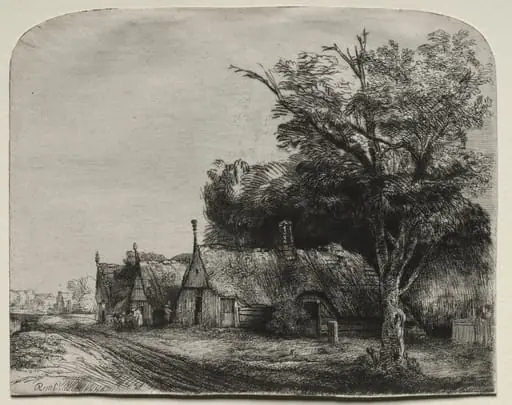
Eugène Isabey’s stone engraving *Two Cottages* dates from around 1844. Executed on wove paper, the print presents a quiet rural scene in which two modest dwellings sit beneath thatched roofs, framed by a sparse grouping of trees, bushes, and a shallow water feature.
Subject & Meaning
The composition juxtaposes a slightly larger cottage on the left with a smaller counterpart on the right, suggesting a simple hierarchy within a shared landscape. The inclusion of rocks and a modest stream contributes to an atmosphere of calm domesticity, inviting contemplation of everyday rural life.
Technique & Style
Isabey employed the stone engraving process, allowing for fine, soft lines and a muted tonal range characteristic of his Romantic sensibility. The engraving’s delicate shading and subtle contrasts convey a sense of serenity without resorting to dramatic chiaroscuro.
History & Provenance
Created during the middle of Isabey’s career, the work reflects his broader interest in atmospheric scenes that bridge painting and printmaking. While specific ownership records are scarce, the piece is catalogued among his graphic output from the 1840s, a period when he was active in both lithography and watercolor.
Context
Isabey’s prints often explored the interplay of light, weather, and mood, aligning with the Romantic movement’s emphasis on feeling over strict realism. *Two Cottages* fits within this framework, offering a tranquil counterpoint to the more dramatic subjects that also populated his oeuvre.
Own this work as a print
Artist & collection
Artist
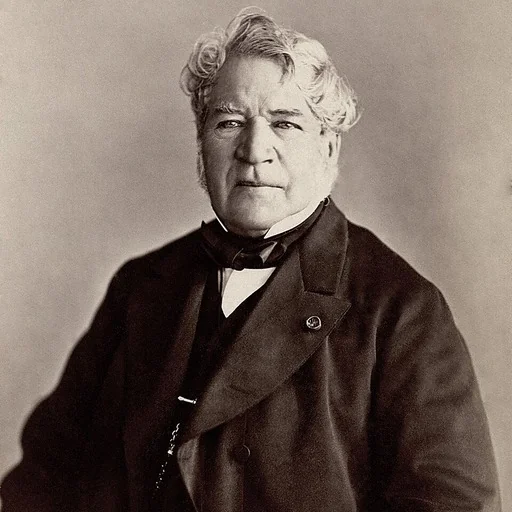
Eugène Louis Gabriel Isabey (French pronunciation: ; 22 July 1803 – 25 April 1886) was a French painter, lithographer and watercolorist in the Romantic style.