Artwork
Arlechin și colombină
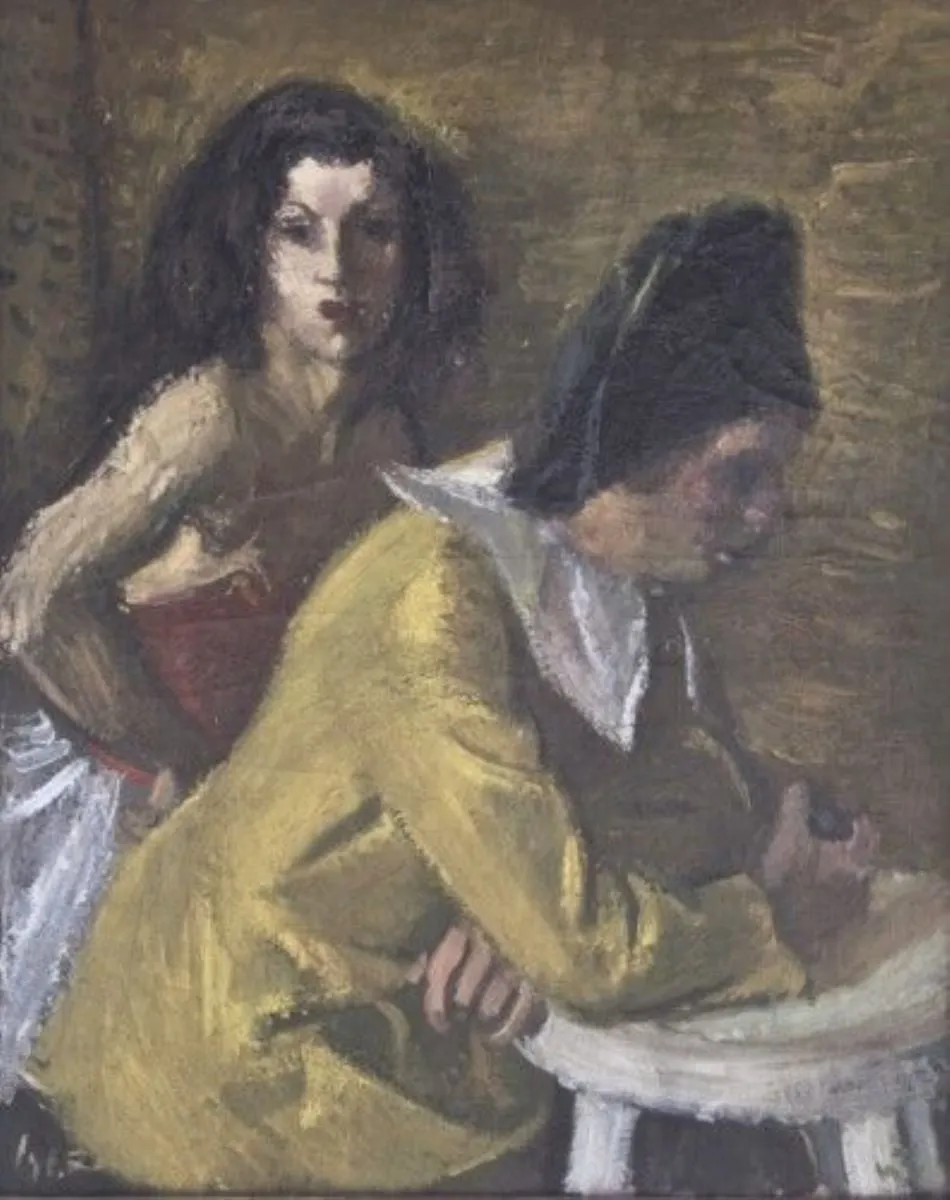
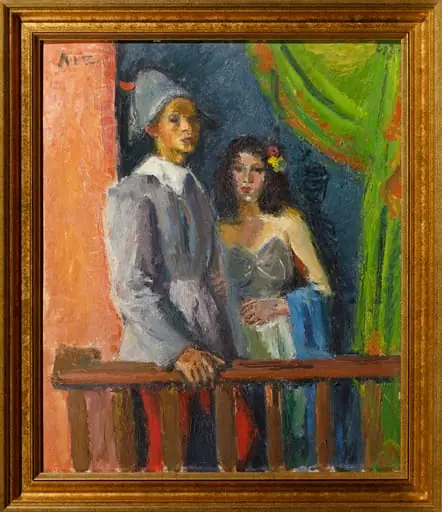
Arlechin și colombină is an unspecified painting by Iosif Iser. It dates from 1943 and is held in the collection of the National Museum of Art of Romania.
About this work
Overview
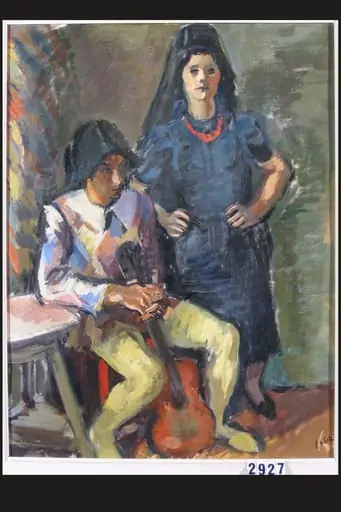
Painted in 1943 by Iosif Iser, Arlechin și colombină presents a quiet interior moment between two figures. The work belongs to Iser’s genre painting phase, where everyday interactions are rendered with subtle emotional nuance. Set in a modest interior, the scene avoids theatricality, focusing instead on the unspoken connection between its subjects through posture and spatial arrangement.
Subject & Meaning
The seated man, in a yellow jacket, appears absorbed in an activity, while the standing woman, in red and white, observes from behind.
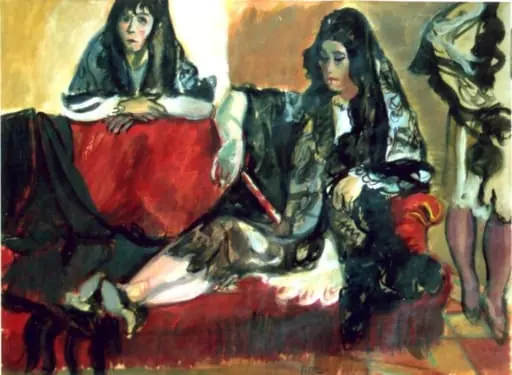
The figures, identified by traditional commedia dell’arte names, are depicted not as performers but as individuals in private life. The seated man, in a yellow jacket, appears absorbed in an activity, while the standing woman, in red and white, observes from behind. Their attire suggests a blend of theatrical costume and domestic reality, hinting at identity, role, and intimacy beyond performance—perhaps reflecting the artist’s interest in layered personal narratives.
Technique & Style
Iser employs soft, muted tones with careful attention to light and texture. The warm, earthy background recedes gently, allowing the figures’ clothing—particularly the red and yellow garments—to anchor the composition. Brushwork is restrained yet deliberate, with subtle modeling of forms that avoids sharp definition, contributing to the painting’s quiet, contemplative mood. The spatial depth is shallow, enhancing the sense of closeness between the figures.
History & Provenance
Created during World War II, the painting emerged from Iser’s Bucharest studio amid a period of cultural constraint. It remained in private Romanian collections after its completion, with no public exhibition record until later decades. Its survival through political upheavals reflects its unassuming nature, avoiding overt political symbolism and thus escaping censorship or destruction.
Context
In 1940s Romania, genre painting offered artists a space to explore human relationships without direct engagement with state-mandated themes. Iser, influenced by French realism and interwar Eastern European traditions, turned to intimate scenes as a form of quiet resistance to ideological pressures. Arlechin și colombină fits within this trend—using familiar archetypes to evoke personal, rather than political, resonance.
Legacy
The painting is now recognized as a representative example of Iser’s mature style and his contribution to Romanian interwar realism. Though not widely reproduced, it is studied for its understated emotional depth and its ability to transform theatrical symbols into private, human moments. It remains a quiet testament to the endurance of introspective art during turbulent times.
Artist & collection