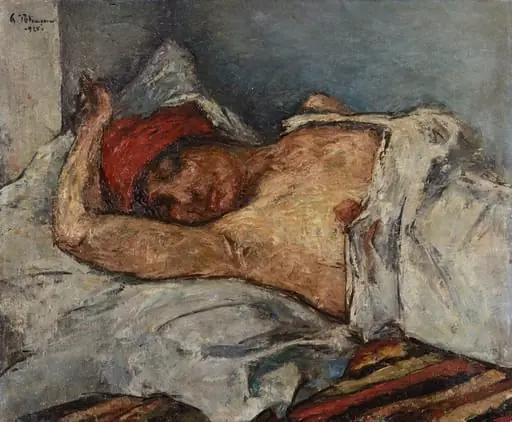
Artwork
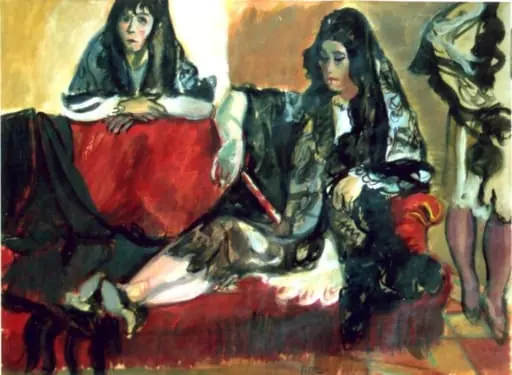
Turcoaice culcate în iarbă
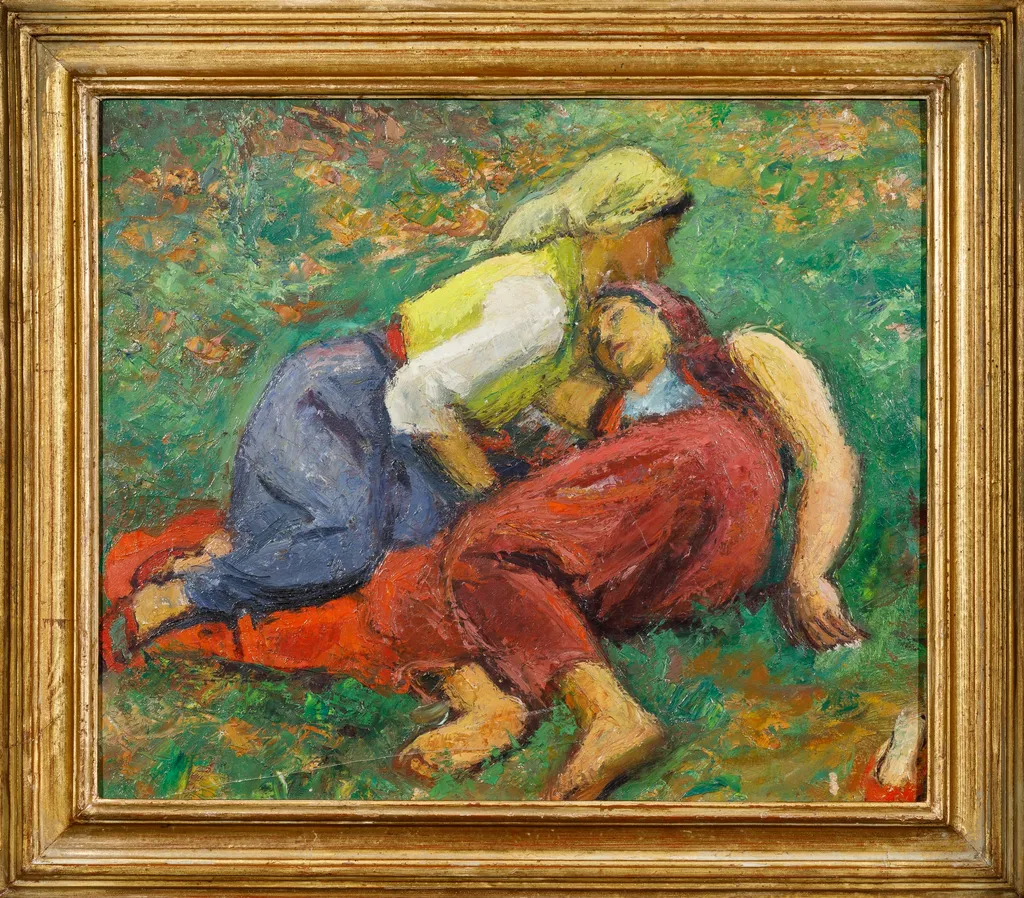
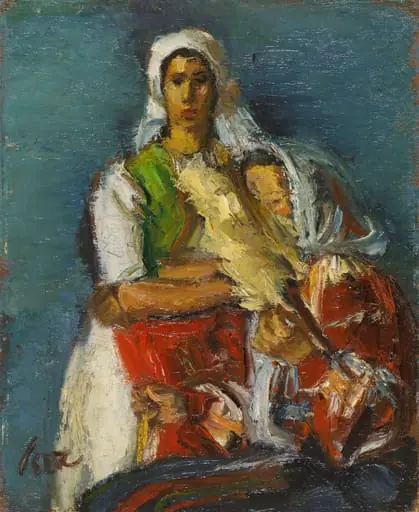
Turcoaice culcate în iarbă is a print by Iosif Iser. It dates from 1850 and is held in the collection of the National Museum of Art of Romania.
About this work
Overview
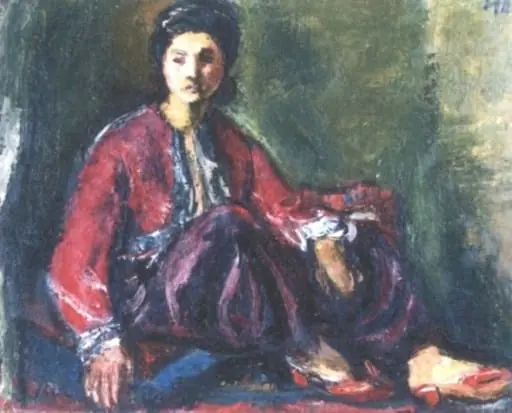
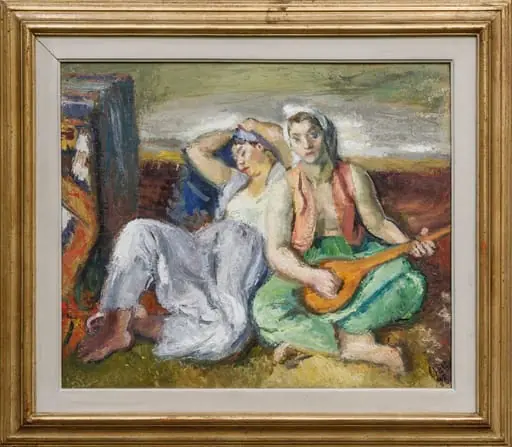
Painted around 1850 by Iosif Iser, Turcoaice culcate în iarbă depicts a solitary figure reclining in tall grass. The work is rendered in oil with a vigorous, tactile application of pigment. Its composition centers on a quiet, intimate moment, framed by bold color and expressive brushwork that emphasizes physical presence over narrative detail.
Subject & Meaning
Her red skirt and yellow headscarf contrast sharply with the surrounding foliage, drawing attention to her stillness.
The figure, identified as a woman in traditional dress, lies relaxed on her back amid lush greenery. Her red skirt and yellow headscarf contrast sharply with the surrounding foliage, drawing attention to her stillness. The pose suggests rest or contemplation, evoking a sense of solitude rather than storytelling. The absence of context invites focus on the body’s relationship to the natural environment.
Technique & Style
Iser applied paint in thick, uneven strokes, creating a textured surface that mimics the roughness of grass and skin. Colors are layered with minimal blending, preserving the energy of each brushmark. The impasto technique gives the scene a tactile quality, where pigment itself becomes part of the subject’s presence, rejecting smooth finish in favor of raw, immediate expression.
History & Provenance
The painting’s early ownership is undocumented, but it is known to have been produced during Iser’s formative years as an artist in Romania. It remained in private hands until the mid-20th century, when it entered a public collection. Its survival through periods of political change underscores its quiet endurance as a personal, rather than monumental, work.
Context
Created in mid-19th century Romania, the painting reflects a growing interest in everyday rural life, distinct from academic traditions. While European art often idealized peasant subjects, Iser’s approach is unembellished, focusing on physicality and atmosphere. The work aligns with regional shifts toward realism and direct observation, even as it resists conventional composition.
Legacy
Turcoaice culcate în iarbă stands as an early example of expressive brushwork in Romanian painting, predating broader modernist experiments. Though not widely exhibited, its emphasis on materiality and informal subject matter influenced later artists seeking alternatives to academic norms. The painting’s raw technique continues to resonate as a quiet precursor to modernist concerns with texture and presence.
Artist & collection