Artwork
The Parable of Lazarus and the Rich Man
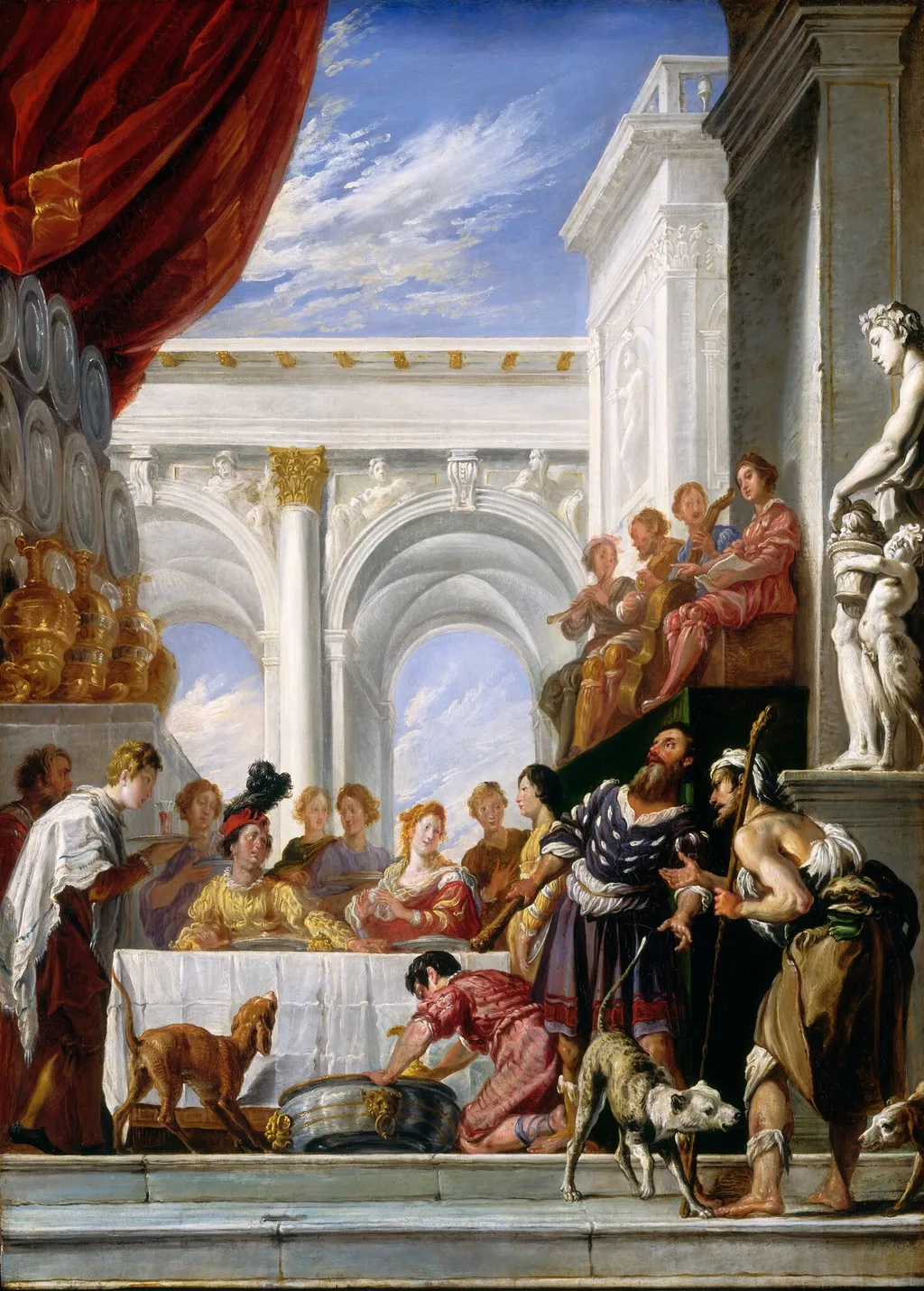
The Parable of Lazarus and the Rich Man is an oil painting. It dates from 1623 and is held in the collection of the National Gallery of Art. The work is an oil painting on panel that depicts an elaborate outdoor banquet.
About this work
Overview
A long table laden with food and wine stretches across the composition, surrounded by elegantly dressed figures, servants, and dogs.
The work is an oil painting on panel that depicts an elaborate outdoor banquet. A long table laden with food and wine stretches across the composition, surrounded by elegantly dressed figures, servants, and dogs. Some guests stand, others sit, while musicians perform from a balcony. Architectural elements such as tall columns and red drapery frame the scene beneath a clear blue sky dotted with clouds.
Subject & Meaning
The gathering appears to reference the biblical Parable of the Rich Man and Lazarus, juxtaposing opulent wealth with moral instruction. The lavish setting emphasizes the excess of the rich, while the contrast of light and shadow on faces suggests a moral dichotomy between indulgence and spiritual neglect, inviting contemplation of the story’s ethical lesson.
Technique & Style
The artist employs chiaroscuro, using strong contrasts of illumination to model forms and create dramatic emphasis. Light falls on selected faces, rendering them luminous, while other figures recede into deeper shade. This handling of light enhances the three‑dimensionality of the figures and heightens the narrative tension within the bustling tableau.
Context
Created as a narrative genre piece, the painting reflects the 17th‑century European interest in biblical allegory rendered in contemporary settings. The inclusion of fashionable attire and a festive atmosphere aligns the ancient parable with the social realities of the artist’s own time, illustrating how moral stories were adapted to resonate with a cultured audience.
Own this work as a print
Artist & collection
