Artwork
Spruce forest
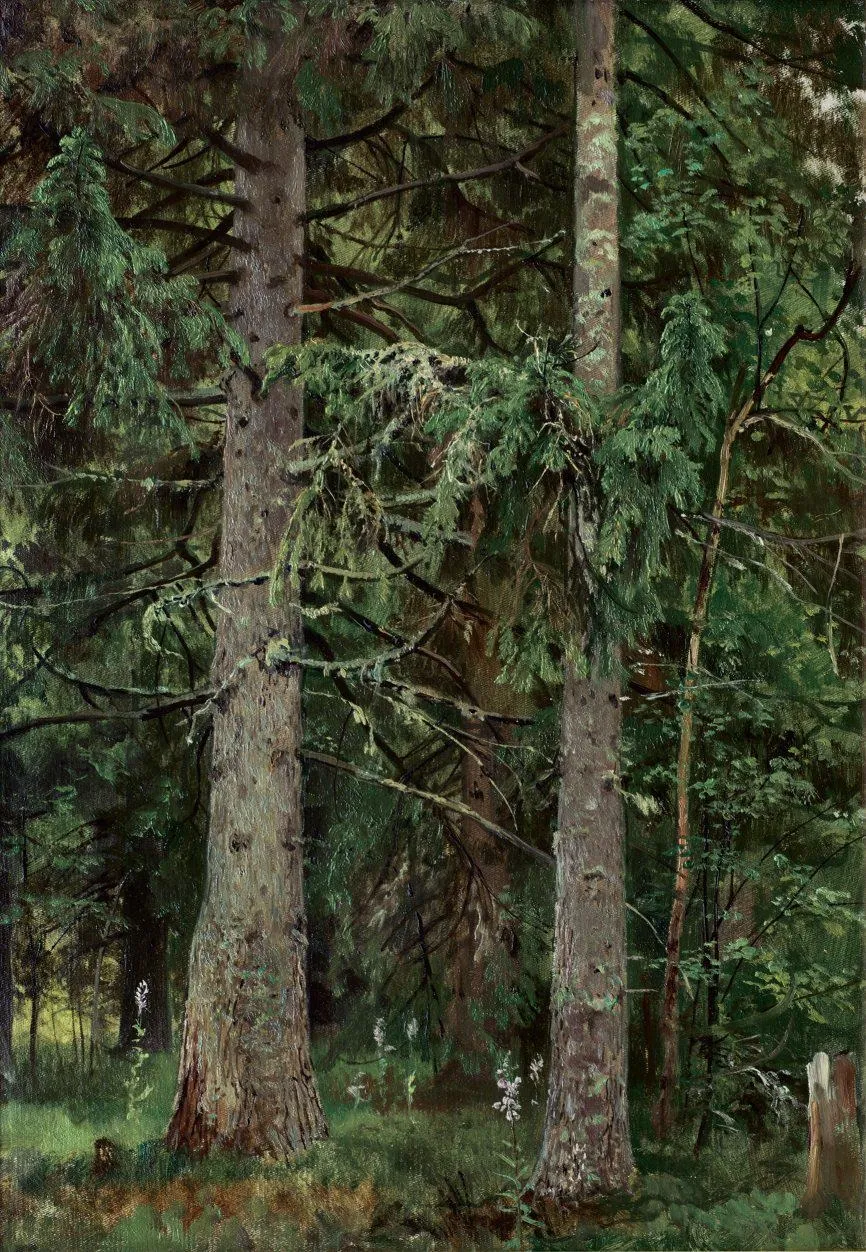
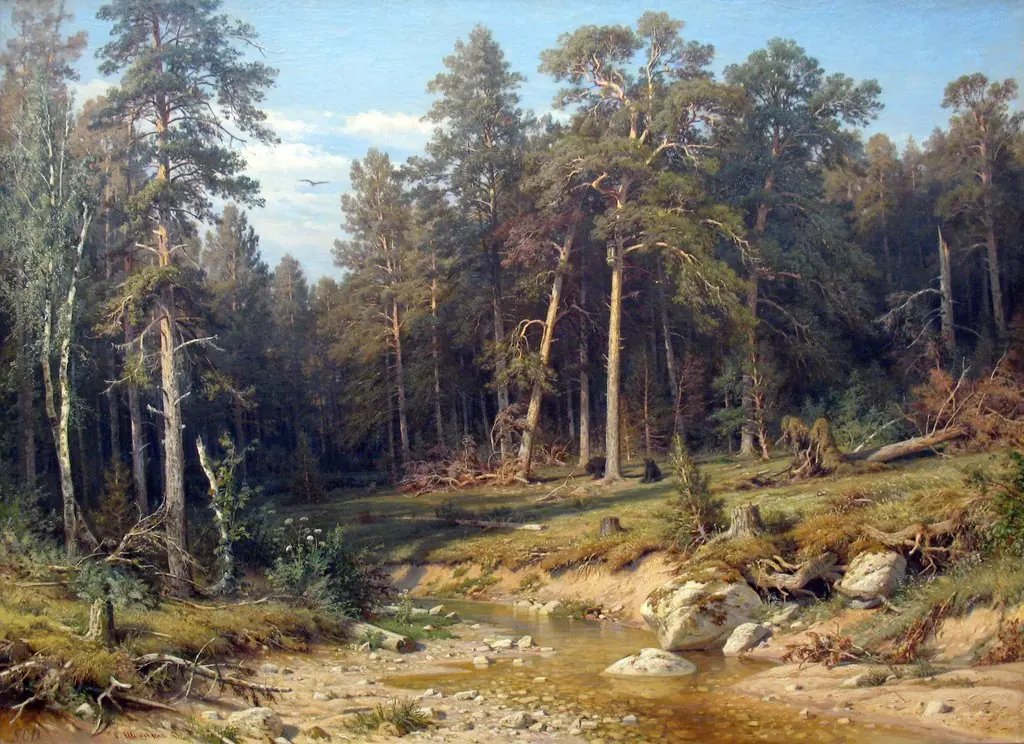
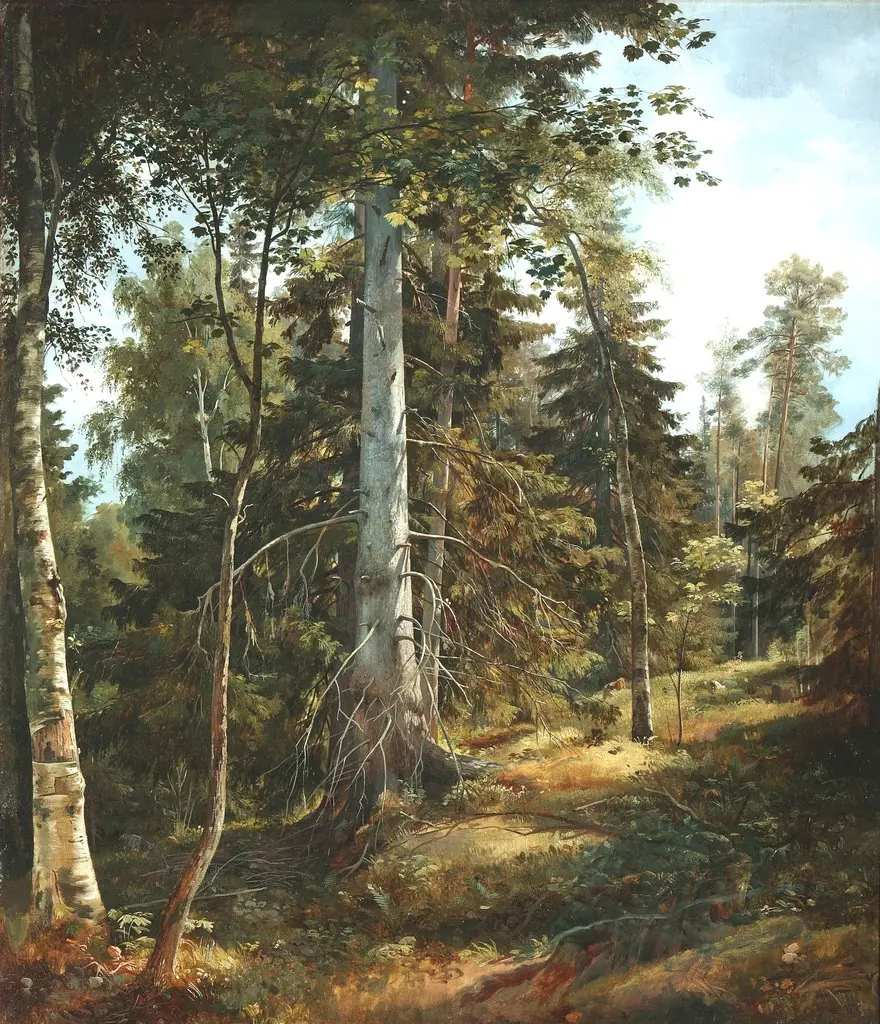
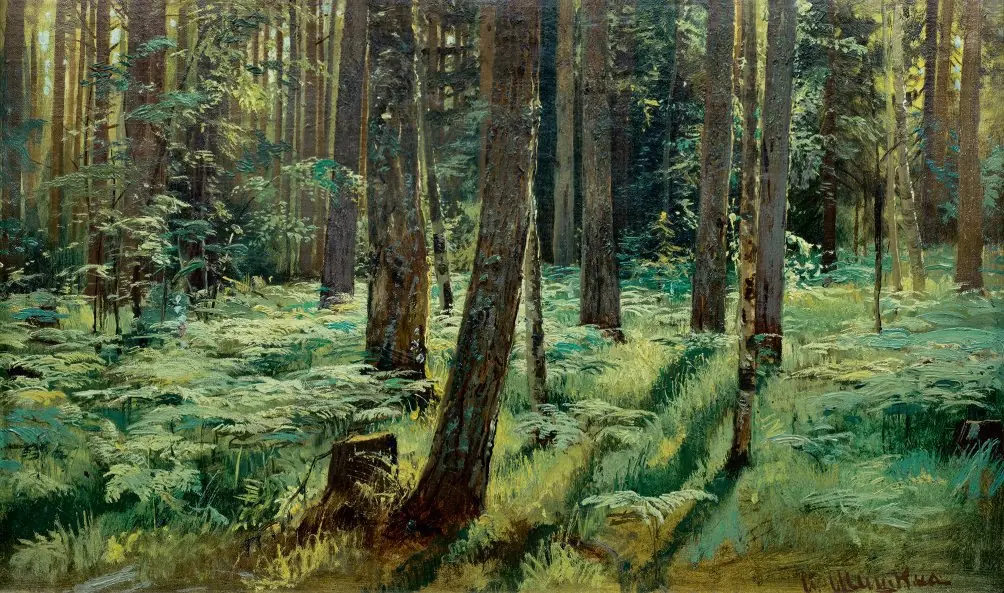
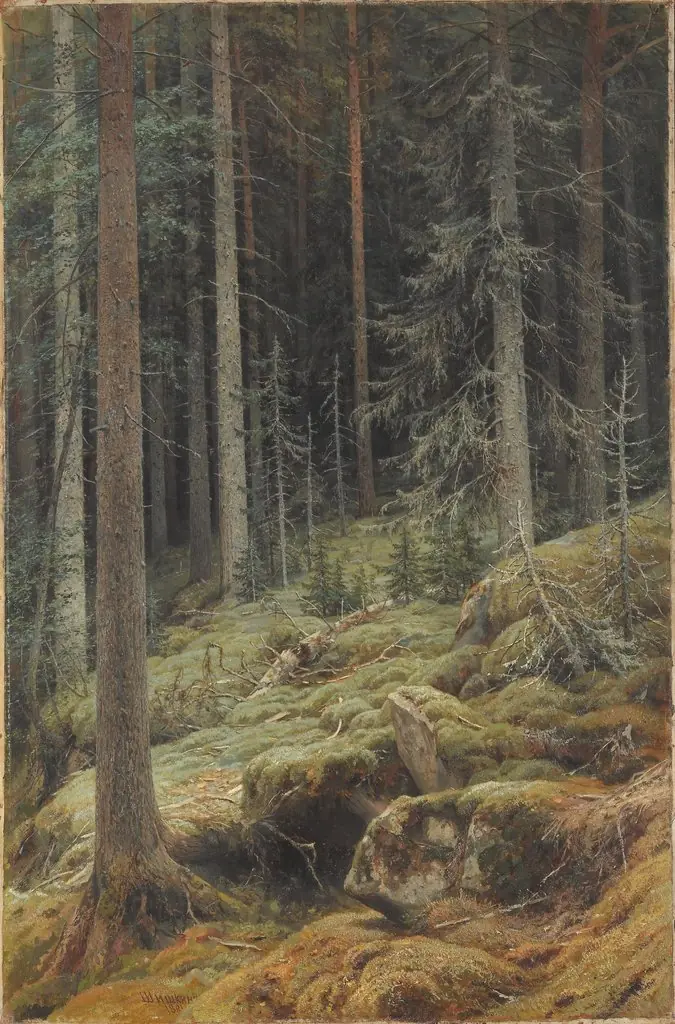
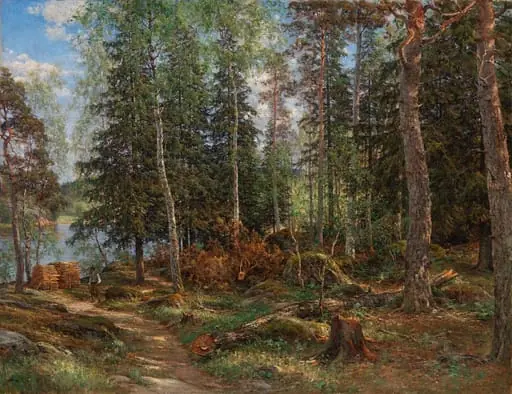
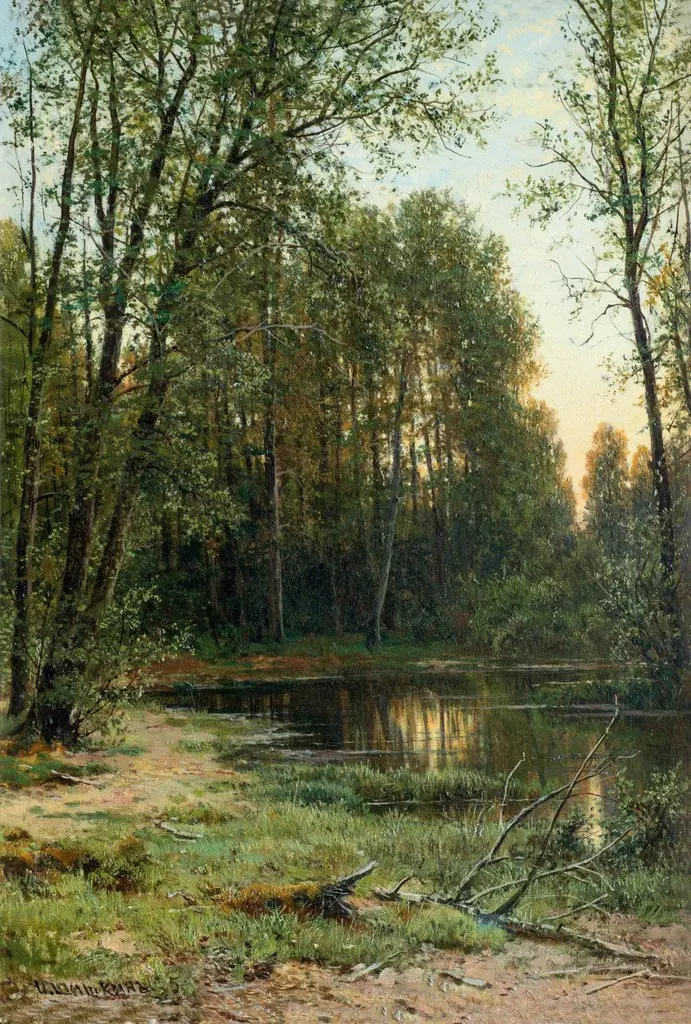
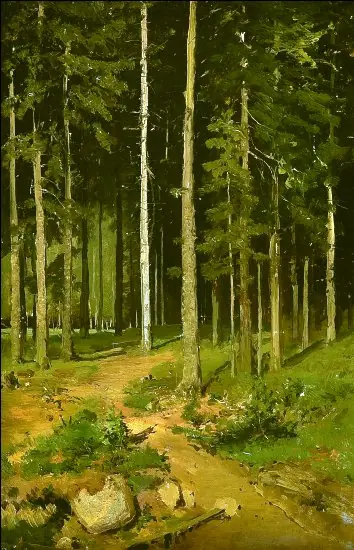
Spruce forest is an oil painting by the Realist artist Ivan Shishkin. It dates from 1895 and is held in the collection of the Tretyakov Gallery.
About this work
Overview
Painted in 1895, *Spruce Forest* is an oil-on-canvas landscape by Ivan Shishkin, a central figure in 19th-century Russian art.
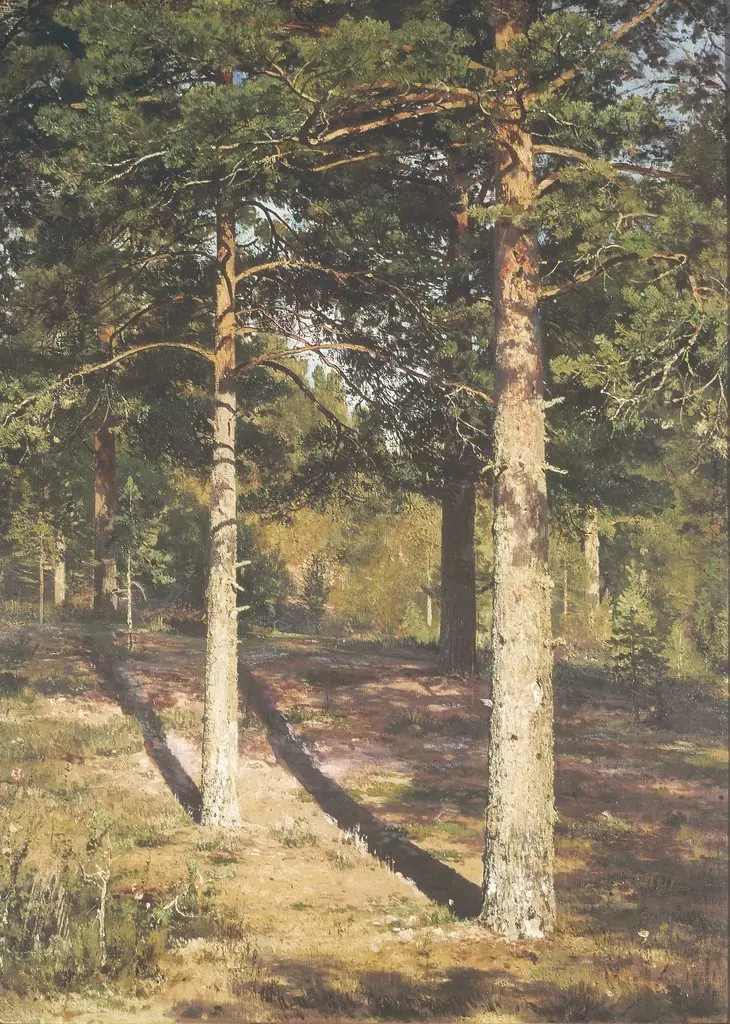
Painted in 1895, *Spruce Forest* is an oil-on-canvas landscape by Ivan Shishkin, a central figure in 19th-century Russian art. It presents a densely packed stand of spruce trees with precise rendering of bark, foliage, and undergrowth. The work exemplifies Shishkin’s dedication to observing nature directly and reflects his role in the Peredvizhniki movement, which sought to ground art in authentic, unidealized scenes of the Russian environment.
Subject & Meaning
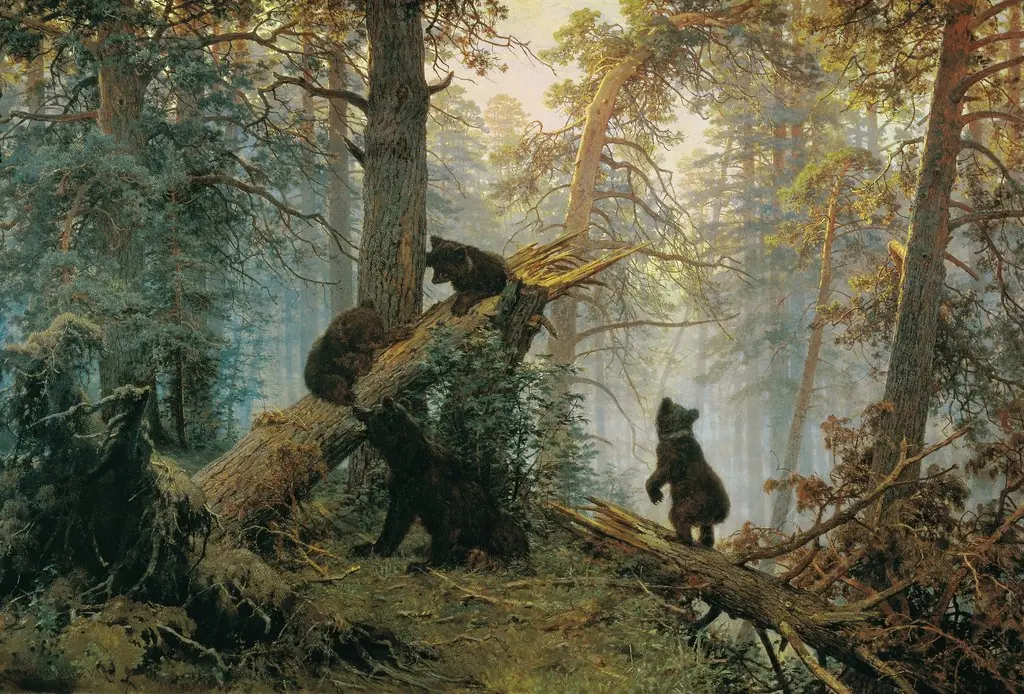
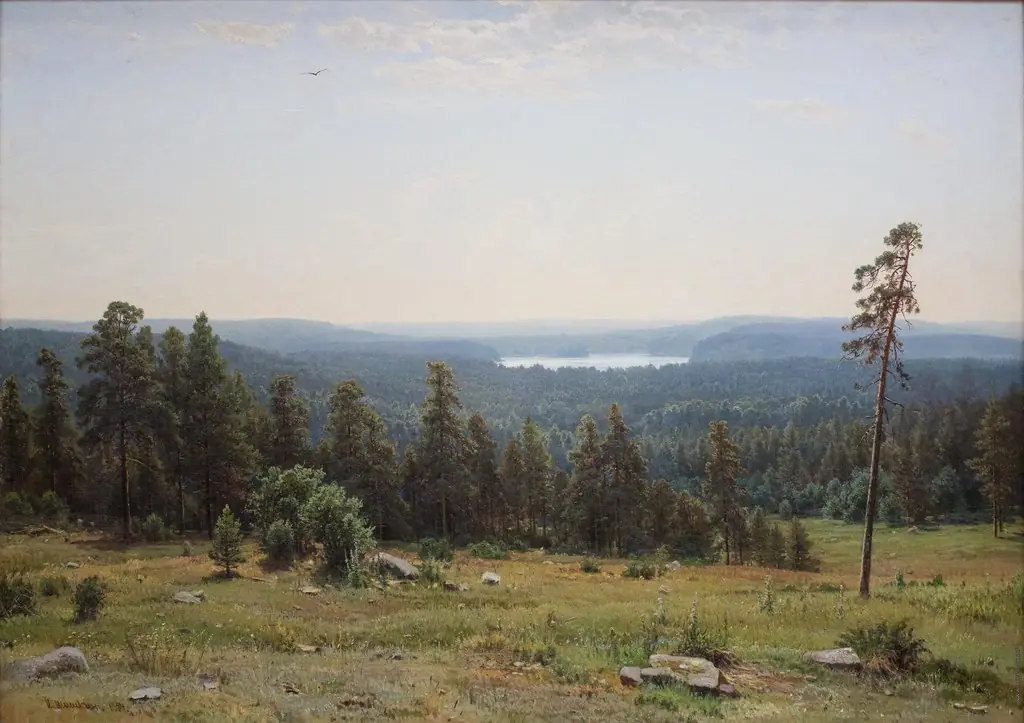
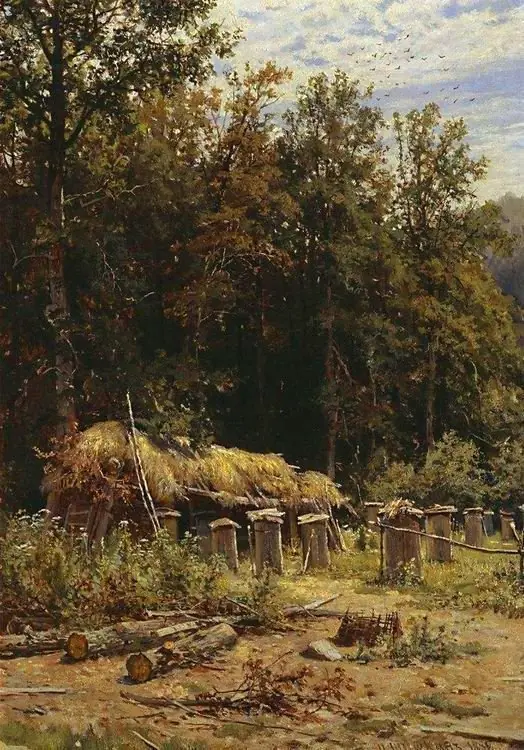
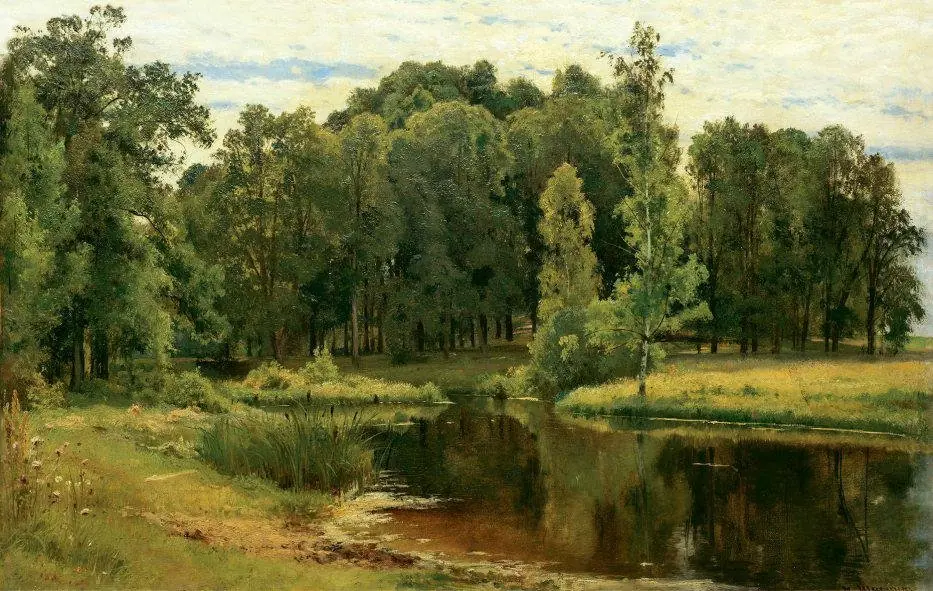
The painting portrays a quiet, undisturbed coniferous woodland, emphasizing the scale and quiet persistence of nature. The tightly packed trees, deep shadows, and layered undergrowth suggest an ecosystem untouched by human intervention. Rather than dramatizing the scene, Shishkin invites contemplation of the forest’s internal rhythm — its growth, decay, and silent endurance — aligning with a broader cultural interest in Russia’s natural identity during the late imperial period.
Technique & Style
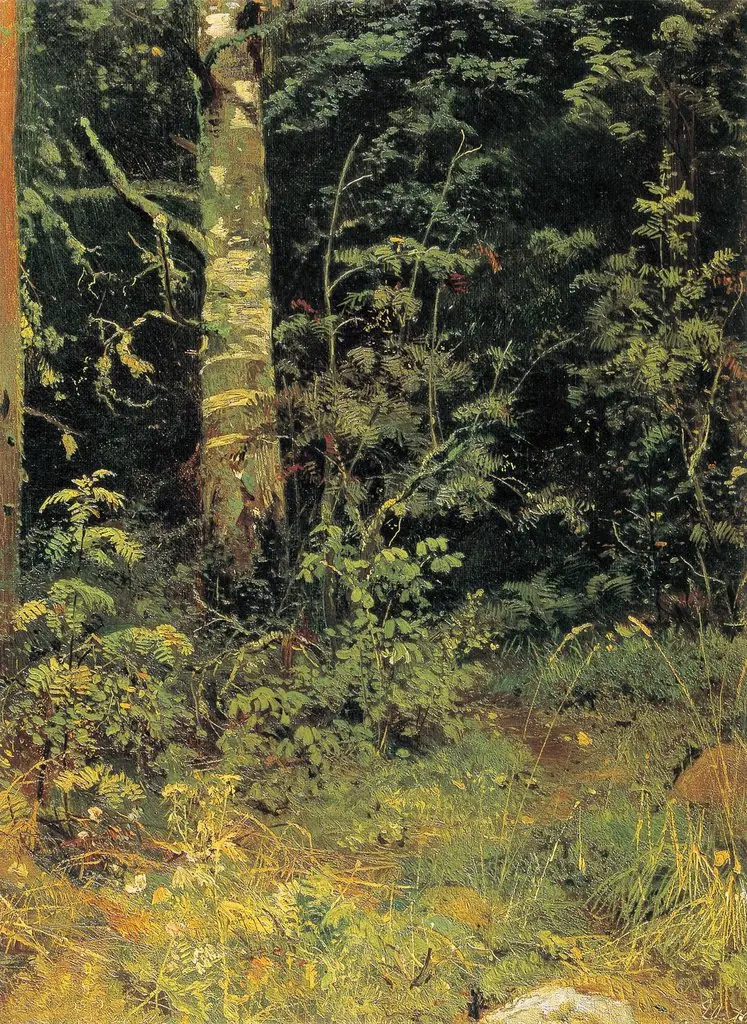
Shishkin employed fine brushwork to capture the texture of bark, the density of needles, and the variation of light filtering through canopy. He built depth through atmospheric perspective, with lighter tones and softer edges receding into the background. The forest floor is rendered with careful attention to individual blades of grass and decaying wood, demonstrating his commitment to botanical accuracy and a restrained palette dominated by greens, browns, and muted grays.
History & Provenance
Created near the end of Shishkin’s career, *Spruce Forest* entered the collection of the Tretyakov Gallery in Moscow, where it remains today. The gallery, founded by Pavel Tretyakov, was instrumental in acquiring works by Peredvizhniki artists, positioning them as national treasures. The painting’s inclusion reflects its status as a representative example of Russian landscape painting during a period when art was increasingly tied to cultural self-definition.
Context
During the reign of Alexander II and into the 1890s, Russian intellectuals and artists turned to the land as a symbol of national character. Landscape painting, once secondary to historical or religious subjects, gained prominence as a vehicle for expressing the country’s vast, untamed terrain. Shishkin’s detailed forests resonated with a public seeking cultural roots, reinforcing the idea that Russia’s identity was inseparable from its natural landscapes.
Legacy
Shishkin’s approach to landscape influenced generations of Russian artists who valued observational rigor over romanticism. *Spruce Forest* stands as a quiet testament to his method: patience, precision, and reverence for natural detail. While later movements embraced abstraction or political themes, this work endures as a reference point for those who see the forest not as backdrop, but as subject worthy of sustained, unembellished attention.
Artist & collection
Artist
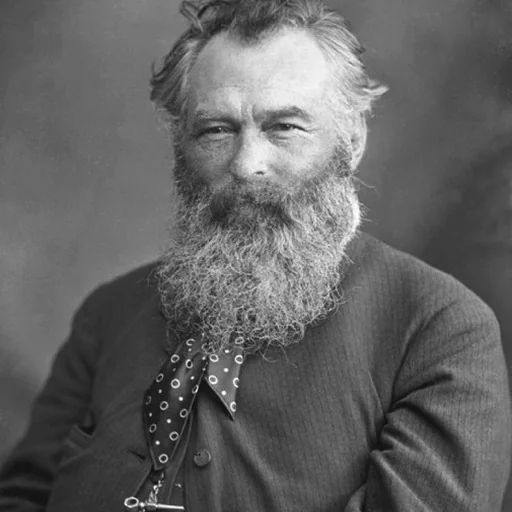
Ivan Ivanovich Shishkin (Russian: Иван Иванович Шишкин; 25 January 1832 – 20 March 1898) was a Russian Realist painter and draughtsman, best known for his landscape subjects.