Artwork
The Suicide of Lucretia
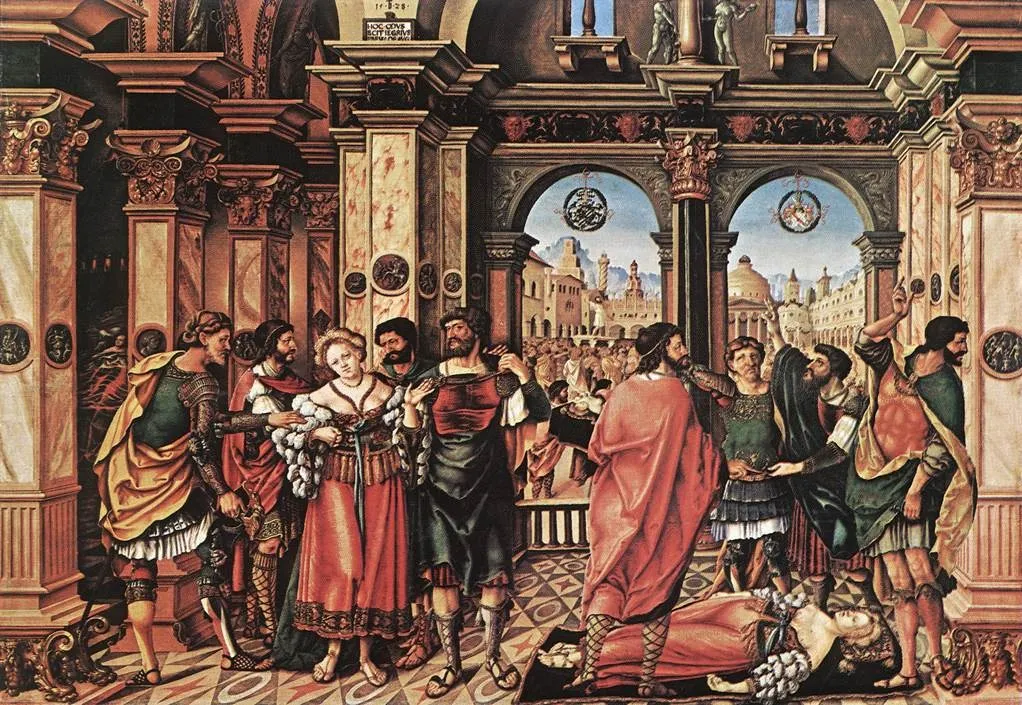
The Suicide of Lucretia is a wood painting by the Early Baroque Italian artist Jörg Breu the Elder. It dates from 1528 and is held in the collection of the Bavarian State Painting Collections.
About this work
Overview
Created in 1528 by Jörg Breu the Elder, this wooden panel presents a dramatic tableau centred on the classical heroine Lucretia. The composition unfolds within an elaborately decorated interior, populated by figures in sumptuous attire and armor, while architectural elements such as columns and arches frame a distant cityscape. The work is part of the collection of Munich’s Alte Pinakothek.
Subject & Meaning
The painting captures the moment traditionally associated with Lucretia’s self‑inflicted death, a narrative that has long symbolised personal virtue and political upheaval in Roman lore. By placing her in a richly appointed setting, Breu emphasizes the tension between private tragedy and public spectacle, inviting viewers to contemplate the moral consequences of honor and betrayal.
Technique & Style
Executed on a wooden support, the panel displays a vivid palette dominated by deep reds and stark chiaroscuro, heightening the emotional intensity of the scene. Breu’s handling of detail—ornate costumes, intricate armor, and finely carved architectural motifs—reflects the influence of the Danube school’s naturalism combined with emerging early Baroque sensibilities.
History & Provenance
Born around 1475 to a weaving family, Breu travelled to Italy twice before establishing his workshop in Augsburg, where he attained master status. The panel bears the heraldic emblems of Baden and the Duchy of Bavaria, indicating a possible patronage link to those territories. It entered the Alte Pinakothek’s holdings in the 19th century, where it remains on display.
Context
The work emerges at a crossroads of Northern German artistic traditions and Italianate trends that were gaining traction in the early 16th century. By integrating classical subject matter with local heraldry, Breu aligns his practice with the broader cultural exchange between the Germanic lands and the Italian peninsula, illustrating the diffusion of Baroque visual language across Europe.
Artist & collection
Artist
Jörg Breu the Elder (c. 1475–1537), of Augsburg, was a painter of the German Danube school. He was the son of a weaver. He journeyed to Austria and created several multi-panel altarpieces there in 1500–02, such as the…
