Artwork
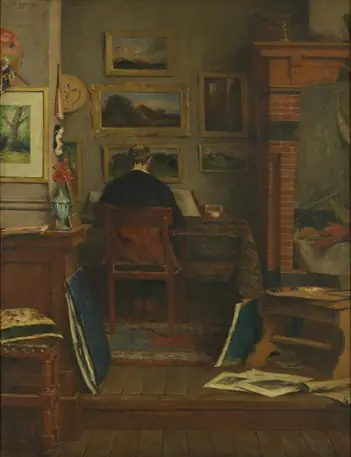
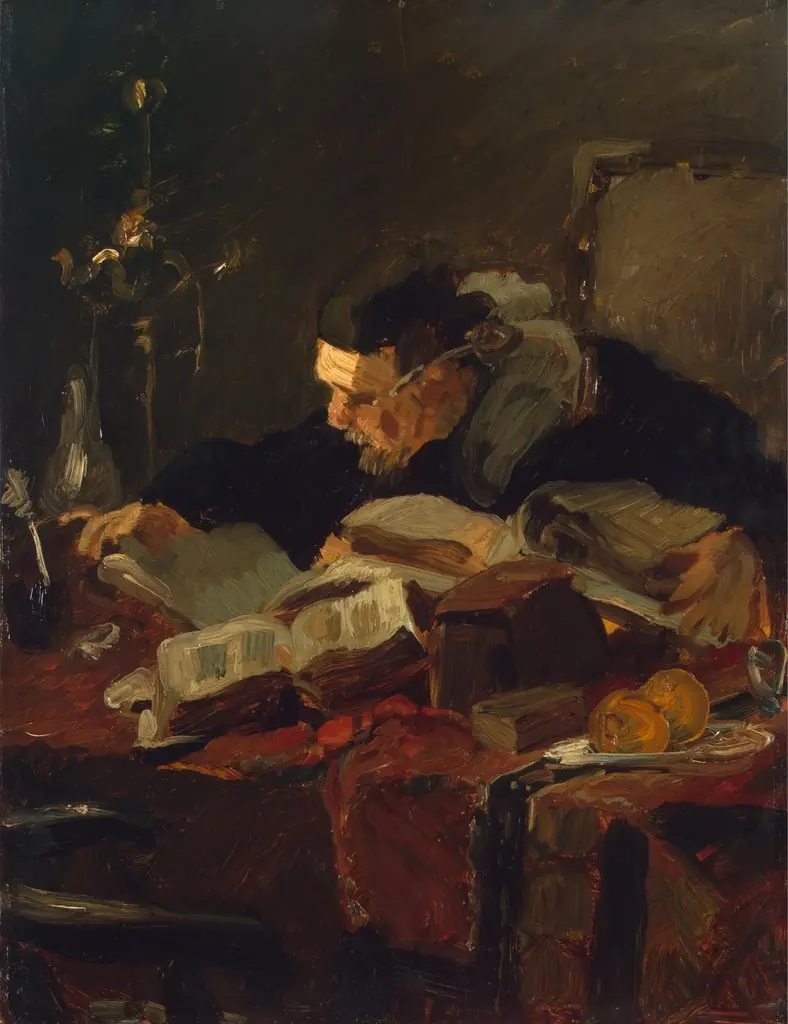
Maisteri Carl Gustaf Swan työpöytänsä ääressä
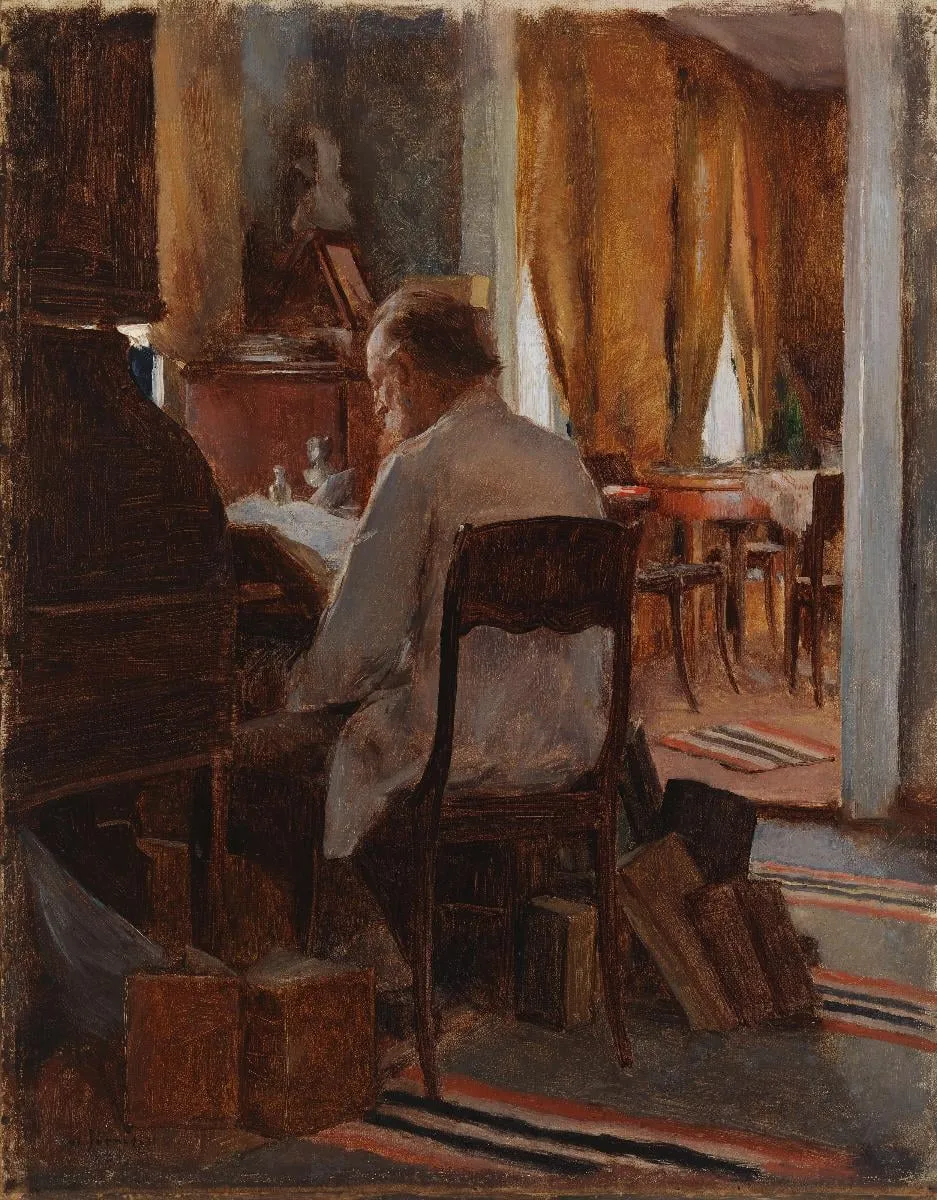
Maisteri Carl Gustaf Swan työpöytänsä ääressä is an unspecified painting by the Realist artist Eero Järnefelt. It dates from 1910 and is held in the collection of the Finnish National Gallery.
About this work
Overview
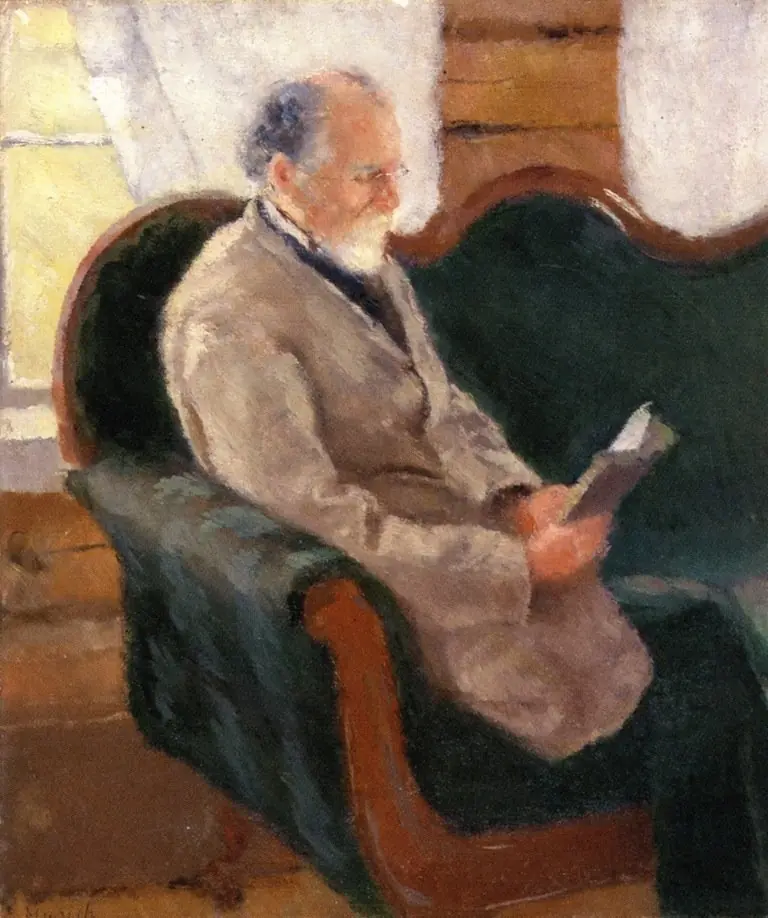
Painted around 1910 by Eero Järnefelt, this portrait depicts Carl Gustaf Swan at his desk, engaged in quiet labor.
Painted around 1910 by Eero Järnefelt, this portrait depicts Carl Gustaf Swan at his desk, engaged in quiet labor. The scene is unadorned, capturing a moment of concentration rather than ceremonial grandeur. Järnefelt’s approach emphasizes the dignity of routine work, avoiding theatricality in favor of intimate realism. The composition is restrained, with attention paid to the physicality of the space and the figure’s posture.
Subject & Meaning
Carl Gustaf Swan, a Finnish master, is shown in the midst of scholarly or administrative work, head bowed over a document. The empty chair beside him suggests a pause in the rhythm of daily life, reinforcing the solitude of intellectual labor. The absence of symbolic props or status markers shifts focus to the act itself—thought, effort, and quiet persistence—reflecting a broader cultural reverence for diligence over display.
Technique & Style
Järnefelt employed thick, deliberate brushwork to convey texture in wood, fabric, and paper, lending the scene a tactile immediacy. The palette is muted, dominated by earth tones, with warmth drawn from a single window’s glow. Shadows fall heavily, defining form through contrast rather than detail. This handling of light and surface aligns with naturalist traditions, prioritizing sensory truth over idealized beauty.
History & Provenance
The painting was created during Järnefelt’s mature period, when he increasingly turned to portraits of Finnish intellectuals and professionals. It likely originated in a private collection, possibly connected to Swan’s family or academic circle. While its early exhibition history is not widely documented, its preservation reflects an enduring interest in depictions of Finnish cultural life at the turn of the century.
Context
In early 20th-century Finland, a national identity was being shaped through art that celebrated ordinary citizens and their contributions. Järnefelt’s work aligned with this movement, portraying educators, engineers, and scholars not as heroes but as quiet pillars of society. The dim interior, cluttered shelves, and focused figure mirror broader societal values around education, discipline, and civic responsibility.
Legacy
The painting endures as a quiet testament to the visual language of labor in Nordic realism. It influenced later Finnish artists who sought to portray intellectual life without embellishment. Its emphasis on atmosphere over narrative, and texture over polish, remains a reference point in discussions of domestic and professional portraiture in early modern Scandinavian art.
Artist & collection

Artist
Erik "Eero" Nikolai Järnefelt was a Finnish painter and art professor. He is best known for his portraits and landscapes of the area around Koli National Park, in the North Karelia region of Finland. He was a medal…