Artwork
Pallas and the Muses
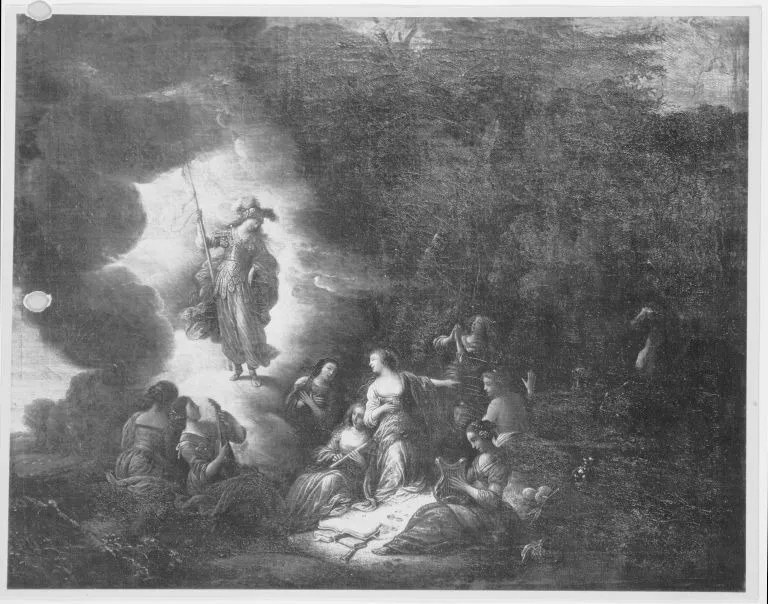
Pallas and the Muses is an oil painting by the Dutch Golden Age artist Jacob de Wet II. It dates from 1669 and is held in the collection of the Bavarian State Painting Collections.
About this work
Overview
Created in 1669, *Pallas and the Muses* is an oil painting on canvas by Dutch artist Jacob de Wet II. The work belongs to the collection of the Alte Pinakothek in Munich and illustrates a scene from classical mythology featuring the goddess Athena surrounded by the nine Muses.
Subject & Meaning
The composition centers on the goddess Pallas Athena, depicted elevated and holding a spear, symbolising wisdom and martial prowess. Below her, the Muses are shown seated or kneeling, each with an instrument or a book, representing the various arts and sciences over which Athena presides.
Technique & Style
De Wet employs a stark chiaroscuro, contrasting a luminous, almost ethereal figure against a dark, storm‑filled sky. The dramatic lighting isolates Athena, while the surrounding figures recede into shadow, a device typical of Dutch Golden Age painters seeking to guide the viewer’s focus.
History & Provenance
Born in Haarlem in 1641, Jacob de Wet II worked primarily in Amsterdam, producing mythological and historical scenes as well as royal portraits for the Scottish court at Holyroodhouse. After his death in 1697, the painting entered various private collections before being acquired by the Alte Pinakothek, where it remains on display.
Artist & collection
Artist
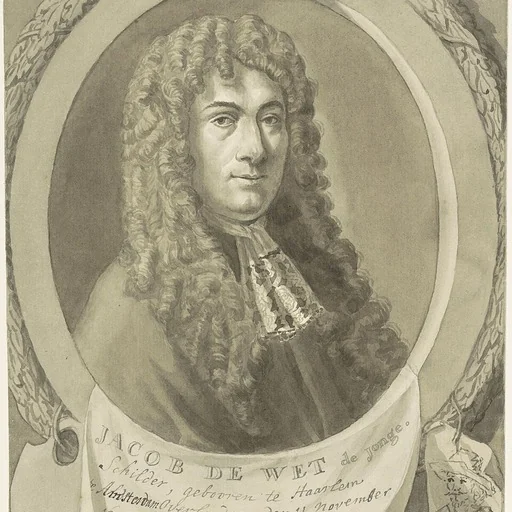
Jacob Jacobsz de Wet II (1641, Haarlem – 1697, Amsterdam), also known as James de Witt, was a Dutch Golden Age painter known for a series of 110 portraits of Scottish monarchs, many of them mythical, produced for the…
