Artwork
Jupiter (in the guise of Diana) and Callisto
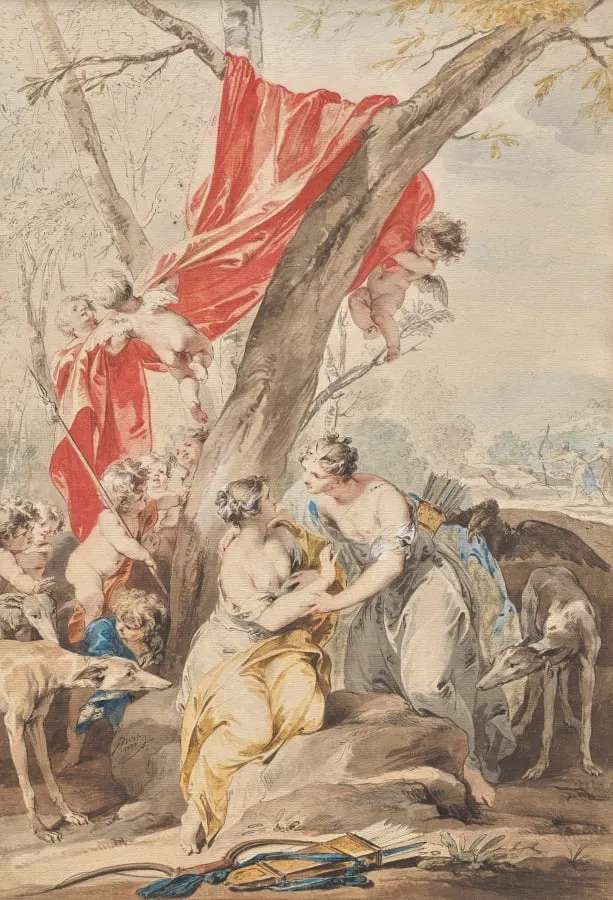
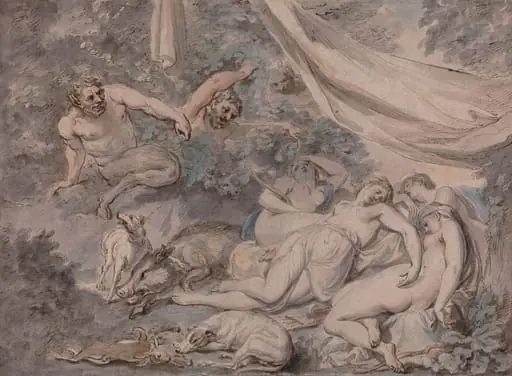
Jupiter (in the guise of Diana) and Callisto is a drawing by the Baroque artist Jacob de Wit. It dates from 1733 and is held in the collection of the Cleveland Museum of Art.
About this work
Overview
The presence of Jupiter is subtly signaled only by an eagle perched behind the figure of Diana, a classical symbol of his divine identity.
This drawing by Jacob De Wit depicts a moment from Ovid’s Metamorphoses in which Jupiter, disguised as the goddess Diana, approaches Callisto, one of Diana’s nymphs. The scene is rendered with delicate linework and soft color, capturing a quiet, intimate encounter. The presence of Jupiter is subtly signaled only by an eagle perched behind the figure of Diana, a classical symbol of his divine identity.
Subject & Meaning
The narrative draws from classical mythology, illustrating Jupiter’s deception of Callisto under the guise of her revered patroness. This act of divine trickery underscores themes of vulnerability and betrayal, common in mythological tales told to aristocratic audiences. The eagle, a traditional emblem of Jupiter, serves as the sole visual clue to his true identity, inviting viewers to recognize the hidden narrative beneath the surface.
Technique & Style
De Wit employs a light, fluid draftsmanship with restrained washes of color to suggest form and movement. The figures are rendered with graceful, naturalistic poses, and the forest setting is suggested rather than detailed, emphasizing the emotional tension. His approach balances theatricality with restraint, reflecting a refined Rococo sensibility that prioritizes elegance and subtle narrative over overt drama.
History & Provenance
Created in early 18th-century Amsterdam, this drawing was likely made as a finished work for private collectors rather than as a preparatory sketch. De Wit was known for producing both large decorative paintings for wealthy homes and smaller, highly finished drawings. This piece aligns with the demand for mythological subjects in domestic interiors, where such scenes sparked conversation and demonstrated cultural literacy.
Context
In Amsterdam’s prosperous merchant class, mythological themes were favored in interior decoration as symbols of refinement and classical education. Scenes of gods in disguise, like Jupiter’s deception of Callisto, appealed to viewers who enjoyed decoding layered narratives. De Wit’s work catered to this taste, blending moral ambiguity with visual charm to suit the tastes of elite households.
Legacy
De Wit’s drawings, including this one, were widely admired for their technical ease and expressive clarity. They influenced later generations of artists interested in mythological storytelling through intimate, finely rendered compositions. Though less monumental than his wall paintings, these works preserved his reputation for blending narrative wit with aesthetic grace in the Dutch artistic tradition.
Artist & collection
Artist
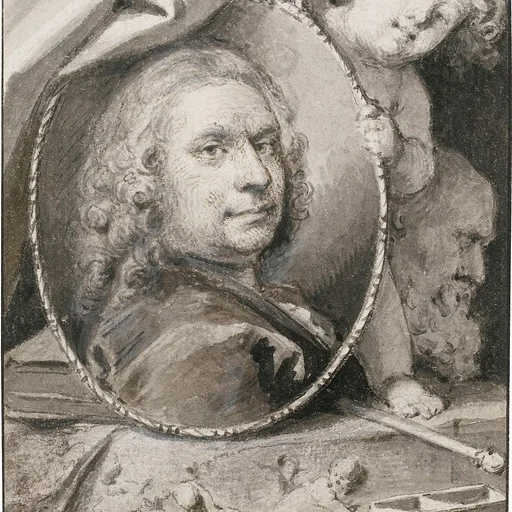
Jacob de Wit (19 December 1695 – 12 November 1754) was a Dutch painter and interior decorator. He is best known for his depictions of religious scenes.