Artwork
Porte d' Aval in Etretat
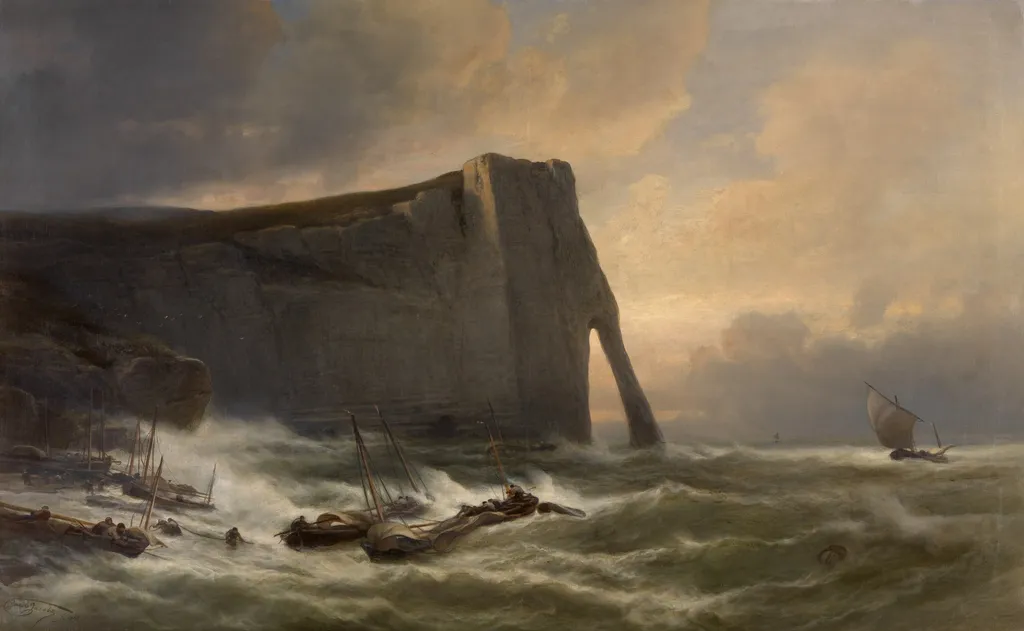
Porte d' Aval in Etretat is an oil painting by the Impressionist artist jacob jacobs. It dates from 1888 and is held in the collection of the Royal Museum of Fine Arts Antwerp.
About this work
Overview
The work captures a moment of natural tension between land and sea, with towering chalk cliffs framing a natural archway.
Painted in 1888 by Jacob Jacobs, this oil on canvas depicts a coastal scene at Étretat in Normandy. The work captures a moment of natural tension between land and sea, with towering chalk cliffs framing a natural archway. It resides in the collection of the Royal Museum of Fine Arts Antwerp, where it is recognized for its atmospheric rendering of the French coastline during a transitional weather moment.
Subject & Meaning
The painting centers on the Porte d'Aval, a natural limestone arch carved by the sea, set against a turbulent ocean. Small fishing boats navigate the churning waves below, suggesting human vulnerability against elemental forces. The storm-lit sky and dark cliffs evoke a mood of quiet endurance, reflecting the relationship between coastal communities and the unpredictable sea without overt narrative or symbolism.
Technique & Style
Jacobs employs a restrained palette dominated by grays, blues, and muted ochres to convey the mood of an overcast day. Chiaroscuro is used to model the cliff face and define the volume of waves, while the diffused sunlight breaking through clouds adds subtle luminosity. Brushwork is deliberate but not overly detailed, prioritizing atmospheric effect over topographical precision.
History & Provenance
Created during Jacobs’s mature period, the painting entered the Royal Museum of Fine Arts Antwerp’s collection in the late 19th or early 20th century. Its acquisition reflects the museum’s interest in 19th-century Belgian and Dutch-influenced landscape traditions. No significant alterations or restorations are documented, and it has remained in public ownership since its acquisition.
Context
Jacobs was part of a generation of Northern European artists drawn to the Normandy coast, where dramatic geology and shifting light attracted painters seeking naturalism. While less known than his French contemporaries, his work aligns with broader trends in coastal landscape painting of the era, emphasizing mood and environmental realism over romantic idealization.
Legacy
The painting endures as a quiet example of 19th-century coastal observation, valued for its restrained emotion and technical control. It contributes to the understanding of how artists outside the French Impressionist circle interpreted natural phenomena. Though not widely reproduced, it remains a representative work in the museum’s 19th-century holdings.
Own this work as a print
Artist & collection
Artist
Jacob Jacobs painted coastal scenes in oil and watercolor in the 1800s. His loose brushwork captures boats and harbors, like *Porte d'Aval in Étretat* (1876) or *Fishing Boat Entering a Harbour*. The water in *A Boat in…

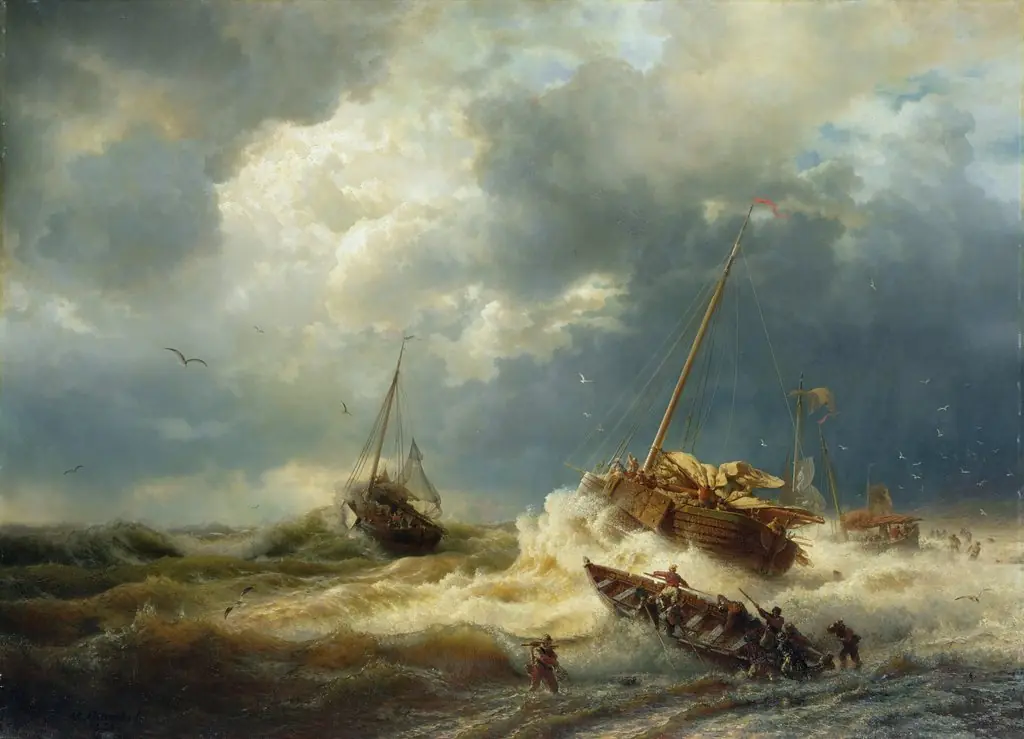 Ships in a storm on the Dutch coast
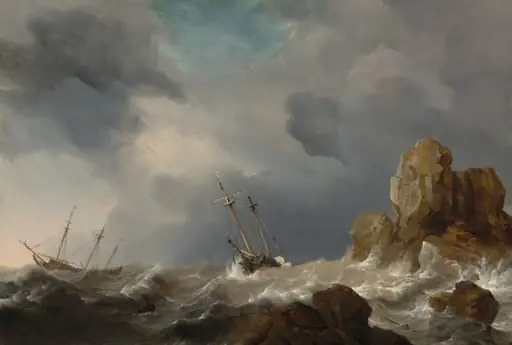 Ships in a Gale
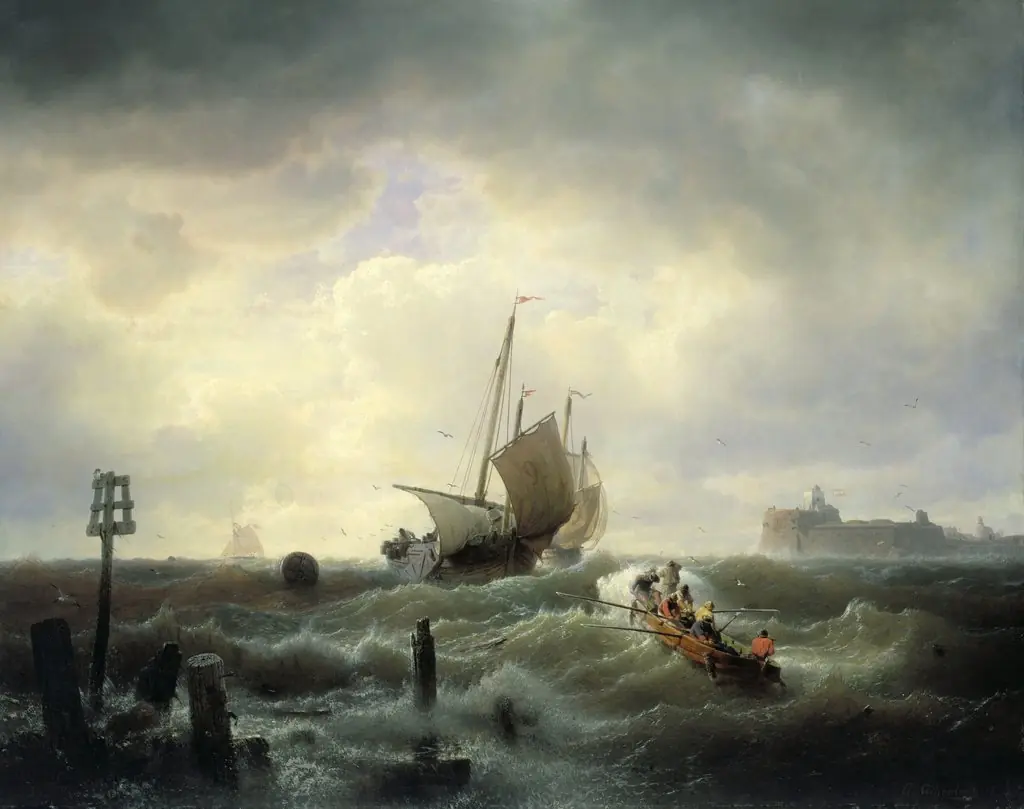 The Entrance to the Harbour at Hellevoetsluys
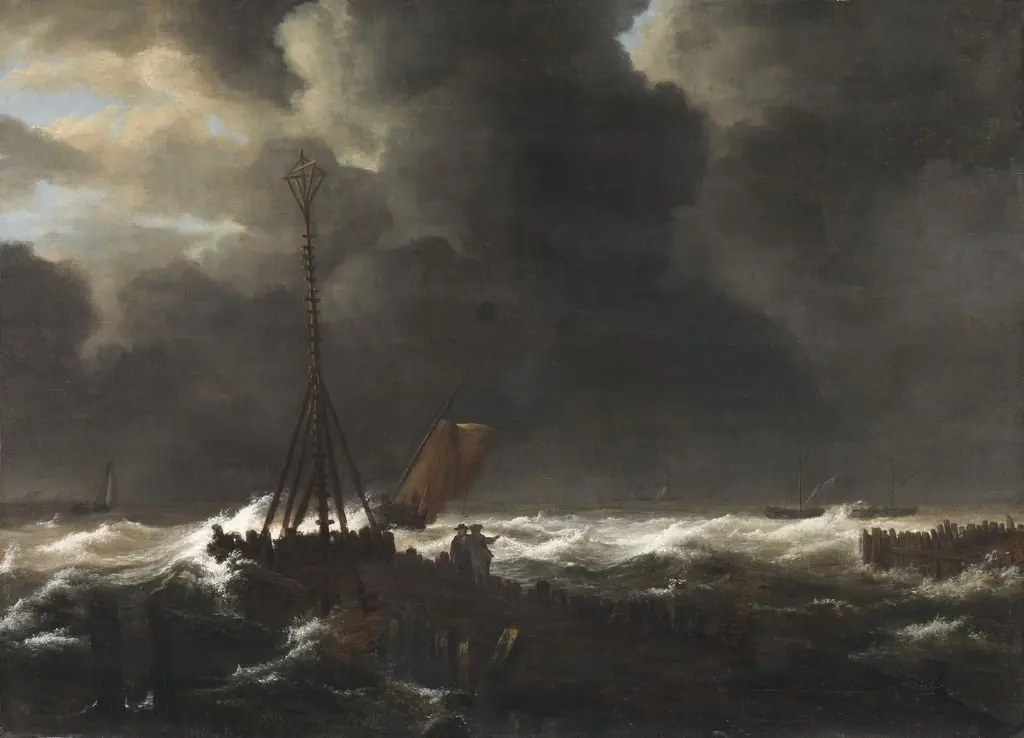 A Stormy Sea
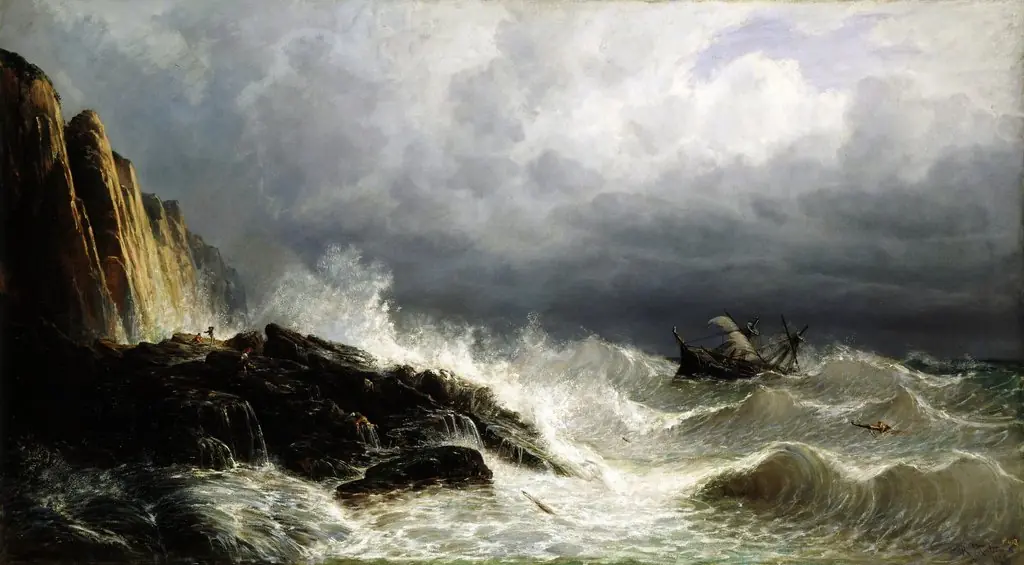 Un naufragio en las costas de Asturias
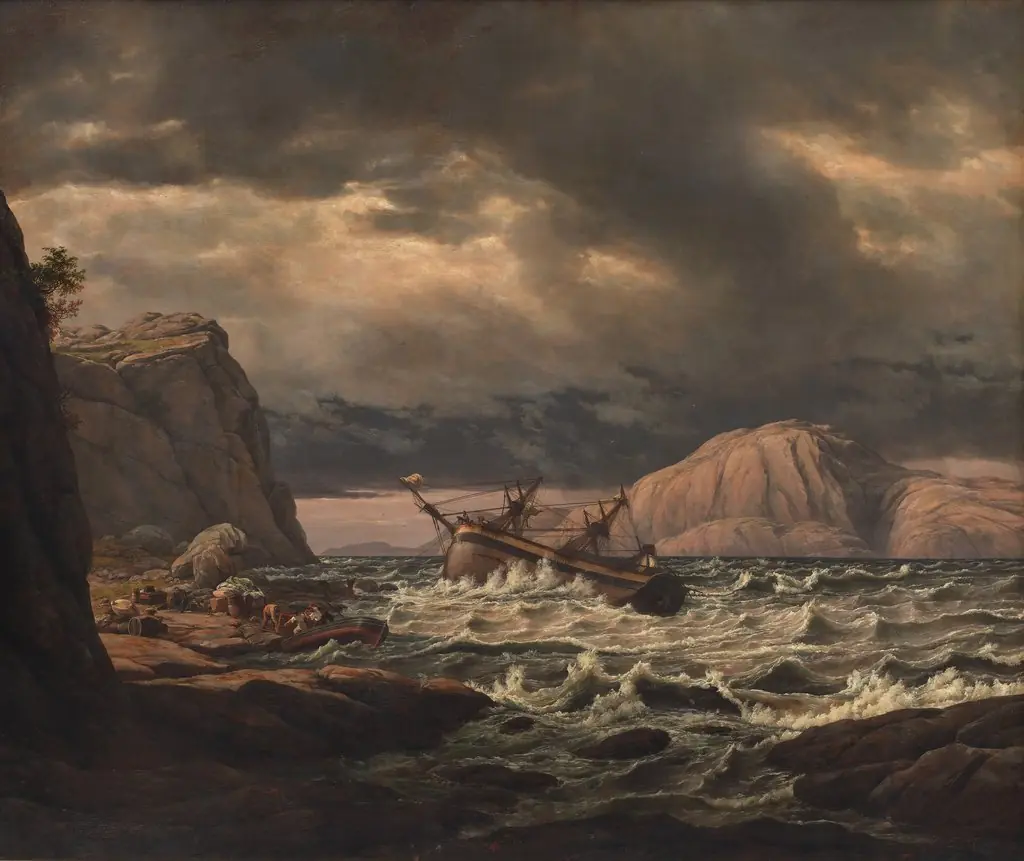 A Shipwreck on the Coast of Norway
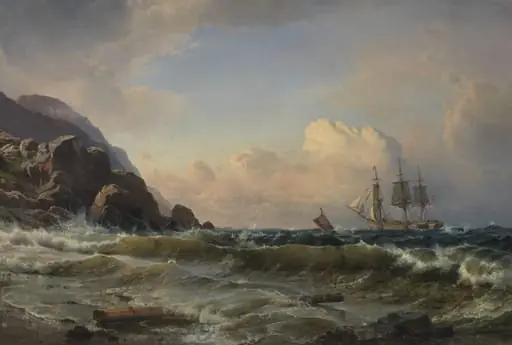 A Norwegian Coastline
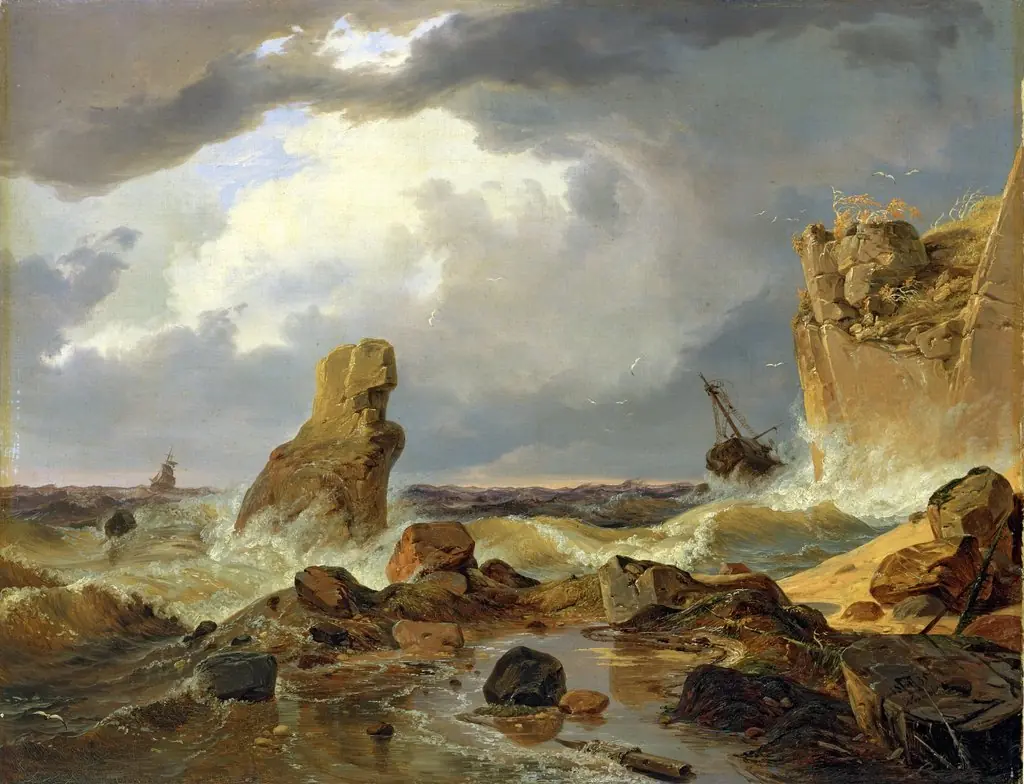 Surf on a Rocky Coast
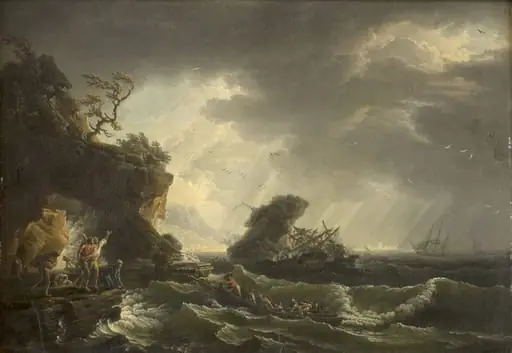 A Shipwreck
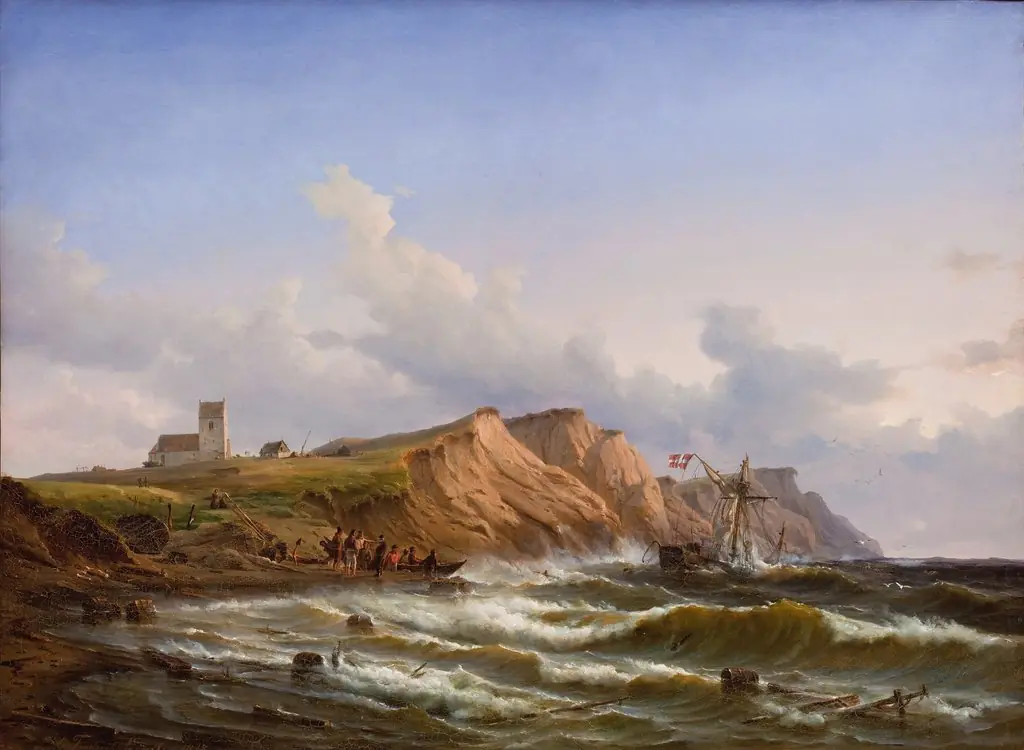 Shipwreck after a Storm off the West Coast of Jutland near Ferring Church
 Shipwreck
 A Norwegian Coastline