Artwork
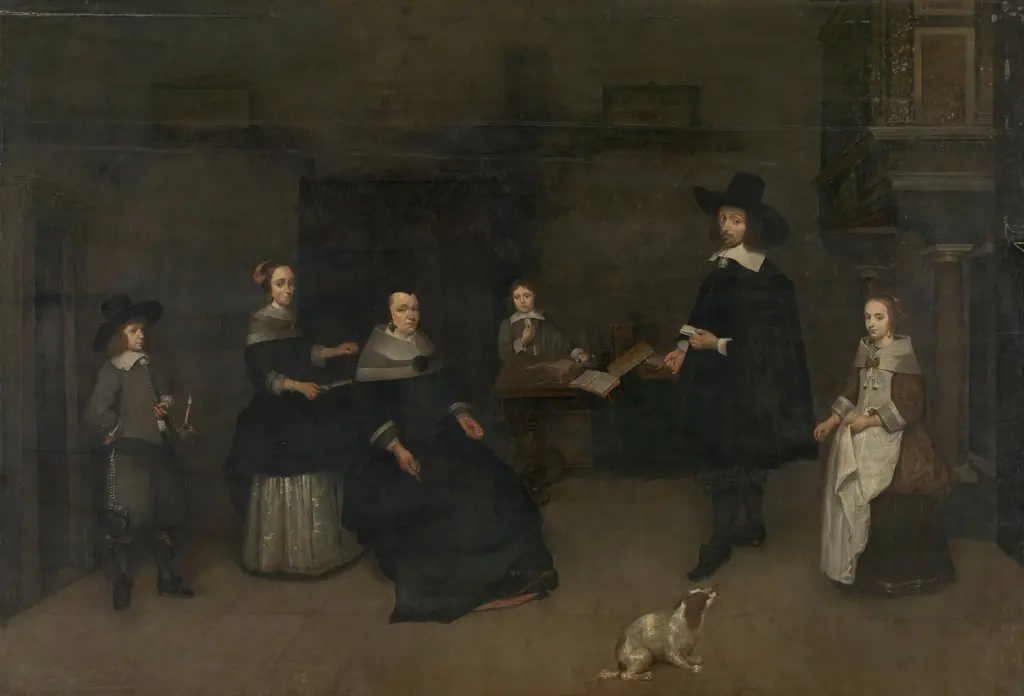
Pieter Cnoll, Cornelia van Nijenrode, their Daughters and Two Enslaved Servants
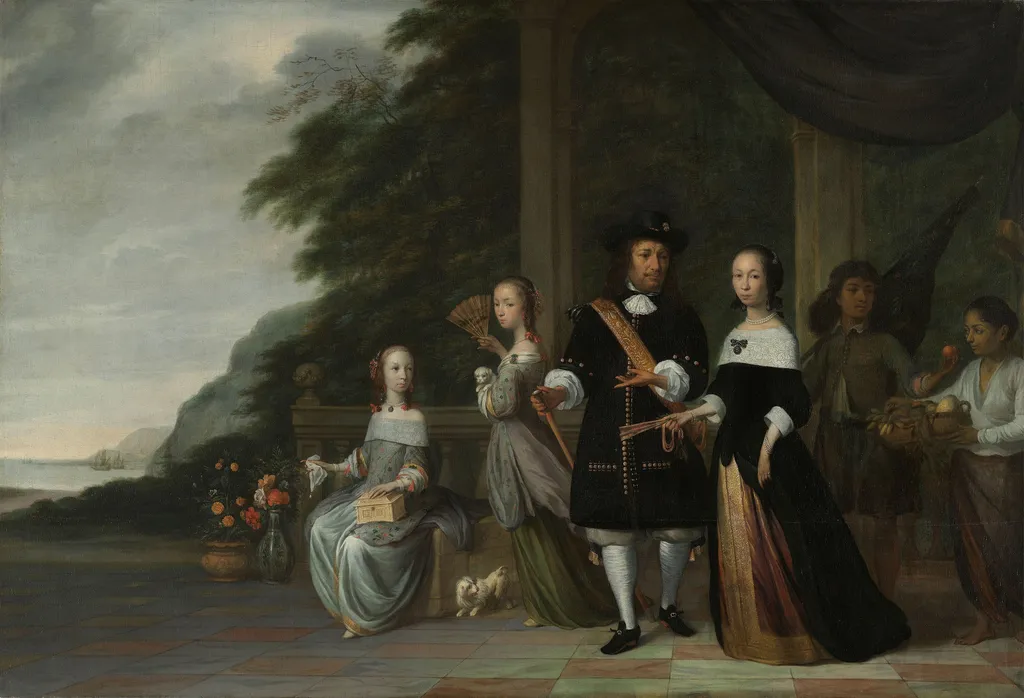
Pieter Cnoll, Cornelia van Nijenrode, their Daughters and Two Enslaved Servants is an oil painting by the Dutch Golden Age artist Jacob Jansz. Coeman. It dates from 1665 and is held in the collection of the Rijksmuseum. Jacob Jansz.
About this work
Overview
Coeman created this oil painting in 1665, depicting Pieter Cnoll, his wife Cornelia van Nijenrode, their daughters, and two enslaved individuals.
Jacob Jansz. Coeman created this oil painting in 1665, depicting Pieter Cnoll, his wife Cornelia van Nijenrode, their daughters, and two enslaved individuals. This work offers a glimpse into a prominent family's life in Batavia during the Dutch Golden Age, a period of significant colonial expansion. The portrait, now housed at the Rijksmuseum, exemplifies the genre of family representation common in the era, while also documenting the complex social structures of the time.
Subject & Meaning
The composition features five figures positioned before a house and garden. Pieter Cnoll and Cornelia van Nijenrode, dressed in formal attire, occupy the center with their two daughters. One girl holds a small box, while the other carries a fan. At the periphery, two individuals in simpler clothing, identified as enslaved servants, stand holding fruit, visually indicating their subordinate status within the household. A small dog rests near the family, adding a domestic detail to the scene.
Technique & Style
Executed in oil paint, this work is a characteristic example of 17th-century Dutch portraiture. Jacob Jansz. Coeman, known for his adherence to the stylistic conventions of Thomas de Keyser, employed a detailed and realistic approach. The painting captures the textures of clothing and the individual features of the sitters, reflecting the period's emphasis on accurate representation. The careful arrangement of figures and the use of light contribute to the formal yet intimate atmosphere of the family grouping.
History & Provenance
This family portrait was completed by Jacob Jansz. Coeman in 1665 in Batavia, then a significant center of Dutch colonial activity. The commission reflects the prosperity and established presence of European families in the East Indies during the Dutch Golden Age. Over time, the painting became part of the collection of the Rijksmuseum, where it remains a key artifact illustrating colonial life and portraiture from the period.
Context
Created in Batavia, the capital of the Dutch East Indies, this portrait provides insight into the colonial society of the mid-17th century. The inclusion of enslaved servants, one of whom is identified as Untung Surapati, underscores the economic and social realities of the Dutch Golden Age, which relied heavily on forced labor in its overseas territories. The painting thus serves as a document of both familial representation and the broader historical context of Dutch imperial expansion and its human cost.
Own this work as a print
Artist & collection
Artist
Jacob Jansz. Coeman (Amsterdam? ca 1632- 9 April 1676, Batavia, Dutch East Indies) was a Dutch painter of portraits. Coeman worked in the style of Thomas de Keyser. In 1655 he married Hester Wils, either from Haarlem or…